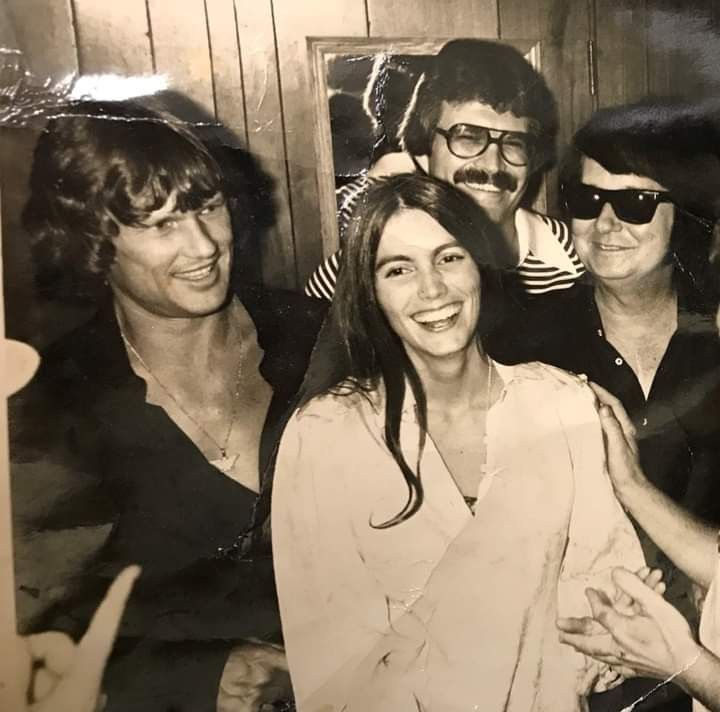
“Drivin’ Wheel” carries the ache of motion itself—part wanderlust, part loneliness, and part hard-earned freedom, wrapped in the steady rhythm of the highway.
There are songs that tell a story, and then there are songs that seem to breathe a landscape. Emmylou Harris’s “Drivin’ Wheel” belongs to that second kind. Released on her 1978 album Quarter Moon in a Ten Cent Town, the song was never one of the era’s biggest radio singles, yet it has endured for listeners who understand that some of the most lasting recordings are not always the loudest hits. The album itself performed strongly, reaching No. 3 on Billboard’s Top Country Albums chart, and it arrived during a period when Harris was shaping one of the most elegant and emotionally intelligent catalogs in country music. Even tucked among better-known tracks like “Two More Bottles of Wine” and “To Daddy”, “Drivin’ Wheel” stands out as one of those songs that seems to gather more meaning with every passing mile.
Written by Canadian songwriter David Wiffen, “Drivin’ Wheel” already carried a meditative, wandering spirit before Harris recorded it. But in her hands, the song becomes something especially haunting. She did not sing it as a grand statement. She sang it as if she had lived inside its dust, its distance, its weariness, and its strange, stubborn hope. That has always been part of Emmylou Harris’s gift: she never simply covers a song. She enters it quietly, listens for its pulse, and then reveals the emotional weather hidden inside the words.
By the time Quarter Moon in a Ten Cent Town was released, Harris had already proven herself as far more than a traditional country singer. She had become an interpreter of uncommon grace, moving easily through country, folk, rock, and Americana before that last term had even become a standard category. This album reflected that range beautifully. Produced by Brian Ahern, the record balanced polish with earthiness, refinement with emotional plainspokenness. That balance matters when talking about “Drivin’ Wheel”, because the song lives in precisely that tension: it sounds smooth and flowing, but under the surface it is restless, uncertain, and quietly bruised.
The title itself is deceptively simple. A driving wheel is practical, mechanical, meant to keep something moving. But in the song, it becomes a metaphor for the inner force that pushes a person onward even when the destination is unclear. This is not a cheerful road song in the usual sense. It does not celebrate freedom in a carefree, wind-in-your-hair way. Instead, it understands that the open road can be both invitation and burden. Motion can feel like liberation, but it can also be a form of longing—one more day spent chasing peace that always seems just over the next horizon.
That is why the song still resonates so deeply. “Drivin’ Wheel” captures a feeling many people recognize but few songs describe so well: the sense that life keeps moving, whether the heart is ready or not. There is yearning in it, yes, but not the theatrical kind. It is a mature yearning, touched by fatigue and wisdom. Harris gives the lyric a remarkable tenderness, never overplaying the sorrow, never forcing the poetry. She lets the song drift and roll, like scenery passing a windshield at dusk.
Musically, the recording is a marvel of restraint. The arrangement does not crowd her voice. Instead, it opens a wide emotional space around it. The gentle rhythm suggests travel, but not speed. This is not reckless motion; it is the steady onward pull of experience. The instrumental backing, tasteful and atmospheric, supports the song’s central mood without distracting from it. As with so many of Harris’s best recordings from that era, every element seems chosen in service of feeling rather than flash.
And then there is the voice. Emmylou Harris has always possessed one of the most unmistakable voices in modern American music—clear, silvery, and full of emotional nuance. On “Drivin’ Wheel”, she uses that voice not to dominate the song but to illuminate it. She sounds distant and intimate at once, like someone singing from just across the room and from many years away at the same time. That quality gives the performance its staying power. It never feels trapped in 1978. It feels suspended somewhere outside of time, where memory, regret, and motion all meet.
There is also something larger at work in the song’s appeal. “Drivin’ Wheel” belongs to a long tradition of American road songs, but it does not rely on cliché. No easy romanticism, no glossy myths. Instead, it understands the road as a spiritual condition. To keep going, to keep searching, to carry one’s unanswered questions forward—this is the deeper landscape of the song. In that sense, it fits beautifully within Harris’s body of work, which so often honors people in transit: emotionally, geographically, spiritually.
What makes the song feel especially powerful now is how gently it speaks. In an age that often mistakes volume for depth, “Drivin’ Wheel” reminds us how moving understatement can be. It does not demand attention. It earns it. The more life one brings to the song, the more the song seems to give back. That is the mark of a lasting performance.
So when people say Emmylou Harris could make the open road sound beautiful, they are only telling part of the truth. On “Drivin’ Wheel”, she made it sound beautiful, lonely, necessary, and unresolved. She understood that longing rarely disappears; it simply changes shape and keeps traveling with us. And that may be why this song still lingers. It does not offer a final arrival. It offers something truer: the sound of a soul still moving, still listening, still following that quiet pull somewhere beyond the headlights.
