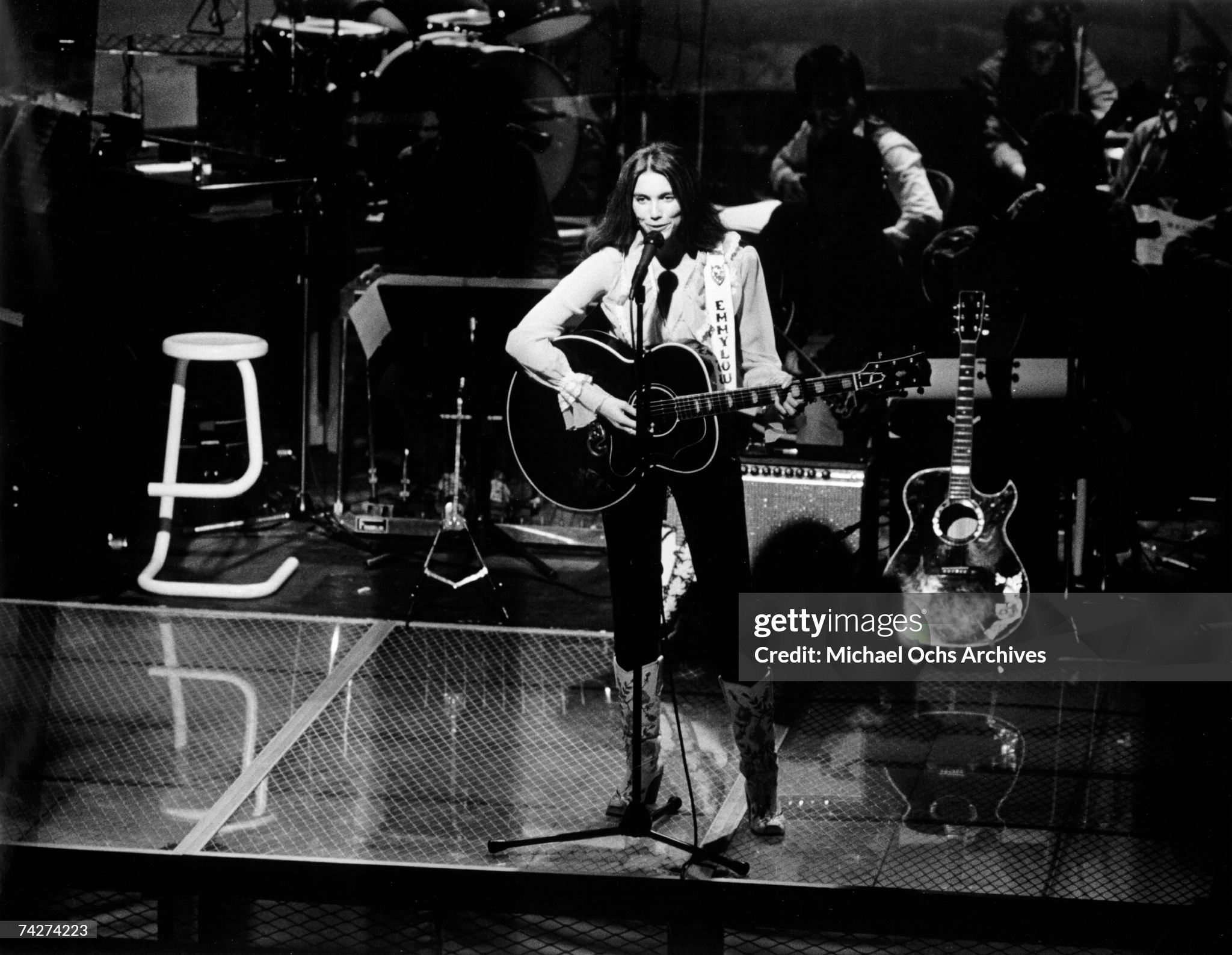
Ooh Las Vegas on Elite Hotel was more than a spirited album cut; it was Emmylou Harris carrying Gram Parsons‘ unfinished roots-rock vision into a new chapter of American music.
When Emmylou Harris recorded Ooh Las Vegas for her 1975 album Elite Hotel, she was doing far more than revisiting a catchy song. She was stepping into a delicate inheritance. Elite Hotel reached No. 1 on Billboard’s country albums chart and crossed over to No. 25 on the Billboard 200, confirming that Harris was no passing figure in the country-rock story. Yet while the album is often remembered for chart-topping singles such as Together Again and Sweet Dreams, Ooh Las Vegas may be the track that most clearly revealed what Harris meant to that whole musical moment. It was bright, loose, and full of movement, but underneath its swing was something deeper: loyalty, memory, and the sound of a legacy being carried forward with grace.
The song itself was written by Gram Parsons and Ric Grech. Parsons had already recorded it for Grievous Angel, the album released in 1974 after his death in 1973. That fact matters enormously. By the time listeners heard Parsons’ version on Grievous Angel, the dream at the heart of his music already felt fragile and unfinished. He had spent years trying to fuse honky-tonk, folk, gospel, rock, and desert loneliness into something he once called Cosmic American Music. Emmylou Harris, who had sung beside him on both GP and Grievous Angel, understood that dream from the inside. So when she brought Ooh Las Vegas onto Elite Hotel, it did not feel like a casual cover. It felt like continuation.
That is one reason the performance still lands with such warmth. Harris does not sing the song as if she is preserving it in glass. She gives it air, pace, and confidence. Her version has that easy West Coast country-rock motion that made the mid-1970s such a fertile time for American roots music, but it never becomes slick or weightless. The band keeps the wheels turning with crisp rhythm, twang, and a sense of open-road freedom, while Harris’ vocal adds clarity where Parsons often preferred beautiful rough edges. The result is not a rejection of his spirit at all. If anything, it proves how strong the song was. Emmylou Harris could sing it in her own voice and still leave the Parsons shadow where it belonged: present, meaningful, and never theatrical.
Lyrically, Ooh Las Vegas is clever because it hides its ache behind motion. On the surface, it is full of energy, neon, and the thrill of going somewhere reckless. But Las Vegas in songs like this is never just a city. It is temptation, drift, luck, loneliness, and the American habit of chasing reinvention one more time. There is humor in it, even a wink, yet there is also a restless undertow. That duality made it perfect for Harris. She had always been able to sing sorrow without dragging her feet, and to sing joy without sounding naive. In her hands, the song becomes a little sharper, a little cleaner, and somehow more durable. The thrill is still there, but so is the knowledge that every bright place casts a long shadow.
Placed within Elite Hotel, the track also says something important about Harris as an artist in her own right. After Parsons, it would have been easy for critics to reduce her to a surviving witness, a gifted harmony partner linked forever to someone else’s mythology. But Elite Hotel made that impossible. This was a commanding album, full of conviction, taste, and musical intelligence. Harris could move from old-country elegance to contemporary roots-rock without losing herself. By including Ooh Las Vegas, she did not simply salute Parsons; she demonstrated that his musical vocabulary had a future. She could take material connected to Grievous Angel and make it live in a broader, more settled, and more fully realized country-rock landscape.
That may be the real meaning of the recording. It stands at the meeting point between grief and growth. Parsons’ version belongs partly to the romance of the unfinished, to that haunted feeling listeners bring to artists who leave behind more promise than time. Harris’ version belongs to survival. It says that great music does not end with the person who first lit the match. It moves on through those who understood its heart. In 1975, that mattered. Country-rock could easily have become either too polished for its own good or too self-conscious about its myth. Emmylou Harris avoided both traps. She kept the music human.
And that is why Ooh Las Vegas remains so rewarding inside the story of Elite Hotel. It was not one of the album’s major chart singles, and it did not need to be. Its importance lies elsewhere. It captures a moment when Harris was no longer merely associated with a movement; she was helping define its future. She honored Gram Parsons not by imitating him, but by proving that the road he loved could still stretch ahead. In that sense, the song is both celebration and quiet testimony. It sparkles, it rolls, it smiles a little, and somewhere beneath all that movement it reminds us how American roots music survives: one voice handing the truth to another, without fuss, without vanity, and with the dust of the road still on the sound.
