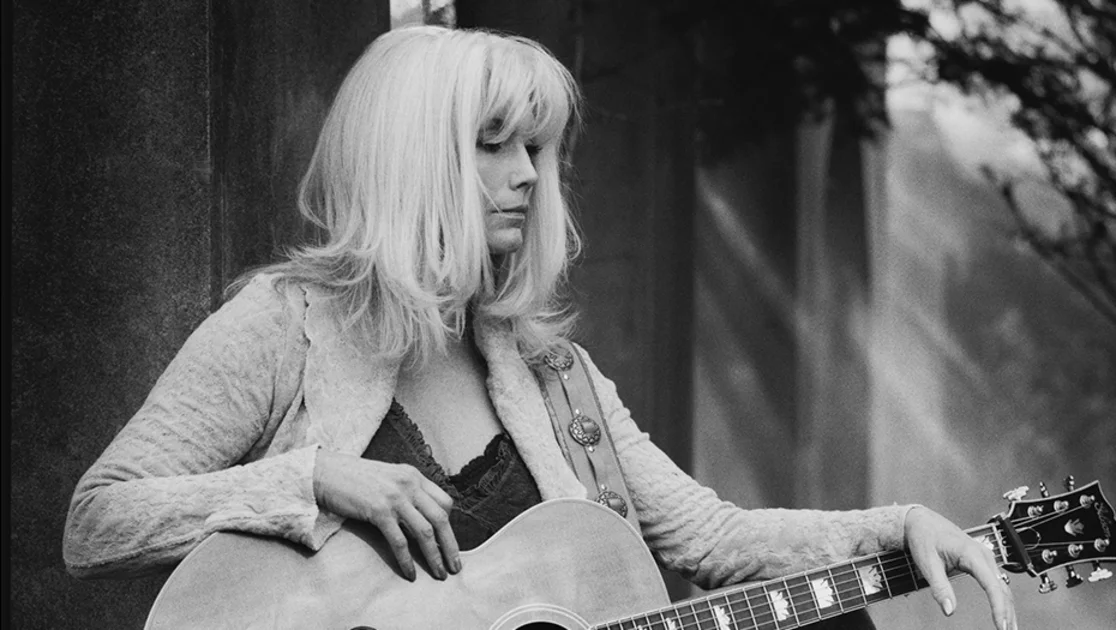
The Good Book finds Emmylou Harris in one of her most reflective moods, turning the language of faith into something intimate, tender, and deeply human.
There are songs that make their case with chart numbers, radio spins, and instant recognition, and then there are songs that take the slower road into the heart. The Good Book belongs to that second kind. As part of the wide and unusually rich world of Emmylou Harris, it is remembered less as a commercial milestone than as a thoughtful, inward-looking piece, and no major standalone Billboard country chart peak is commonly associated with it. That matters, because the song’s power has never depended on how high it climbed. Its strength lies in the way it lingers.
What makes The Good Book so affecting is the tension already hidden inside the title. The phrase suggests certainty, doctrine, and answers passed down in black and white. But when Emmylou Harris enters a song like this, certainty is rarely the whole story. She has always been one of the great interpreters of emotional complexity in American music, and she sings as if every line has been weighed against memory, loss, hope, and lived experience. In her hands, a song with spiritual language does not become preachy. It becomes personal.
That has long been one of the quiet miracles of her art. From the country sorrow of Boulder to Birmingham to the haunted beauty of Wrecking Ball and the old-time sacred warmth of Angel Band, Harris has treated belief not as a slogan, but as a conversation. She understands that faith in song often has less to do with perfect confidence than with endurance. It is about continuing to ask, continuing to listen, continuing to hope. The Good Book fits beautifully into that tradition. It feels less like a lesson than a reckoning.
Listen closely to the way she phrases the song, and you hear what has always set her apart. Emmylou Harris never rushes toward emotional effect. She allows a line to breathe. She lets silence do part of the work. Her voice, clear and weathered in just the right places, carries both humility and authority. That combination is rare. Some singers sound as if they are telling you what to feel. Harris sounds as if she is standing beside you, turning the page slowly, admitting that the words we inherit can comfort us and unsettle us at the same time.
The emotional meaning of The Good Book seems to rest in that very contradiction. It is a song shaped by the old American language of scripture and conscience, yet it does not feel locked inside church walls. It opens outward. It speaks to anyone who has ever searched for direction, anyone who has tried to reconcile what they were taught with what life actually became. That is why the song remains so moving. The title may point toward tradition, but the feeling inside the performance is unmistakably human: doubt, reverence, longing, and the wish to find a little peace between them.
There is also something deeply characteristic about Harris choosing or shaping material of this kind. Throughout her career, she has been drawn to songs that sit at the meeting point of earth and spirit. She can sing of heartbreak, drifting, regret, and devotion without drawing hard lines between the sacred and the everyday. In her world, those things are never far apart. A lonesome country song can feel like prayer. A gospel phrase can feel like memory. A simple lyric can carry the weight of years. The Good Book belongs to that lineage of songs that reveal how gracefully she moves between those emotional worlds.
For listeners who came to Emmylou Harris through her famous hits and landmark albums, a song like this can feel like an unexpected doorway into the deeper rooms of her catalog. It reminds us that her greatness has never been limited to the obvious classics. Some of her most lasting performances are the ones that do not announce themselves loudly. They grow in meaning over time. They become companions. The Good Book is very much that kind of song. It does not demand attention. It earns it.
And perhaps that is why it continues to resonate. In an age when so much music is built for impact, The Good Book still trusts the old virtues: patience, honesty, atmosphere, and emotional truth. It asks the listener to lean in. It rewards the listener for bringing a little life experience to it. That is where Emmylou Harris has always been most extraordinary. She sings not only to the ear, but to memory itself. In The Good Book, she offers no grand spectacle, no easy resolution, no showy finale. What she offers instead is something finer and rarer: a song that feels like an intimate conversation with the soul.
So even without the kind of chart history that usually defines a hit, The Good Book stands as a revealing piece of the Emmylou Harris story. It shows her gift for finding the sacred inside ordinary feeling, and for making reflection sound as powerful as revelation. That is why this song still matters. Not because it conquered the charts, but because it speaks softly and stays with you long after the music fades.
