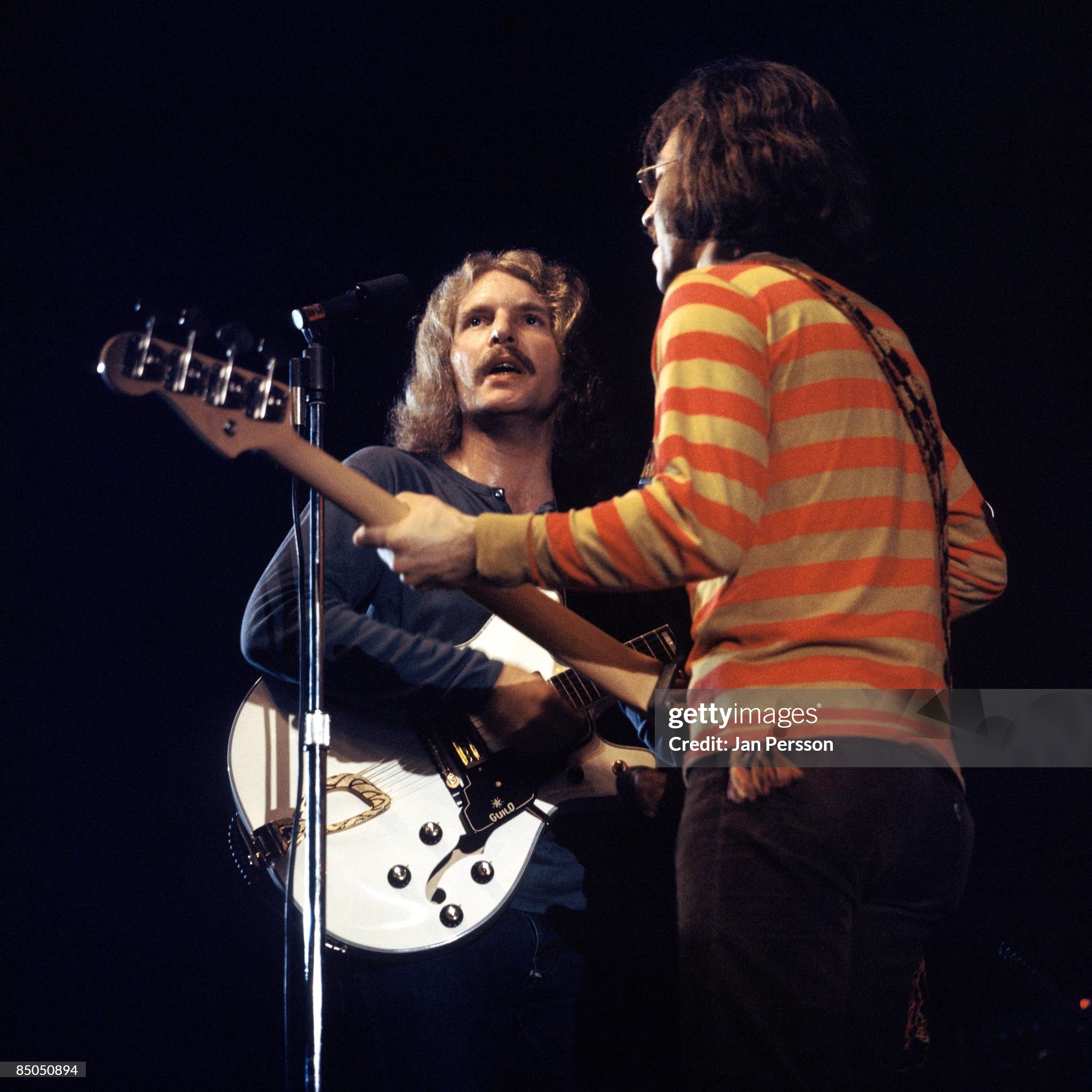
Sinister Purpose shows the shadow side of Creedence Clearwater Revival, and the 1985 remaster makes that old unease feel uncannily close, as if the warning in the song never stopped echoing.
There are songs that arrive like old friends, and there are songs that step out of the speakers like a caution. Creedence Clearwater Revival made both kinds, but Sinister Purpose belongs firmly to the second group. In its 1985 remastered form, the track sounds even more revealing: the groove is tighter, the menace is clearer, and the tension at the center of the performance feels less buried in the swamp and more like it is standing right in front of you. For listeners who know CCR mainly through their biggest radio staples, this song can be a surprise. It is not built for comfort. It is built for suspicion, warning, and the slow recognition that danger rarely announces itself loudly.
The basic facts are important because they explain why the song still matters. Sinister Purpose first appeared on Bayou Country, the band’s second studio album, released in January 1969. The song itself was not a charting single, so it did not claim a separate Billboard placement of its own. But Bayou Country was no minor record. It reached No. 7 on the Billboard 200, and it also gave the world Proud Mary, which climbed to No. 2 on the Billboard Hot 100. That means Sinister Purpose was born during one of the most decisive stretches in the band’s career, when Creedence Clearwater Revival was moving from promise to permanence.
Written by John Fogerty, the song has none of the easy uplift that people often associate with classic American rock. Instead, it leans into a dark pulse. The narrator does not sound romantic, triumphant, or nostalgic. He sounds watchful. The lyric suggests somebody approaching with motives that should not be trusted, and the whole track is arranged to support that feeling. The rhythm section keeps moving forward, but not with freedom. It moves like footsteps in a place where you are not sure who is behind you. That is part of the genius of CCR: even when the band played simple patterns, those patterns could carry deep emotional weather.
Listen closely and the players tell the story almost as powerfully as the words. John Fogerty sings with that unmistakable rasp, but here he is less preacher than witness. Tom Fogerty helps thicken the atmosphere with rhythm guitar, Stu Cook keeps the low end steady and uneasy, and Doug Clifford drives the song with drums that never let it drift into softness. The performance is controlled, but it is never relaxed. That tension is the point. Sinister Purpose is a warning song, and warnings are not supposed to smile.
Its meaning has always felt larger than its brief running time. On one level, the song is about a suspicious figure, someone whose intentions can be read in the eyes before the damage is done. On another level, it works as one of those old truths that never stop being relevant: learn to recognize what does not feel right. In that sense, the song is not simply dark for the sake of darkness. It is alert. It understands that charm and danger often travel together, and that some of life’s hardest lessons begin with a feeling one cannot quite explain. That is why the song has aged so well. It does not depend on fashion, and it does not belong to a passing trend. It speaks in instinct.
The 1985 remaster adds an interesting layer to that experience. Rather than softening the edges, the remastered presentation tends to bring the structure of the song into sharper relief. The bass feels more present, the guitar lines seem to bite a little harder, and the vocal sounds less distant from the listener. For a track already rooted in unease, that added clarity can make the mood feel even more intimate. It is one thing to hear a murky threat floating in from another era; it is another to hear it sharpened just enough that every pause, every push of the beat, every rough grain in John Fogerty’s voice lands with renewed force. The remaster does not change the soul of Sinister Purpose. It simply lets more of that soul step out into view.
What makes the song so memorable, though, is where it sits in the larger Creedence Clearwater Revival story. This was a band famous for economy. They did not need long solos or elaborate studio tricks to create a world. In barely a few minutes, Sinister Purpose paints one: humid, tense, morally uncertain, and strangely addictive. It reveals the darker current that always ran beneath the band’s more famous songs. Beneath the drive, the hooks, and the swamp-rock swagger, CCR often understood something essential about American music: joy and threat live close together, and some of the truest songs know how to hold both at once.
That may be why the track lingers. It was never the obvious anthem, never the crowd-pleasing headline, never the song most casual listeners named first. Yet it remains one of those album cuts that tell devoted listeners who a band really was. Sinister Purpose is not merely a curiosity from Bayou Country. It is evidence of how much depth Creedence Clearwater Revival could summon without ever sounding strained or self-conscious. And in the 1985 remastered version, that depth feels newly vivid. The song still walks in quietly, still carries that warning in its bones, and still leaves the room just a little darker than it found it.
