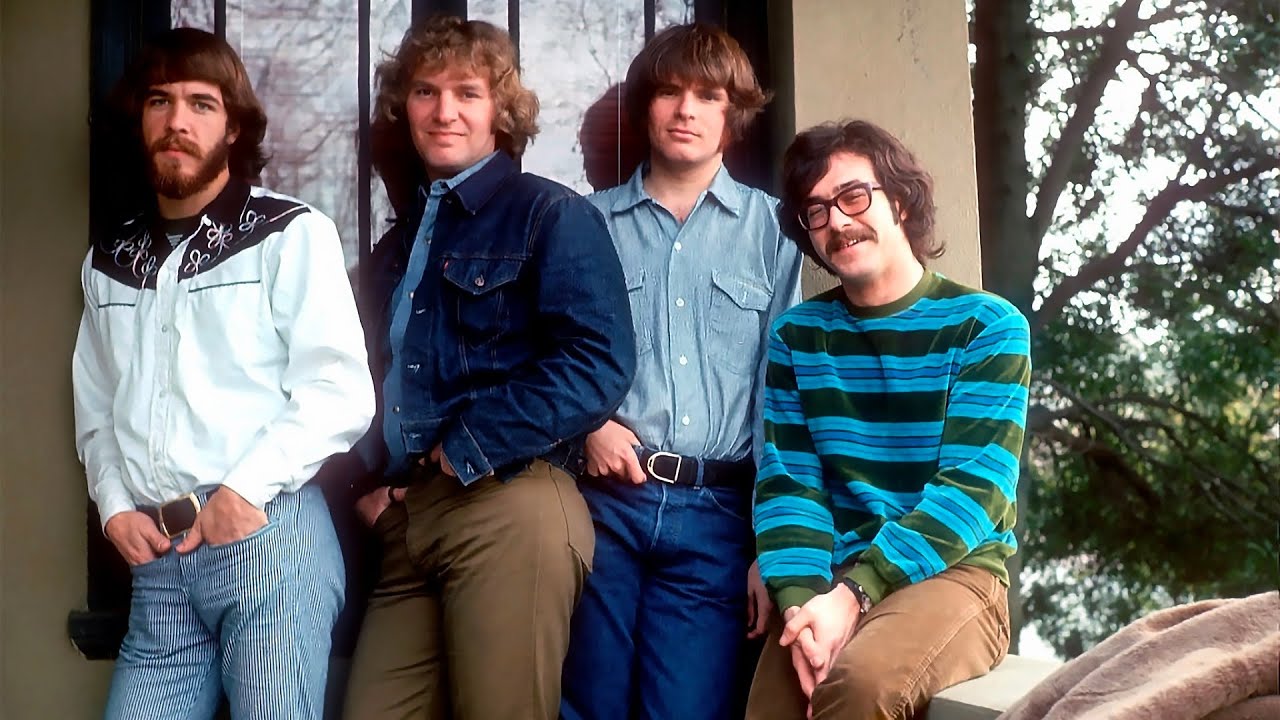
On Mardi Gras, a record shaped by strain and transition, Lookin’ for a Reason lets John Fogerty turn Creedence Clearwater Revival‘s final studio opening into something gentler, dustier, and more revealing than the album’s reputation suggests.
When Creedence Clearwater Revival released Mardi Gras in 1972, the band was no longer the tightly unified force that had driven one remarkable run of albums after another at the end of the 1960s. Tom Fogerty had already left, and the group’s final studio record reflected a new internal balance in which Stu Cook and Doug Clifford also wrote and sang lead on several tracks. That history matters from the first seconds of Lookin’ for a Reason. Written and sung by John Fogerty, the song opens the album not with a blast of swamp-rock urgency, but with a country-leaning ease that feels almost intentionally relaxed, as though he were stepping away from old expectations before the rest of the record even has a chance to speak.
That makes the track more than just a pleasant first cut. It becomes a kind of tonal statement. Mardi Gras has long been one of the most debated albums in the CCR catalog, often discussed through the lens of fatigue, disagreement, and the group’s shifting chemistry. Yet Lookin’ for a Reason does something quietly surprising inside that context: it sounds unforced. There is no sense of overreaching, no attempt to outmuscle the band’s own past. Instead, the song settles into an easy gait, drawing on country phrasing and rootsy plainness in a way that lets Fogerty sound less like a hitmaker defending his ground and more like a songwriter following a familiar back road.
That country pull was never alien to Creedence Clearwater Revival. Even at their most driving, the band carried traces of Southern radio, honky-tonk rhythm, folk storytelling, and old American songcraft. John Fogerty had always known how to thread rural imagery and down-home motion into compact rock records. But Lookin’ for a Reason brings those elements closer to the surface. The song does not chase the compressed force of Green River or Travelin’ Band. It leans into space instead of attack. The melody moves with a loose, open-air swing, and the vocal is delivered with a calm assurance that gives the track its personality. He is not pushing the line. He is living inside it.
There is something especially telling in that restraint. The title alone suggests restlessness, but not panic. It feels like the language of a man circling his thoughts rather than declaring them. That suits the performance. Fogerty sings as if the answer may not arrive all at once, and the arrangement supports that mood by keeping everything grounded and conversational. The result is a song that feels smaller than CCR‘s biggest records in scale, but not in character. It holds attention through texture, timing, and tone. The listener hears a band famous for command choosing, for a moment, to let the road stretch out a little longer.
As a deep cut, Lookin’ for a Reason benefits from not being overexposed. It does not arrive carrying the weight of a familiar anthem. It has room to breathe. That helps modern listeners hear what is distinctive about it. On a record where the division of songwriting and singing has often overshadowed the music itself, this opening track reminds us that Mardi Gras is not only a document of breakup-era tension. It is also a record where different possibilities briefly surfaced. John Fogerty‘s contribution here points toward an earthier, more country-shaped path, one that fits naturally with his larger musical instincts even if it arrives during a period of visible strain.
There is also a certain poignancy in where the song sits. As the first track on the last studio album, Lookin’ for a Reason carries a quiet historical echo whether it means to or not. It opens a final chapter without sounding dramatic about finality. That may be part of its power. Many farewell moments in rock are remembered for spectacle, rupture, or grand statements. This one is remembered, if it is remembered at all, for its lack of noise. It begins with a sense of motion, but not conquest. It sounds like daylight on gravel, a band still playing, still capable of groove and color, even as the larger story is nearing its close.
That is why the song lingers. Not because it tries to compete with Creedence Clearwater Revival‘s most famous work, but because it offers another angle on John Fogerty‘s writing and on the complicated mood of Mardi Gras. Heard today, it feels like a modest song carrying more history than its surface first reveals. There is warmth in it, and distance too. The country flavor softens the edges, but it does not erase the sense of change hanging around the album. If anything, it makes that feeling easier to hear. In the end, Lookin’ for a Reason stands as one of those album tracks that quietly deepens a band’s story: not a grand finale, not a lost anthem, just a graceful, clear-eyed moment at the threshold of the end.
