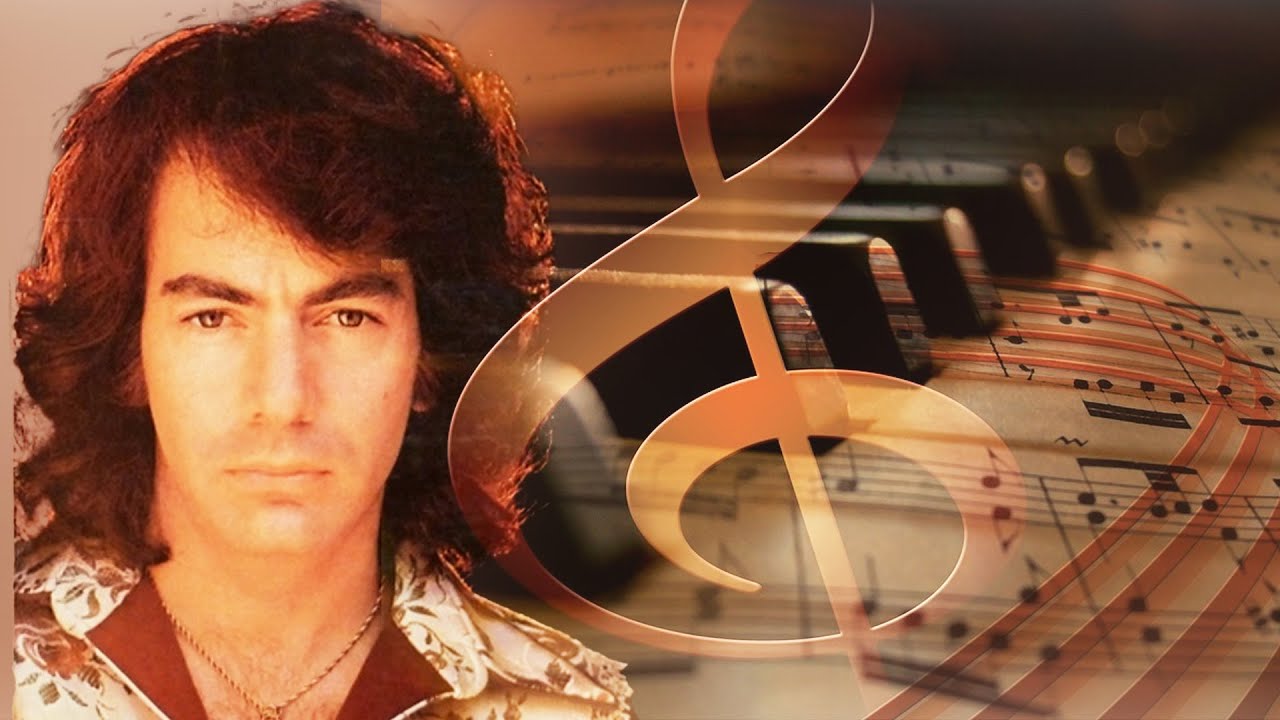
Sometimes the songs that last are the ones that never push their way forward. On Three Chord Opera, Neil Diamond turned inward, and Leave a Little Room for God became one of his gentlest, most revealing late-career moments.
On Neil Diamond’s 2001 album Three Chord Opera, Leave a Little Room for God stands as one of those album tracks that can be easy to pass by at first and difficult to forget once it has settled in. It was never built like one of the towering singles that made Diamond a household voice. There is no oversized dramatic payoff, no obvious radio-first design, no attempt to compete with the grand sweep of his most famous recordings. Instead, it arrives quietly, with the patience of a songwriter who no longer needs to raise his voice to be heard.
That is part of what makes the song so affecting. By 2001, Diamond had long since secured his place in popular music. He had already moved through the eras of Brill Building craft, stadium-sized performance, intimate confession, and polished reinvention. Three Chord Opera came from a later chapter, one in which experience had become part of the sound itself. Even the album title suggests something essential to Diamond’s art: the belief that simple songwriting materials can still hold big emotional weight. In that setting, Leave a Little Room for God feels less like a side note than a private statement tucked into the body of the record.
The title might lead some listeners to expect a heavy-handed spiritual song, but that is not really the space Diamond occupies here. What gives the track its dignity is its restraint. It does not feel interested in preaching. It feels interested in making room, which is a subtler and more human idea. The phrase itself carries humility. It suggests that modern life, pride, ambition, grief, and noise can fill a person up so completely that there is hardly any silence left for wonder, mercy, surrender, or reflection. Diamond approaches that thought not as a public declaration, but as something nearer to a lived realization.
Musically, the song fits the mature atmosphere of Three Chord Opera. The arrangement is measured and uncluttered, allowing the lyric to breathe. Diamond’s voice, deeper and more weathered by this point, gives the song much of its character. He does not sound as though he is trying to persuade anyone. He sounds as though he has considered the subject long enough to understand that certainty is less interesting than honesty. That lived-in tone matters. In younger hands, a title like Leave a Little Room for God could have tilted toward statement or slogan. In Diamond’s voice, it becomes reflection.
That may be one reason the song remains overlooked. Listeners often reach for the obvious milestones in a catalog as large as Diamond’s: the songs tied to radio memory, public sing-alongs, and major career peaks. But album tracks often tell a different truth about an artist. They show what a songwriter chose to keep close rather than what the marketplace chose to magnify. On Three Chord Opera, Diamond was writing from a place of maturity, and maturity rarely announces itself with the same flash as youth. It tends to arrive in songs like this one, where the real power lies in what is held back.
There is also something deeply characteristic about Diamond in the way the song balances the personal and the universal. He was always capable of writing directly, but his strongest work often leaves just enough space for the listener to enter. Leave a Little Room for God does exactly that. Whether one hears the title in religious terms, moral terms, or simply as a plea for humility in a crowded world, the song opens outward. It speaks to exhaustion, to perspective, to the need to preserve some inner space from the endless pressures of being busy, certain, and self-protective.
In that sense, the song feels especially rich within the larger mood of Three Chord Opera. The album belongs to a late-career period in which Diamond seemed increasingly comfortable letting songs unfold without chasing the old formulas too hard. That choice gives the record a reflective texture, and this track may be one of its clearest expressions. It does not ask to be admired for scale. It asks to be heard for truth.
What makes overlooked songs so valuable is that they often reveal the artist without the glare. Leave a Little Room for God may never stand at the center of every Neil Diamond retrospective, but it offers something many bigger songs cannot: the sound of a major writer stepping back from display and choosing clarity over force. There is wisdom in that decision, and tenderness too. The song lingers not because it overwhelms, but because it stays open.
And perhaps that is why it deserves another listen. In a career filled with memorable choruses and public moments, this 2001 Three Chord Opera track reminds us that Neil Diamond also knew how to write for the quieter room inside a person. Not every great song arrives with applause behind it. Some simply wait, speaking softly until the right season of life makes their meaning impossible to miss.
