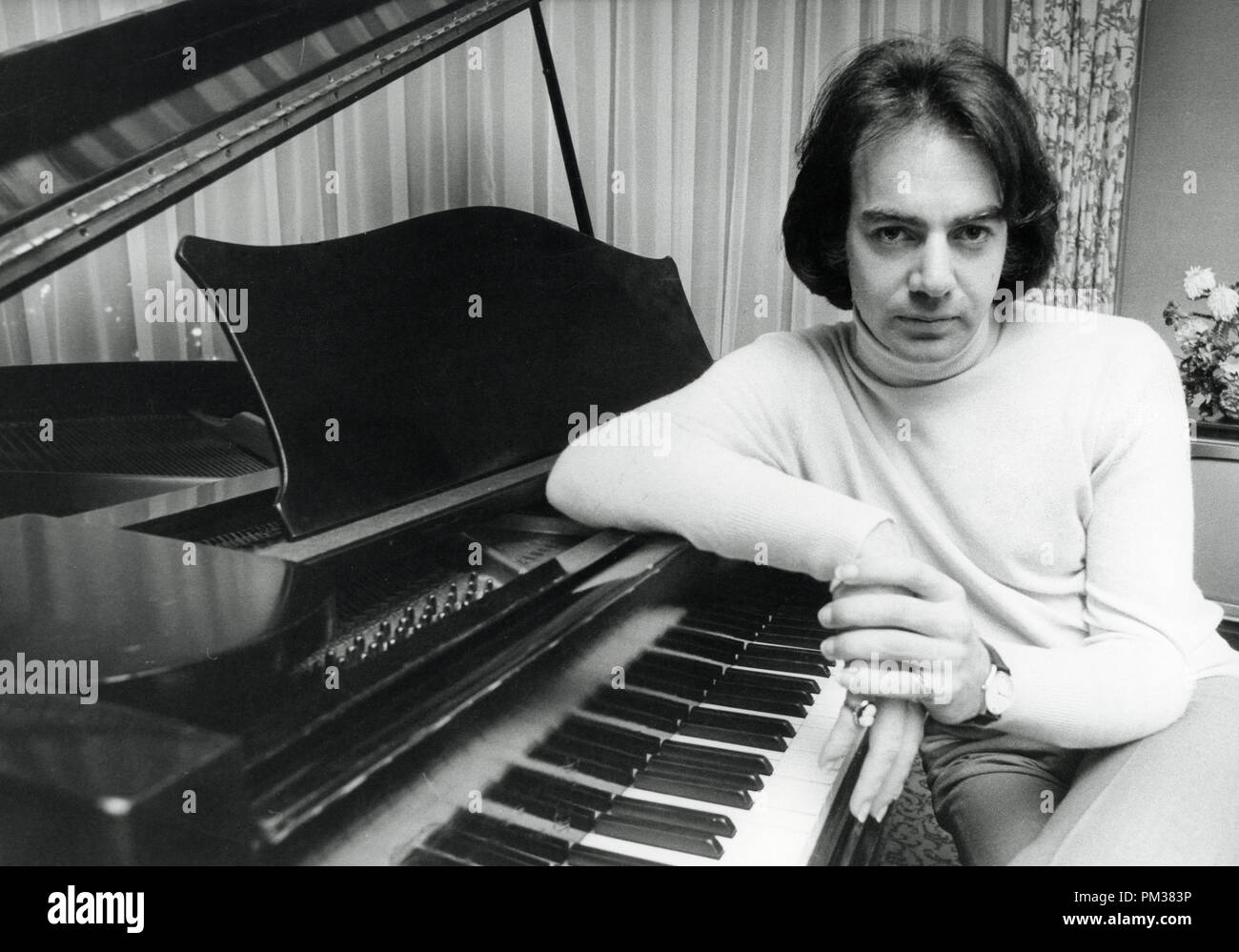
In “Lonely Looking Sky”, Neil Diamond turns a film about flight into something deeply human, letting the Jonathan Livingston Seagull soundtrack hold both wonder and solitude in the same breath.
In 1973, Neil Diamond took on an unusual assignment for an artist already firmly established as a major recording star: he wrote and performed the music for Jonathan Livingston Seagull, the film adaptation of Richard Bach’s hugely popular novella. Within that soundtrack world, “Lonely Looking Sky” stands as one of the most revealing pieces. It is not simply a song attached to a movie. It is part of the movie’s emotional weather, a song that helps explain why this project still occupies such a singular place in Diamond’s catalog. The film asked for uplift, motion, and spiritual reach, but this song adds something more difficult to name. It hears the distance inside aspiration.
That matters because Jonathan Livingston Seagull was never a conventional soundtrack subject. The source material is spare, allegorical, and centered on the idea of striving beyond limitation. For a songwriter like Diamond, whose best work often balances grand melodic sweep with personal yearning, that material offered a natural but risky fit. He was coming off a period in which his voice and ambitions had grown larger, and the success of Hot August Night had shown just how commanding he could be on a big emotional stage. But “Lonely Looking Sky” does not swagger. It reaches upward, yes, yet it also listens to the silence surrounding that reach.
The title alone is quietly brilliant. A sky can suggest freedom, possibility, transcendence. Add the word “lonely,” and the whole emotional color changes. Suddenly the image is no longer only about liberation. It becomes about separation too: the space between where we are and where we want to be, the cost of seeing farther than everyone around you, the strange ache that can live inside beauty. That tension is exactly what makes the song so effective in the soundtrack context. The film is about flight, but the song understands that flight is never just movement. It is also isolation, vision, and longing.
Musically, the performance carries the polished expansiveness that suited Diamond in the early 1970s. The arrangement has lift in it, but it never feels hurried. Instead, it lets the melody travel in broad emotional arcs, giving his voice room to sound reflective rather than merely declarative. That distinction is important. Diamond was one of the great communicators of big feeling, yet here he resists the temptation to overpower the idea. He sings as if the horizon itself is answering back only in fragments. The result is a recording that feels cinematic without losing its human scale.
Heard apart from the film, “Lonely Looking Sky” remains moving because it does not depend entirely on screen imagery to make its point. It works on its own terms. You can hear it as a meditation on ambition, on escape, on the emotional aftertaste of wanting more from life than the ordinary day seems willing to give. But placed back inside Jonathan Livingston Seagull, the song gains an extra layer. It becomes part of a larger spiritual atmosphere, one in which air, light, and motion are not just scenic details but symbols of inner restlessness. Diamond understood that the soundtrack needed more than melody. It needed a sense of searching.
That searching quality is what sets this song apart from the more immediately familiar side of his catalog. A great many Neil Diamond recordings are built to meet the crowd head-on, to invite singalongs, to turn emotion outward until it fills the room. “Lonely Looking Sky” does something subtler. It faces outward toward an immense space and lets the feeling deepen there. The voice is warm, but the mood is not cozy. It is open, wind-touched, and slightly removed, which is exactly right for a song tied to a story about leaving the flock and testing the edge of one’s own limits.
There is also something distinctly early-1970s in the song’s spirit. This was a period when mainstream popular music often made room for introspection, for spiritual language, for the idea that a pop recording could hold private questions without fully answering them. The Jonathan Livingston Seagull project belongs to that moment. It is earnest, searching, and unafraid of scale. “Lonely Looking Sky” captures that sensibility beautifully. It is neither ironic nor naïve. It simply trusts that a song can look upward and still tell the truth about loneliness.
That may be why it stays with listeners who return to the soundtrack after many years. The song does not force its meaning. It lingers. It lets Diamond inhabit a different kind of role, not just pop star or confessor, but guide through a reflective, airborne fable. And in doing so, it reveals something essential about his artistry: beneath the stadium-sized emotion and the unmistakable voice, there was always a performer who understood distance, hunger, and the ache built into hope itself.
So when “Lonely Looking Sky” rises out of the 1973 Jonathan Livingston Seagull soundtrack, it feels like more than a period piece and more than a curious entry in a famous career. It feels like a moment when Neil Diamond found a language spacious enough for wonder, but honest enough to leave the loneliness in place. That is why the song still glows. Not because it promises easy freedom, but because it understands how often the open sky can be both invitation and mirror.
