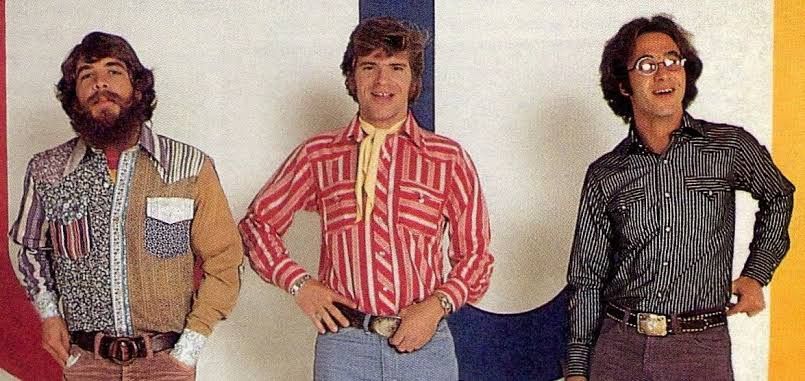
Before Creedence Clearwater Revival had a name, a sound, or a mythology, The Golliwogs cut a small 1965 single that quietly marked John Fogerty’s first real step onto a commercial record.
Released in 1965 on Fantasy Records, “Don’t Tell Me No Lies” occupies a very particular place in American rock history. It was the very first commercial Fantasy pressing to feature John Fogerty, years before the world would know him as the voice, guitarist, and driving force behind Creedence Clearwater Revival. That fact alone gives the single a special pull. This is not a retrospective curiosity dressed up by later fame. It is a real beginning: a young musician on an actual label release, trying to find shape and authority inside an industry that had not yet learned what to do with him.
By this point, the group had already come through earlier incarnations, most notably as The Blue Velvets. When Fantasy Records got involved, the band was given the unfortunate and imposed name The Golliwogs, part of a wider mid-1960s habit of chasing current fashions instead of trusting what was already in the room. The British Invasion was in full swing, labels wanted quick visual hooks, and young American bands were often packaged before they were fully heard. That tension matters when listening to “Don’t Tell Me No Lies”. The record carries one identity on the label, but another is trying to break through the grooves.
Musically, the single does not sound like finished Creedence, and that is precisely why it is worth hearing closely. It belongs to that restless middle ground where garage rock, rhythm and blues, early beat-group energy, and California bar-band toughness all push against one another. The track has a compact, no-frills attack. You can hear the young band’s instinct for momentum, for getting to the point without unnecessary decoration. Even before the signature swamp pulse of later years, there is already something lean in the construction, something impatient with softness. The rhythm section has that forward shove that would later become so natural for Stu Cook and Doug Clifford, and the guitar work points toward the harder-edged directness that John Fogerty would eventually refine into a style of his own.
What gives the single its emotional weight is not polish but emergence. So many origin stories are told backward, with every early detail treated like a prophecy. “Don’t Tell Me No Lies” feels more human than that. It sounds like a band still learning how much force it can generate, and like a young John Fogerty beginning to move from participant to central presence. The confidence is not yet monumental. It is more interesting than that: it is forming. You hear discipline before myth, effort before certainty, instinct before full command.
There is also something moving about the simple fact that this was a commercial pressing. Not a rehearsal tape passed among friends, not a private acetate with local legend attached to it afterward, but a record made to leave the room and meet the public. That changes the feeling of it. A commercial Fantasy Records release means the moment became tangible: cataloged, sold, handled, stacked in stores, carried home. For collectors and longtime followers of Fogerty’s path, that physical reality matters. It marks the point where possibility stopped being private and entered the marketplace, however modestly.
Listening now, the record also reveals how strange and accidental great careers can look at the start. The name The Golliwogs never fit the seriousness or grit that would later define this group’s best work. The presentation was temporary; the musical instincts were not. Beneath the borrowed image, you can hear habits that would stay with John Fogerty: economy, rhythmic clarity, a distrust of wasted motion, and a feel for songs that speak plainly but hit hard. Those qualities would become far more focused later, but they are already beginning to gather here.
That is why “Don’t Tell Me No Lies” remains more than a footnote from the pre-Creedence years. It lets us hear a future giant before history had arranged the spotlight. It catches John Fogerty at the unglamorous but deeply revealing stage when talent is still being shaped by circumstance, label decisions, local scenes, and sheer repetition. The record does not need to sound fully transformed to matter. Its value lies in the almost-there quality, in the sense that something durable is being assembled just beneath the surface. In that way, this 1965 single is not only an early artifact. It is the sound of direction arriving.
