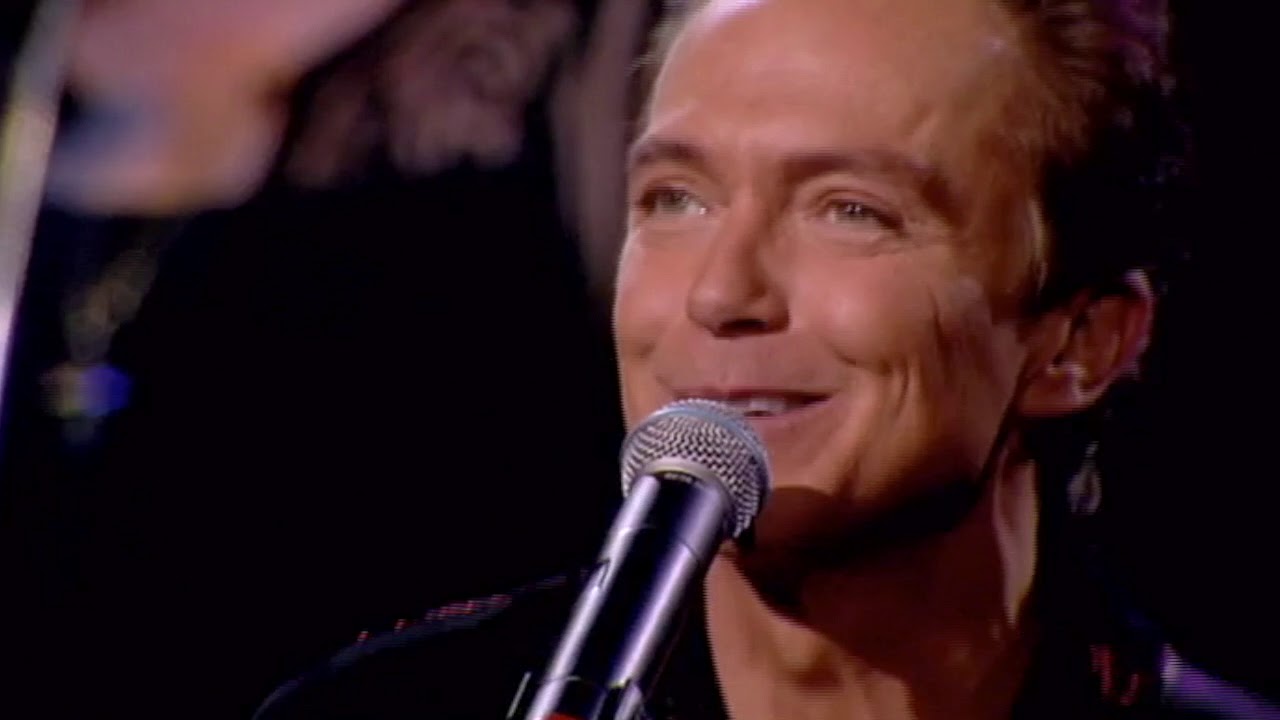
With If I Didn’t Care, David Cassidy turned a timeless standard into something quieter, older, and far more revealing than his early fame ever allowed.
David Cassidy’s If I Didn’t Care is not remembered because it stormed the charts. In fact, unlike the song’s immortal original hit version, Cassidy’s recording was not a major standalone chart success in either the United States or the United Kingdom. That matters, because the true power of this performance lies somewhere deeper than numbers. It belongs to the later, more reflective chapter of David Cassidy’s career, when he was no longer singing from inside the bright machinery of teen-idol fame, but from a place that sounded lived in, bruised, and emotionally honest. For listeners who knew him first through The Partridge Family and the frenzy of the early 1970s, this recording can feel almost startling. It asks you to hear not the poster on the bedroom wall, but the man who came after.
The song itself has a pedigree that reaches far beyond Cassidy. If I Didn’t Care was written by Jack Lawrence and became one of the great American hits of 1939 when The Ink Spots recorded it. Their version helped define a whole mood of popular music: intimate, yearning, patient, and unafraid of tenderness. It was the kind of song that did not need to raise its voice to leave a mark. The melody moved gently, but the emotional stakes were enormous. At its center is a deceptively simple thought: love reveals itself not through grand speeches, but through the ache of caring too much to pretend otherwise. That idea has survived every shift in style, fashion, and production because it still feels true.
That is precisely why David Cassidy was such an interesting artist to take it on. He could have treated the song as a nostalgic exercise, a pleasant revisit to an old standard. Instead, he approached it as a piece of emotional evidence. His reading does not lean on youthful sweetness alone. There is softness in it, certainly, but also restraint, a sense of someone choosing his phrases carefully, as if he understands that the song is most effective when nothing is overplayed. In Cassidy’s hands, If I Didn’t Care becomes less a period piece than a confession heard years later, after life has had time to test every romantic promise.
And that is where the song’s meaning deepens. On paper, the lyric is direct and almost modest. It is not cluttered with elaborate imagery. It simply circles one essential truth: if the feeling were not real, why would it hurt this much, why would it matter this much, why would the heart keep returning to it? Sung by a younger voice, that sentiment can sound dreamy and idealized. Sung by a more mature David Cassidy, it carries another shade entirely. It suggests experience, disappointment, longing, and perhaps even the private fatigue of someone who has been seen by millions but not always fully known. The result is moving because it does not beg for attention. It earns it quietly.
There is also a larger story here about image and time. For years, David Cassidy had to push against a public identity that froze him in one era. The screaming crowds, the magazine covers, the instant recognizability of his youth were blessings in one sense, but they also created a frame that could be difficult to escape. Songs like If I Didn’t Care showed what happened when he stepped outside that frame. Here was a singer with phrasing, control, and sensitivity, interpreting material that demanded emotional credibility rather than pop momentum. No, it was not the kind of recording built to dominate radio in a new decade. But that is exactly why it has endured for listeners who value nuance over noise.
What makes the performance especially memorable is its refusal to oversell the emotion. Many singers approach standards by trying to enlarge them. Cassidy does almost the opposite. He trusts the craftsmanship of the song. He allows space around the melody. He lets the lyric carry its own weight. That choice gives the recording a grown-up elegance. You hear affection in it, but also distance. You hear sincerity, but not innocence. It is a love song, yes, though not in the breathless sense. It sounds more like someone standing still long enough to admit what remains after pride has fallen away.
For listeners returning to David Cassidy after many years, that may be the most affecting part of all. If I Didn’t Care reminds us that artists we thought we understood at one stage of life often reveal something entirely different later on. The familiar face remains, but the voice changes its weather. The meanings change with it. A song once heard as simply romantic begins to sound like endurance. A singer once treated as a passing phenomenon begins to sound like a serious interpreter of feeling. That kind of re-discovery is one of music’s quiet gifts.
So while David Cassidy’s If I Didn’t Care did not leave behind a headline-making chart position of its own, it left something many hit records never do: a lingering sense of truth. It stands as a reminder that some performances arrive not to conquer the moment, but to outlast it. Heard now, with all the years that have gathered around both the song and the singer, it feels less like a commercial move and more like a revelation. Not loud. Not flashy. Just honest. And sometimes, especially with a song like this, honesty is the part that stays.
