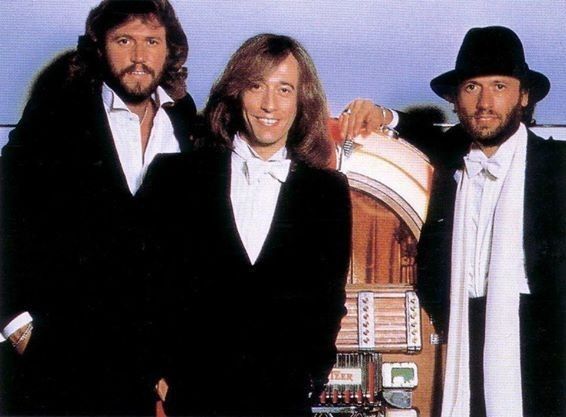
The power of Stayin’ Alive was never just in its beat, but in its refusal to give in. In the Bee Gees promo 12″ version, that refusal feels bigger, colder, and somehow even more human.
There are songs that belong to their era, and then there are songs that seem to outlive the era that made them. “Stayin’ Alive” by the Bee Gees is one of those rare records. Released in late 1977 from the landmark Saturday Night Fever soundtrack, it did far more than soundtrack a cultural craze. It reached No. 1 on the Billboard Hot 100 in the United States, where it stayed for four weeks in early 1978, and it climbed to No. 4 on the UK Singles Chart. Those numbers matter because they confirm what listeners already felt: this was not merely a hit single, but a song that seemed to step out of the speakers with absolute certainty.
And yet the promo 12″ version tells a slightly different story from the familiar 7-inch radio single. It belongs to the world that helped make disco more than a genre: the world of club sound, DJ culture, dance-floor architecture, and records cut to be felt in the room as much as heard in the ear. A promotional 12-inch pressing was never just a larger copy of the same song. In the disco years, that format meant presence. It meant deeper grooves, stronger low end, more physical impact, and a sense that a record could stretch its shoulders and breathe. For “Stayin’ Alive”, that matters enormously, because this was always a song built on tension as much as melody.
The backstory remains one of the great moments in pop history. Barry Gibb, Robin Gibb, and Maurice Gibb wrote the song during the extraordinary creative burst that produced the music for Saturday Night Fever. Producer Robert Stigwood needed songs that could capture the mood of urban nightlife, longing, toughness, and release. The Bee Gees answered with music that was sleek on the surface but carried a nervous pulse underneath. “Stayin’ Alive” was never simply about dancing. It was about endurance. About moving through pressure. About carrying your own style when the world seems to push back from every side.
That is why the lyric still lands so cleanly. Lines like “Life goin’ nowhere, somebody help me” are not hidden away in the song; they sit right there inside one of the most famous grooves ever recorded. That contrast is part of its brilliance. The song sounds cool, but it is not carefree. It sounds stylish, but it is not shallow. The narrator is not bragging from a position of ease. He is pushing forward through strain, through noise, through the demands of the city and the demands of life itself. When Barry Gibb’s falsetto rises above the track, it does not float away from the rhythm. It cuts through it.
Musically, the record is one of the Bee Gees’ finest constructions. The guitar figure is clipped and instantly recognizable. The bass line is disciplined but alive. The rhythm section gives the track its relentless march. One of the most discussed details in the song’s creation is its drum feel: when the session faced complications, the team used a looped drum passage to preserve that unblinking pulse, a studio decision that helped make the groove feel almost mechanical in its steadiness. That steadiness is one reason the song never collapses under its own glamour. It keeps walking. It keeps insisting.
Now place that same architecture into the promo 12″ format, and the emotional center of the song becomes even clearer. On a promotional disco pressing, “Stayin’ Alive” is not reduced to nostalgia. It reclaims its original physicality. The beat has more room. The rhythmic pocket feels wider. The song’s cool turns sharper, and its anxiety becomes easier to hear. This is why collectors and longtime listeners continue to care about these promotional versions. They preserve not only the song, but the environment around it: the clubs, the booths, the huge speakers, the city-night sensation that disco records were designed to command.
It also helps explain why the song became inseparable from the image of John Travolta striding through Brooklyn in the opening sequence of Saturday Night Fever. That scene gave the record one of cinema’s most iconic pairings of movement and sound, but the song already contained that walk inside it. The promo 12″ version simply lets the stride feel longer. It emphasizes the record’s true strength: not sparkle for its own sake, but momentum with meaning.
For the Bee Gees, this was one of the recordings that transformed them from admired hitmakers into defining voices of an age. They had already proven their songwriting brilliance in earlier years, but “Stayin’ Alive” placed them at the center of a worldwide cultural shift. Even so, what keeps the record alive is not fashion, and not even fame. It is emotional recognition. Nearly everyone knows what it means to keep moving with dignity when things feel uncertain. Nearly everyone knows the performance required just to get through the day looking composed.
That is why the promo 12″ version is more than a collector’s footnote. It reminds us that this song was built for impact, yes, but also for resilience. In a larger format, with more space around its rhythm, “Stayin’ Alive” reveals its full character: polished yet restless, elegant yet streetwise, danceable yet quietly defiant. Decades later, it still sounds like a person stepping into the night and deciding, with style and with nerve, not to be defeated.
