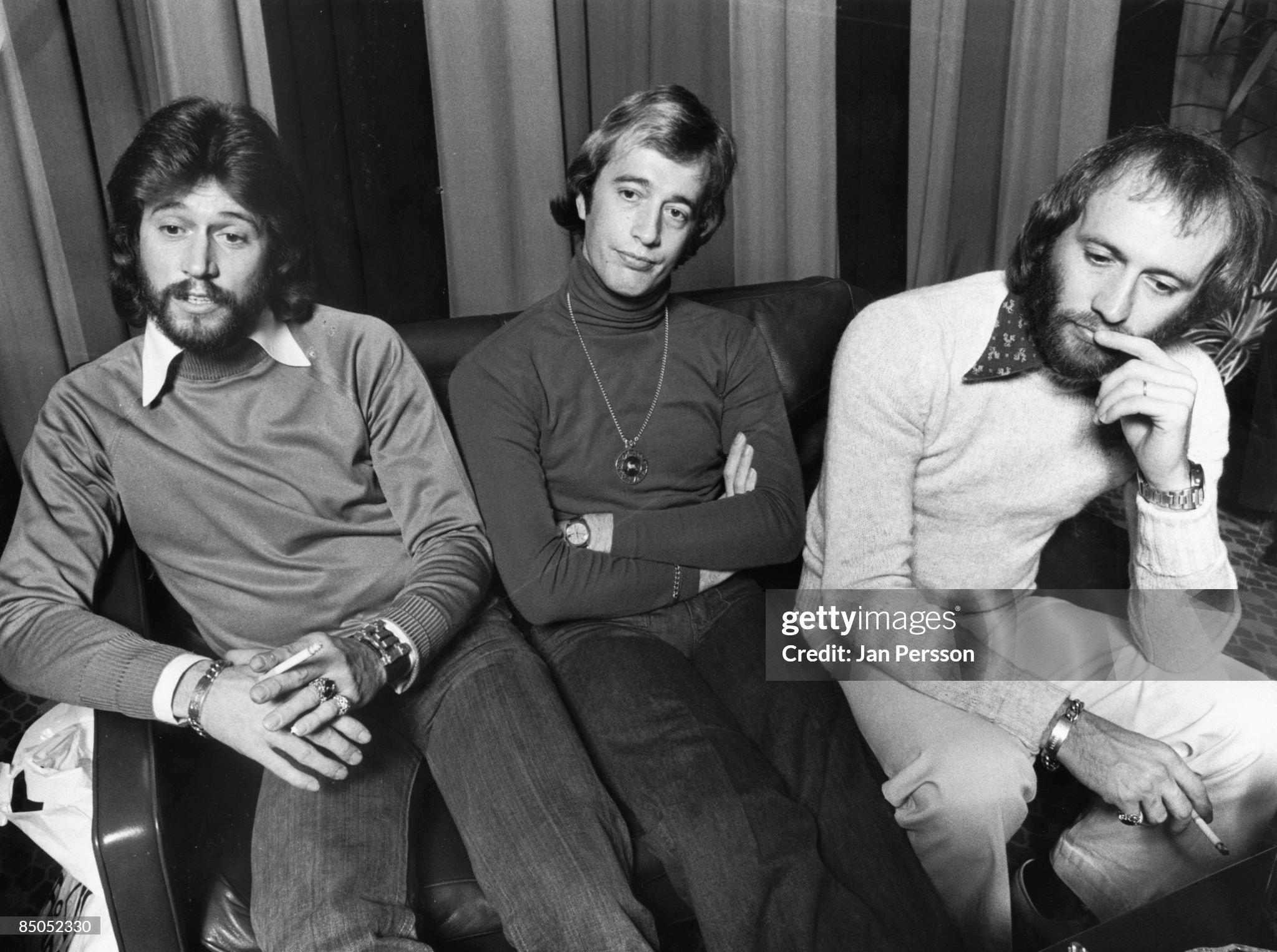
Long before disco turned the Bee Gees into global giants, Claustrophobia caught them in a far more fragile moment — young, gifted, and already singing as if the walls were closing in.
There is something deeply moving about hearing the Bee Gees before the polished legend took shape. Before Saturday Night Fever, before the immaculate falsetto era, before the world knew just how extraordinary Barry, Robin, and Maurice Gibb would become, there was Claustrophobia — an early Australian single released in 1964 on the Leedon label. It was not a major chart breakthrough, and it did not become one of the big national hits that would later define their career. In truth, its commercial impact was modest, and it is remembered less for chart placement than for what it reveals: the sound of a remarkable group still pressing against the edges of obscurity.
That is part of what makes Claustrophobia so fascinating now. It belongs to the Australian chapter of the Bee Gees story, when the brothers were still teenagers, still absorbing the energy of British beat music, still shaping the vocal blend that would one day become unmistakable. The record came from a period when they were writing constantly, performing relentlessly, and trying to turn raw promise into permanence. Even without the worldwide fame that would soon follow, the emotional instincts were already there. You can hear ambition. You can hear tension. Most of all, you can hear a young group trying to find air.
The title itself is striking. Claustrophobia is not the name of a carefree pop song, and that alone sets it apart from many early-1960s beat records. Whether heard literally or metaphorically, the song suggests confinement — the feeling of being hemmed in, emotionally cornered, unable to move freely. For a group of young brothers trying to break out of the limits around them, that idea feels almost prophetic. The song can be heard as teenage frustration, romantic pressure, or the broader ache of wanting more from life than your present circumstances seem willing to allow. That sense of inward pressure would later become one of the great emotional signatures of the Bee Gees.
Musically, Claustrophobia belongs to the group’s pre-international era, with the beat-group drive of the time still very much in its bones. It does not sound like the Bee Gees of Main Course or Spirits Having Flown, and that is exactly why it matters. This is a leaner, more youthful performance, built on urgency rather than elegance. Yet even here, the harmony blend is beginning to show its power. The brothers already understood how to create ache inside a melody, how to let voices lean against one another until the feeling became larger than the arrangement itself. That gift would stay with them through every reinvention.
The story behind the song is inseparable from the larger story of the Bee Gees in Australia. After emigrating from England as children, the Gibb brothers grew up performing on local stages, radio, and television, steadily building a reputation as unusually gifted young entertainers. By the time Claustrophobia arrived, they were no longer simply talented boys with good harmonies. They were becoming serious recording artists, testing how far their songwriting and identity could go. Songs like this were stepping stones — not yet career-defining hits, but crucial markers in the evolution of a group learning how to turn private feeling into public sound.
And that is why the song still lingers. For longtime listeners, Claustrophobia is not just an early curiosity. It is an emotional clue. It hints at the melancholy, sensitivity, and vulnerability that would later deepen in songs such as Massachusetts, I Started a Joke, and so many others. Even when the style changed, the emotional core of the Bee Gees remained rooted in longing, tenderness, and the tension between outward success and inward unrest. In that sense, this little-known early single is not separate from the later masterpieces. It is part of the same river, just nearer the source.
It is also worth remembering that many early records do not survive in public memory because they were huge hits. Some survive because, with the benefit of time, they tell the truth more plainly. Claustrophobia never conquered the charts in the way later Bee Gees classics would, but it has endured among devoted listeners because it captures something unguarded. There is no mythology needed to make it meaningful. The meaning is already there in the title, in the restless delivery, in the sense that these young artists were already singing from inside an emotional squeeze they had not yet fully escaped.
So when people return to Claustrophobia now, they are hearing more than an obscure early single. They are hearing the Bee Gees before the world opened wide for them — before the arenas, before the immaculate production, before the names became permanent fixtures in popular music history. And perhaps that is why the song can feel so poignant. It reminds us that even the most luminous careers begin in tight spaces, in uncertain rooms, in moments when talent is real but the future is still unseen. In Claustrophobia, the walls are close. But so is the first echo of greatness.
