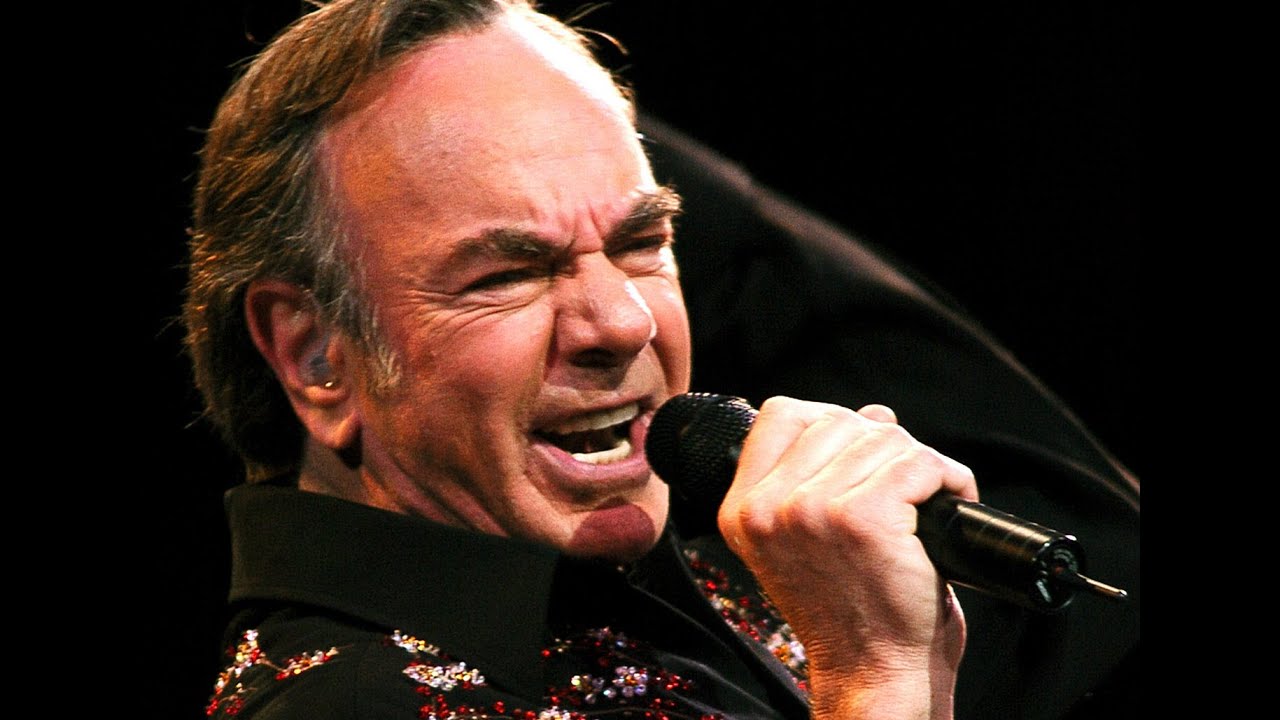
On Lovescape, Neil Diamond turns Don’t Turn Around from a farewell song into a study of pride trying not to tremble.
Neil Diamond recorded Don’t Turn Around for his 1991 album Lovescape, giving his own reading to a song written by Diane Warren and Albert Hammond. That detail matters, because this is not just another familiar title passing through another famous voice. By the time Diamond placed it inside the polished adult-pop world of Lovescape, the song already carried more than one identity. Tina Turner had recorded it in the 1980s, Aswad had taken it into a warm reggae setting and made it a major British hit in 1988, and Ace of Base would later bring it to a different pop audience in the 1990s. Diamond’s version sits in a fascinating middle space: after the song had proved its strength, but before it became even more widely known to a new generation.
What makes Diamond’s interpretation worth returning to is not that he tries to out-sing the other versions, or bend the song into something unrecognizable. He does something more restrained. He brings the lyric closer to the emotional territory that had always made his best performances feel human: the place where romance, pride, loneliness, and self-command all lean against one another. Don’t Turn Around is built on a contradiction. The speaker is telling someone to leave, but also asking not to be seen in the moment of collapse. It is not a simple plea for love to stay. It is a request for dignity at the instant dignity becomes hardest to maintain.
That contradiction suits Neil Diamond more naturally than it might first appear. His voice has always carried a certain public strength, a broad-shouldered tone that can fill a room without sounding casual. Yet beneath that size there is often a private ache, especially when he sings from the edge of separation. On the Lovescape recording, the arrangement gives him a smooth early-1990s setting: controlled rhythm, clean production, a sense of adult-contemporary polish rather than raw confession. But instead of weakening the song, that polish creates an emotional frame. The music seems composed; the lyric is not. The surface holds itself together while the center quietly gives way.
That is the emotional key to Diamond’s cover. In other hands, Don’t Turn Around can become a dramatic anthem of survival or a sleek pop single about moving on. In Diamond’s hands, it becomes more like a final conversation delivered without looking directly at the wound. He does not need to push every line toward maximum anguish. His strength is in the tension between what the words admit and what the singer refuses to show. The title phrase itself becomes less like an instruction and more like a fragile boundary: do not look back, because if you do, the performance of control may not last.
The placement of the song on Lovescape also gives it a particular resonance within Diamond’s career. By 1991, he was no longer the young Brill Building songwriter, no longer only the arena figure associated with sweeping choruses and stage-lit intensity. He was an established artist working within a changing pop landscape, where production styles were shifting and songs often traveled from one singer to another, collecting new meanings along the way. Covering a Diane Warren and Albert Hammond composition allowed him to step into a contemporary songwriting language while still filtering it through his own long history with emotional directness.
There is also something revealing about hearing Diamond sing a song so closely associated with restraint. Much of his most recognizable work reaches outward; it invites the crowd in, turns memory into communal feeling, makes a chorus feel almost architectural. Don’t Turn Around, by contrast, turns inward. Its drama is not in a grand farewell gesture, but in the refusal to be witnessed breaking. That makes his vocal choices feel especially important. The baritone weight is still there, but the performance works best when it suggests that the singer is measuring himself, keeping just enough distance from the pain to survive the line.
As a cover interpretation, Diamond’s 1991 Lovescape version reminds us how durable songs change shape depending on who is carrying them. The same melody can become a reggae hit, a pop memory, a soul-tinged declaration, or, in this case, a dignified admission from a singer whose greatest gift was often making large emotions sound personally owned. He does not erase the song’s previous lives. He adds another room to them.
That is why this recording still has a quiet pull. It is not the loudest version of Don’t Turn Around, and it does not need to be. It listens to the pride inside the lyric and lets the vulnerability remain partly hidden, which is exactly where the song hurts most. In Diamond’s hands, the farewell is not a door slammed shut. It is a man standing still, asking for one last mercy: leave if you must, but do not turn the parting into a spectacle.
