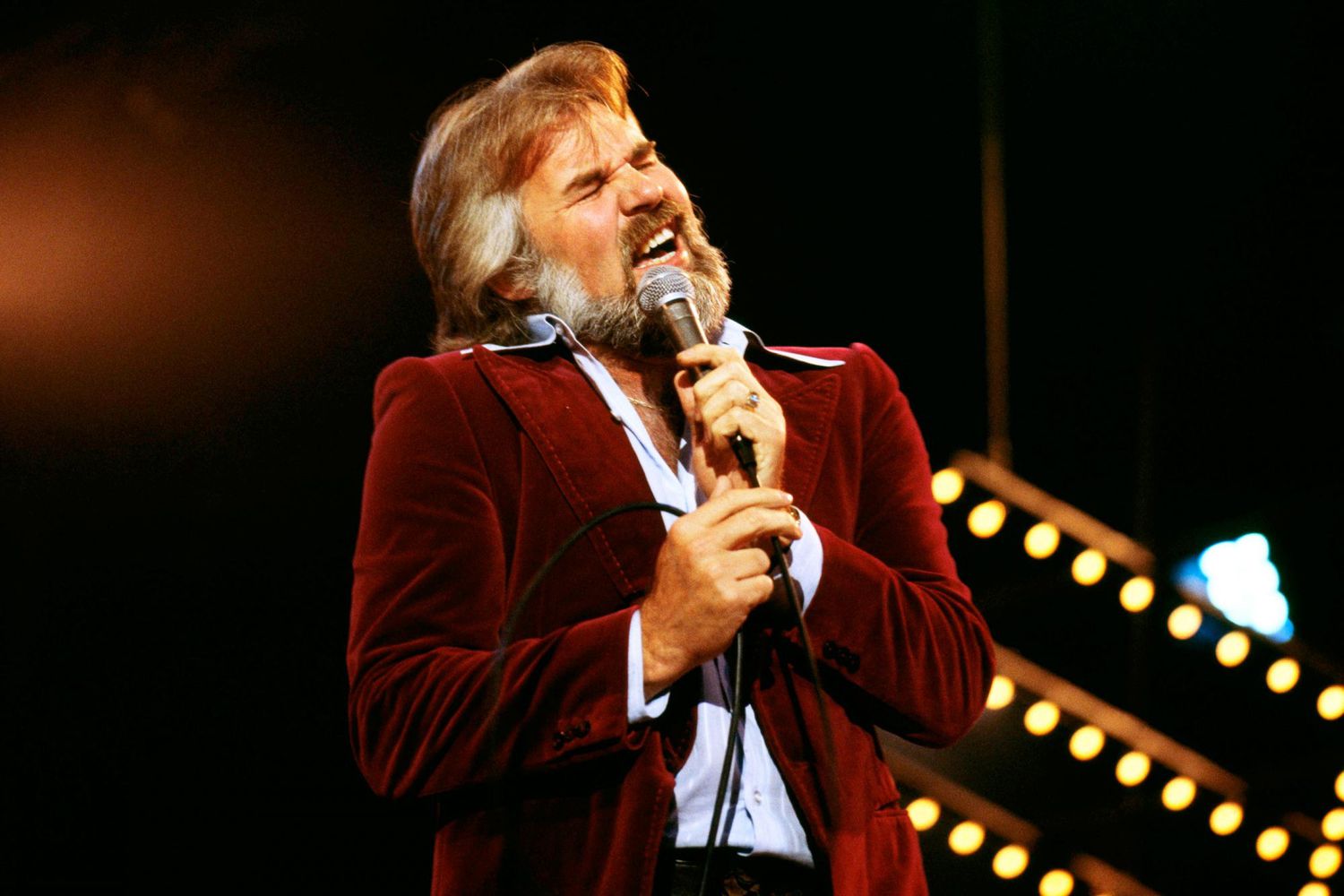
Kenny Rogers turned a county-wide shame into a tense country parable about restraint, love, and the price of finally fighting.
In 1979, Kenny Rogers released Coward of the County on his album Kenny, carrying forward the story-song power that had already made him one of country music’s strongest crossover voices. Written by Roger Bowling and Billy Edd Wheeler and produced by Larry Butler, the recording became one of Rogers’s defining hits, reaching country listeners first and then traveling far beyond the usual borders of the genre. But its staying power has never depended only on chart success. It rests in the way Rogers tells the story: calmly, patiently, and with enough tension in his voice to make every verse feel like a door slowly closing.
Coward of the County belongs to a country tradition that values narrative as much as melody. It is not simply a song about a fight. It is a song about a promise, a public reputation, and the hard difference between avoiding violence and being unable to protect what matters. The central figure, Tommy, is known around the county as a man who will not stand up for himself. The insult follows him so completely that it becomes almost a second name. Yet the narrator, Tommy’s uncle, keeps the story from turning into a simple judgment. From the beginning, he suggests that the county may have read Tommy wrong.
That is where the song’s emotional machinery begins. Tommy’s father dies in prison, and before his death he leaves his son with a warning born from his own ruined life. The message is plain country wisdom: walk away from trouble when you can, and do not mistake mercy for weakness. Rogers delivers that part with a grave, almost fatherly softness. He does not rush it or decorate it. He lets the words sit in the air like advice passed across a kitchen table, the kind of advice that carries both love and regret.
The arrangement helps build that feeling. The recording is polished, but it is not crowded. A steady acoustic foundation gives the song its spine, while the rhythm moves with the controlled pace of someone telling a hard family story from memory. The instruments do not announce tragedy too early. They hold back, giving Rogers room to shape the verses in his conversational style. His phrasing is crucial: he sounds less like a singer performing a drama than a witness trying to report it fairly. That restraint is what makes the narrative feel tense. The listener can sense the pressure building long before the story breaks open.
Rogers had a rare gift for making a song’s central character feel both ordinary and mythic. In The Gambler, he found philosophy in a train-car conversation. In Coward of the County, he finds moral conflict in a small community’s cruel nickname. Tommy is not introduced as a hero. He is introduced as a man under watch, someone whose refusal to fight has become public entertainment. That detail gives the song its country realism. Small towns can remember kindness, but they can also remember shame, and a label can stick to a person longer than the truth does.
The song’s most difficult turn comes through Becky, the woman Tommy loves. When the fictional Gatlin boys harm her, the story moves from ridicule into violation, and the father’s lesson is tested in the harshest possible way. Rogers does not sing this section with theatrical excess. He keeps the tone controlled, which makes the moment more unsettling. The drama comes from the silence around it, from what is implied, and from the terrible knowledge that Tommy’s lifelong restraint has now been forced into a new meaning. The question is no longer whether he is brave enough to fight. The question is whether the promise he made can survive a world that has crossed a line.
That tension is what separates Coward of the County from a simple revenge ballad. The final confrontation does not erase the earlier wisdom. It complicates it. Tommy’s violence is not presented as casual toughness or barroom pride. It arrives as the moment when a man who has avoided trouble all his life decides that walking away is no longer the same thing as doing right. The song’s famous moral reversal works because Rogers has spent the whole recording teaching the listener to respect Tommy’s self-control. By the time Tommy acts, the old insult has already begun to sound foolish.
As a 1979 recording, the song also reflects a particular moment in country music. Rogers was bringing country storytelling to mainstream radio with smooth production, clear hooks, and a voice that could welcome listeners who might not have grown up with honky-tonk records. Yet Coward of the County never loses its country bones. Its power comes from a family vow, a rural reputation, a love put in danger, and a final line that turns a father’s lesson over in the listener’s hands. The song reached No. 1 on the Billboard country chart and became a major crossover hit, and it later inspired a 1981 television film starring Rogers, proof that its plot had taken root in the public imagination.
Still, the recording itself remains the strongest version of the story because of how much it leaves to the voice. Rogers does not sound eager to deliver the ending. He sounds burdened by it. That is an important distinction. The best country story songs do not simply tell us what happened; they make us feel the weight of what happened after the last verse ends. In this case, the weight is Tommy’s broken promise, Becky’s pain, the father’s shadow, and a county that finally has to reconsider the man it mocked.
More than four decades later, Kenny Rogers’s Coward of the County still carries the quiet force of a tale told on a long drive after dark, when the road is empty enough for hard memories to speak. Its acoustic tension, measured vocal, and moral unease keep it from settling into easy triumph. It asks an old country question in a plainspoken way: how much can a good man bear before peace becomes surrender? Rogers never answers with a speech. He lets Tommy’s story answer, and the silence around that answer is what keeps the song alive.
