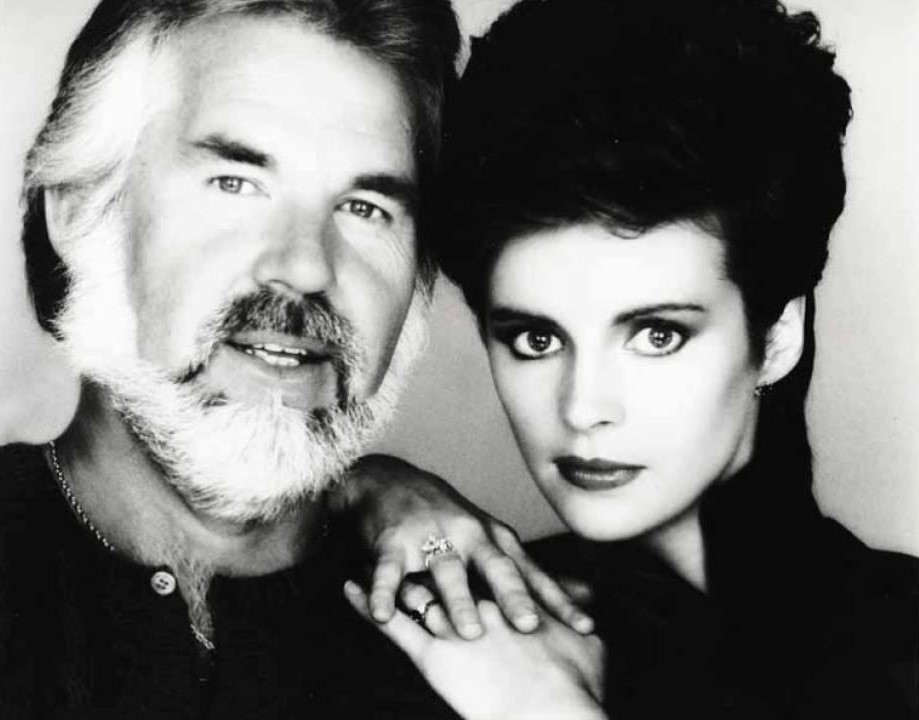
In Kenny Rogers’ hands, “The Gambler” became a quiet lesson in timing, restraint, and the wisdom to walk away.
Kenny Rogers released “The Gambler” in 1978 as the title track of his album The Gambler, turning a song written by Don Schlitz into the recording most closely associated with his name. Produced by Larry Butler, the single reached No. 1 on the country chart, crossed into the pop Top 20, and later earned Rogers a Grammy Award for Best Male Country Vocal Performance. Those facts explain its reach, but not entirely its hold. The deeper story lies in how Rogers made a carefully built narrative sound like advice being offered across a small table.
By 1978, Rogers was already familiar to listeners beyond country radio. He had moved from the pop and folk-rock world of The First Edition into a solo career that found an unusually welcoming space between country, adult contemporary, and mainstream pop. “Lucille” had already shown how effectively his voice could carry a story with plainspoken gravity. But “The Gambler” gave that gift a sharper shape. It did not simply place Rogers inside a story; it gave him a role that seemed to fit his public voice so naturally that the character and the singer became difficult to separate.
The song’s setting is simple and almost cinematic: two tired travelers, a train, a gambler who recognizes the moment to speak. Schlitz’s writing has the compactness of a fable. Nothing is overexplained. The gambler does not need a biography, and the narrator does not need a dramatic confession. The lesson arrives through the language of cards, but its usefulness extends beyond the game: hold on, let go, leave, survive. The song’s power comes from the way it turns judgment into rhythm. Its famous chorus is memorable not because it is complicated, but because it reduces hard-earned experience to words anyone can understand.
Rogers’ interpretation is the reason that lesson feels lived-in rather than merely clever. He does not sing the verses as if he is performing a character sketch. His delivery is measured, warm, and lightly weathered, with a conversational patience that allows each line to land without force. There is authority in the voice, but not intimidation. He sounds less like a man commanding attention than someone who has learned that quiet speech can travel farther than a raised one.
The arrangement supports that restraint. A steady country-pop pulse keeps the song moving like the train in its opening image, while the acoustic textures and clean production leave room for the narrative to breathe. The chorus expands just enough to become communal without losing the intimacy of the verses. Background voices and instrumentation lift the refrain, but they do not turn it into spectacle. The recording understands that the central drama is not external action; it is recognition. A listener hears the gambler’s advice and begins to place it against private decisions, disappointments, risks, and exits.
That balance helped “The Gambler” travel across formats. Country audiences heard the tradition of the story-song, with its clear moral architecture and memorable character. Pop listeners could enter through the polished production, the singable refrain, and Rogers’ relaxed command. The recording belongs to a late-1970s moment when country music was increasingly comfortable moving through softer, more expansive arrangements, and Rogers became one of the artists who made that crossing feel natural rather than calculated.
Its signature status grew because the song did not stop at radio. In 1980, Rogers starred in the television film Kenny Rogers as The Gambler, and later sequels extended the association between the singer and the card-playing figure his recording had made famous. Yet the song’s place in his career cannot be explained only by branding or visibility. Many hits become attached to artists; fewer seem to clarify them. “The Gambler” distilled qualities that Rogers often projected at his best: calmness, approachability, emotional control, and a kind of masculine tenderness that did not need to announce itself.
There is an irony in a signature song written by someone else. But popular music has always depended on the meeting point between composition and interpretation. Schlitz gave the song its architecture; Rogers gave it its human temperature. In another voice, the gambler might have sounded theatrical, sly, or hardened. Rogers made him reflective. The advice did not arrive as a trick of the trade. It arrived as a principle of living with consequences.
That is why “The Gambler” still feels larger than its setting without needing to escape it. The train, the cards, the weary exchange between strangers — all remain intact. But inside that compact scene is a discipline that listeners recognize: the courage to choose, the humility to stop, the wisdom to understand that not every loss is defeat and not every victory is worth pursuing. A career-defining song does not always have to show an artist at their loudest. Sometimes it reveals the lasting force of a voice that knows exactly when to speak, and when to let the silence finish the lesson.
