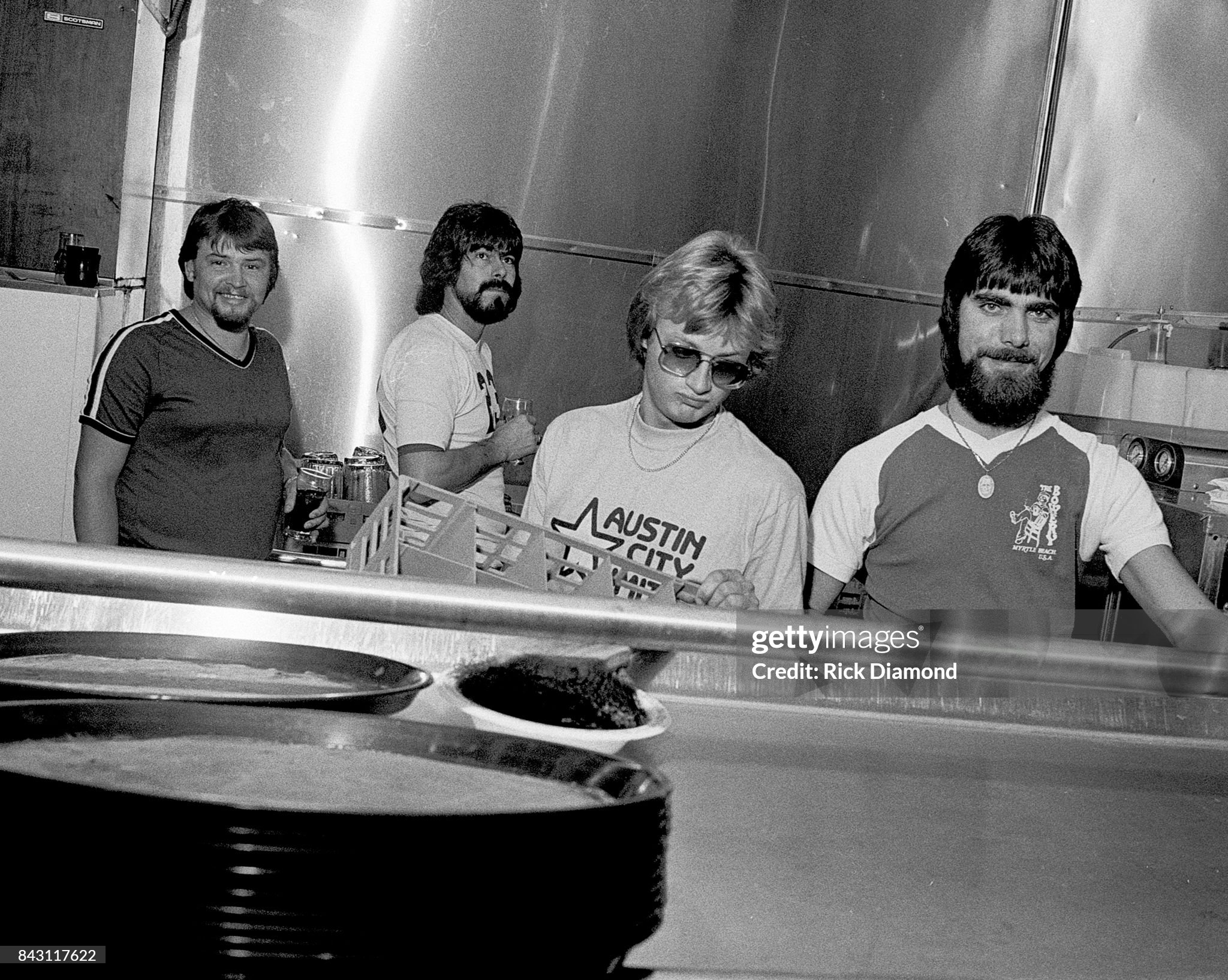
In 1984, Alabama turned a trucker’s long road into a family chorus country radio could hold close.
Released in 1984 as a single and the title track from Alabama’s album Roll On, “Roll On (Eighteen Wheeler)” was written by Dave Loggins and became one of the group’s defining country radio hits of the decade. It arrived during a period when Alabama had already changed the sound of mainstream country with a band identity built on close voices, road-tested musicianship, and a clean country-pop polish that still left room for working people, small towns, and family feeling.
The song’s subject was familiar to many listeners long before the first chorus opened up: the American trucker, gone for miles at a time, trying to provide for a family while the highway keeps pulling him away from home. Country music had always understood that kind of distance. It knew the ache of shift work, travel, waiting by the phone, and counting the days between departures and returns. But “Roll On (Eighteen Wheeler)” gave that story a bright, communal shape. It was not only about the driver in the cab. It was about the home he left behind, the family listening for news, and the chorus that seemed to carry all of them together.
That is where Alabama made the song feel larger than a road ballad. The group had a gift for turning an individual story into a shared sound. Randy Owen’s lead vocal brought the plainspoken center: steady, clear, and emotionally direct without overplaying the drama. Around him, the band’s harmony blend gave the song its lift. The voices do not simply decorate the chorus; they make it feel like a family calling across distance, like a radio signal strong enough to cross state lines.
Musically, the record moves with a clean highway pulse. The rhythm has forward motion, but it is not reckless. It feels measured, dependable, and suited to a man doing hard work over long miles. The guitars and rhythm section sit in that polished early-1980s Alabama sound, where country storytelling could meet pop clarity without losing its roots. The arrangement leaves room for the melody to rise, and when the chorus arrives, the record opens the windows. That soaring quality is part of why the song stayed in people’s memory: it sounds like motion, but it also sounds like hope.
The story within “Roll On (Eighteen Wheeler)” carries a quiet tension that country audiences understood immediately. A father leaves, a family waits, and the road becomes both livelihood and risk. The truck itself is not treated as a symbol of glamour. It is part of the work, part of the responsibility, part of the life that keeps food on the table. In that sense, the song honors the driver without turning him into a myth. He is a working-class man with people depending on him, and that is enough to make the story matter.
What keeps the record from becoming too heavy is the group’s warmth. Alabama had a way of singing family songs that made them feel inclusive rather than sentimental. On “Roll On (Eighteen Wheeler)”, the chorus does not belong to one character alone. It feels passed around: from father to mother, from children to road, from radio to listener. That shared-voice feeling is central to the song’s oldies-country appeal. Many fans remember not just hearing it, but singing along with it, especially on car radios, kitchen radios, and long drives where the sound of the highway outside made the story feel close.
In the broader setting of 1984 country music, the record also showed how confidently Alabama could balance modern production with traditional country concerns. The group was not singing about fame or escape here. They were singing about labor, worry, duty, and homecoming. The song fit the band’s run of 1980s hits because it had a big chorus and an easy radio shape, but its emotional center was modest. It remembered the people who leave before sunrise, the families who manage the waiting, and the everyday courage that rarely asks for attention.
That is why “Roll On (Eighteen Wheeler)” still works as a country oldies memory. It has the shine of its era, but beneath that polish is a story older than any chart year: someone has to go down the road, and someone has to keep faith at home. The record gives both sides dignity. The trucker is not alone in the song, because the harmony keeps surrounding him. The family is not passive either, because the chorus gives them a voice inside the journey.
For listeners who grew up with Alabama on the radio, “Roll On (Eighteen Wheeler)” can bring back a whole landscape: interstates, CB-era images, roadside diners, and the sound of a country band filling the car speakers with melody. But its deepest pull is simpler than memory. It is the feeling of a song built for people who know that love often has to travel through distance, work, and worry before it finds its way back home. In that space, Alabama made a trucker’s anthem that was also a family hymn for the open road.
