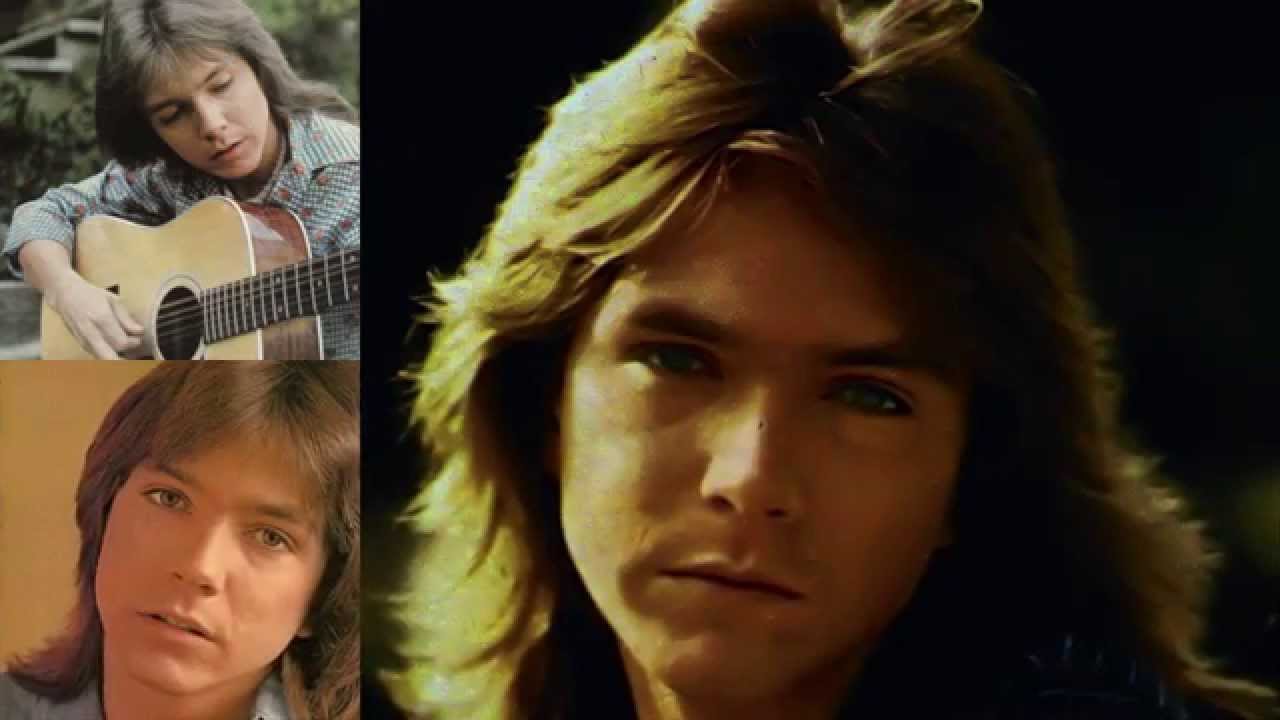
David Cassidy turned I Write the Songs into something deeply personal: not a boast, but the sound of an artist asking to be heard beyond the image the world had already chosen for him.
Before Barry Manilow made I Write the Songs an American No. 1, David Cassidy had already given the song one of its most revealing early interpretations. Released in 1975 and included on his album The Higher They Climb, Cassidy’s version climbed to No. 11 on the UK Singles Chart. That may seem like a small historical footnote beside the song’s later blockbuster fame, but it is actually one of the most telling details in the story. Cassidy was at a delicate stage in his career, trying to move beyond the teen-idol label that had followed him from The Partridge Family. In that moment, I Write the Songs sounded less like a hit vehicle and more like a declaration of identity.
The song itself was written by Bruce Johnston of The Beach Boys, and its meaning has long been misunderstood. On paper, the title can sound self-congratulatory, almost as if the singer is praising his own genius. But Johnston’s lyric was never really about one songwriter congratulating himself. The voice in the song is meant to be larger than any one performer. It is the voice of music itself, the mysterious force that moves through radio speakers, concert halls, heartbreak, memory, and imagination. That is why lines about making the young girls cry and making the old stars sing were always intended to feel universal. In the hands of the right singer, the song becomes a hymn to music’s power rather than a speech about ego.
That distinction matters even more when the singer is David Cassidy. By 1975, he was no longer simply the fresh-faced television sensation who had inspired mass adoration a few years earlier. He was older, wiser, and carrying the burden that often comes with early fame: the public thinks it knows you, while you are still trying to discover yourself. His reading of I Write the Songs has an undercurrent of longing that makes the lyric feel unusually human. He does not sing it like a man standing on top of the mountain. He sings it like someone trying to prove that his relationship to music runs deeper than celebrity, posters, and screaming headlines.
Musically, Cassidy’s version leans into polished mid-1970s pop, but there is something notably restrained about it. Where later versions would become grander and more theatrical, his performance carries a gentler ache. The melody rises with hope, yet there is vulnerability beneath the confidence. That is one reason his recording still resonates with listeners who return to it after many years. It captures an artist in transition. You can hear ambition in it, certainly, but also sincerity. He sounds as though he believes the song, and perhaps needs to believe it.
The chart story also gives Cassidy’s recording a special place in pop history. Reaching No. 11 in the UK, it proved the song had real commercial life before it became inseparable from Manilow’s name in the United States. Barry Manilow’s later version would top the Billboard Hot 100 in early 1976, and Johnston would go on to win the Grammy for Song of the Year. Yet Cassidy’s recording remains important because it preserved the song at a more intimate stage in its journey. It reminds us that before a composition becomes fixed in the public imagination, it can still carry different shades of meaning from one voice to another.
There is also a quiet irony in Cassidy singing a song about the invisible source of music. For years, many people saw him first as a manufactured star, a face from television, a phenomenon created by the machinery of pop culture. But I Write the Songs gave him space to push back against that assumption without saying so directly. He did not need a confrontational lyric. He needed a song large enough to suggest that music mattered to him in a way the public had not fully understood. That is part of what gives the performance its lingering emotional pull. Beneath the glossy arrangement, there is an artist asking for recognition on deeper terms.
In the end, David Cassidy’s version of I Write the Songs endures not because it outsold every rival, but because it revealed something true. It caught him in the middle of reinvention, reaching for adulthood, credibility, and a more lasting musical identity. For listeners who remember that era, the record carries the bittersweet feeling of a familiar voice trying to step into a wider horizon. And for anyone hearing it now, it offers a moving reminder that some songs are not only about what they say. They are about who is singing them, when they sang them, and what they were still trying to become.
