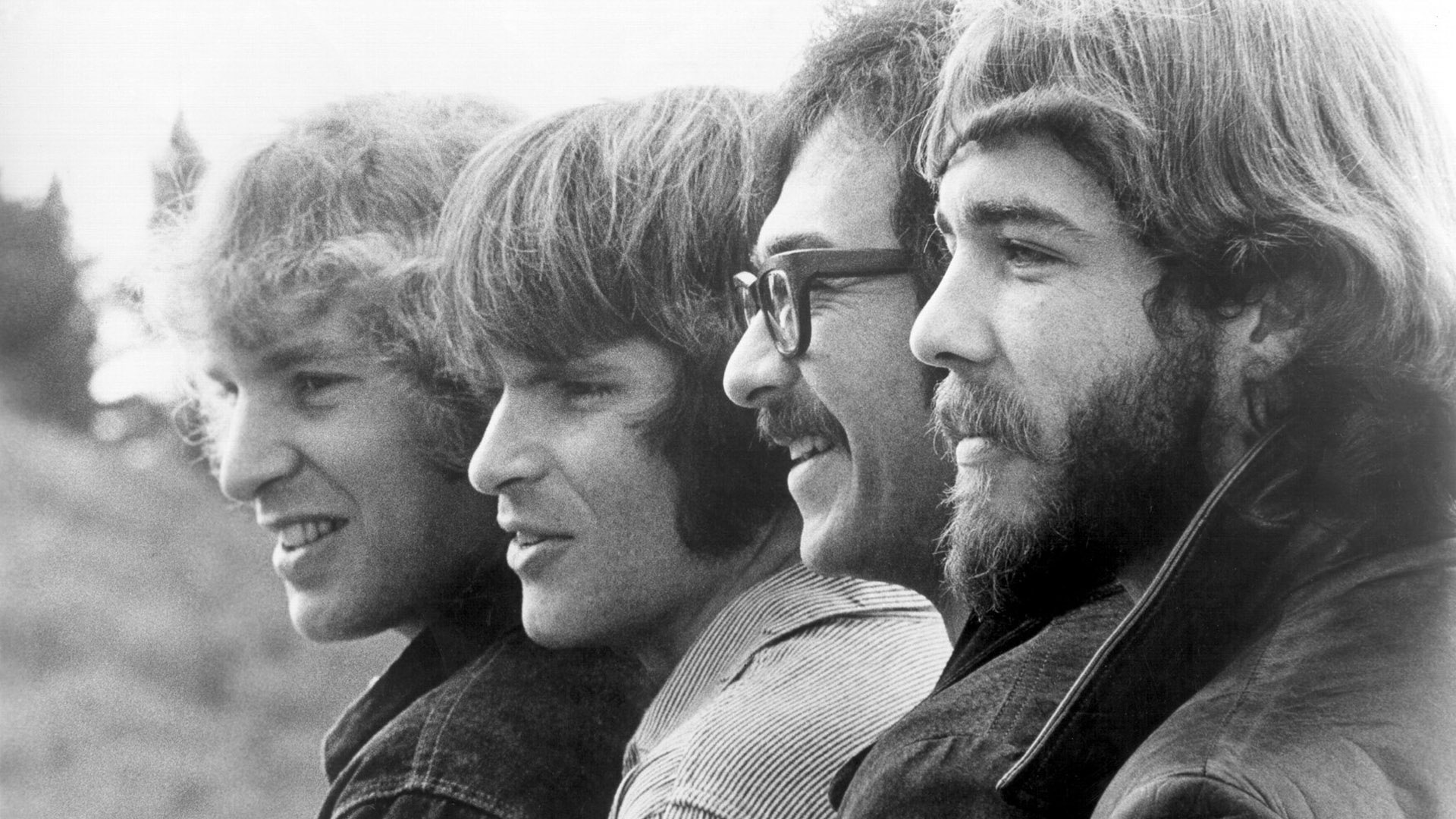
In its 1971 live form, Green River sounds less like a carefree memory and more like a band racing to keep its spirit alive in real time.
There is something especially revealing about hearing Creedence Clearwater Revival tear into Green River onstage in 1971. By then, the song was already a classic. It had first arrived in 1969 as a compact burst of American imagination, climbing to No. 2 on the Billboard Hot 100, while the album Green River went on to reach No. 1 on the Billboard 200. In the studio version, everything felt tight, sly, and sun-struck. But in the 1971 live performances, especially those captured on the band’s European tour later heard on Live in Europe, the song carries a different charge. It is faster in spirit, rougher around the edges, and somehow more human. You can hear not just the joy of the song, but the strain and urgency of the moment surrounding it.
That matters, because 1971 was not an easy year in the story of CCR. Tom Fogerty had left the band, leaving John Fogerty, Stu Cook, and Doug Clifford to carry on as a trio. The group was still a formidable live force, but the internal balance had changed. So when Green River appeared in concert that year, it no longer sounded like a simple revival of an old hit. It sounded like a statement. The groove was still there. The famous riff still snapped into place. Yet the performance had an edge that belonged to a different season of the band’s life.
Part of the power of Green River has always been the way it turns memory into motion. John Fogerty wrote the song out of a collage of remembered places and sensations. He has often connected it to childhood trips near Putah Creek in California and to the old soda syrup called Green River, details that gave the song its title and flavor. That is why the lyric feels so immediate. It is not nostalgia as decoration. It is nostalgia with dirt on its shoes: rope swings, cool water, dragonflies, and the private geography of youth. Even listeners who had never seen those exact places recognized the feeling at once. Green River was about the deep American longing to get back to one small, half-mythic patch of freedom.
On the original record, CCR gave that feeling a marvelous discipline. The track was concise, radio-perfect, and unmistakably theirs, blending swamp rock, country bite, and garage-band economy into a sound that seemed effortless. But live in 1971, the same song became a little more exposed. Without the polished containment of the studio, the band leaned on attack, momentum, and sheer conviction. Doug Clifford’s drumming pushed the song forward with a muscular steadiness. Stu Cook anchored the low end with that practical, driving pulse that helped define so many CCR records. And over it all, John Fogerty sang with that familiar cracked authority, part storyteller and part believer, as if the river in the song were both a real place and a refuge he still needed.
What makes the live 1971 version so compelling is this emotional contradiction: Green River is a song about escape, but by then it was being performed by a band under visible pressure. That tension gives the performance its special depth. The song still rolls and snaps. It still invites the listener into summer shade and river water. But there is also a harder outline around it, a sense that innocence is now being remembered from farther away. The result is not sadness exactly. It is something more mature than that. It is the sound of memory surviving contact with reality.
For many listeners, that is why Creedence Clearwater Revival has endured. They never dressed their music in unnecessary excess. Even when the emotions ran deep, the songs stayed lean. Green River may be one of the purest examples of that gift. In just a few verses, it evokes weather, smell, geography, childhood freedom, and the ache of looking back. In its 1971 live form, it adds one more layer: the knowledge that even the strongest bands, like the strongest summers, cannot stay unchanged forever.
And yet the song does not collapse under that knowledge. It rises. That is the miracle of Green River. Even in a later, tougher performance, it never loses its pull. It still opens a door. It still takes the listener somewhere. In a concert hall far from the creek and far from the California memories that inspired it, CCR could still summon that landscape with a riff, a beat, and a voice that sounded like it had lived every mile of the road. That is why the 1971 live version matters. It lets us hear not only what the song meant when it was new, but what it meant after time had already started to change the men playing it.
Some songs age by becoming museum pieces. Green River did not. In concert, it remained alive, restless, and road-worn. That is perhaps the highest compliment one can pay a rock and roll song. It could survive the charts, survive the years, survive the shifting shape of the band itself, and still reach out with the same dusty invitation: come on back to the riverbank, if only for three minutes. In 1971, Creedence Clearwater Revival played it not as a relic, but as a memory still fighting to stay present. That is why it still hits as hard as it does.
