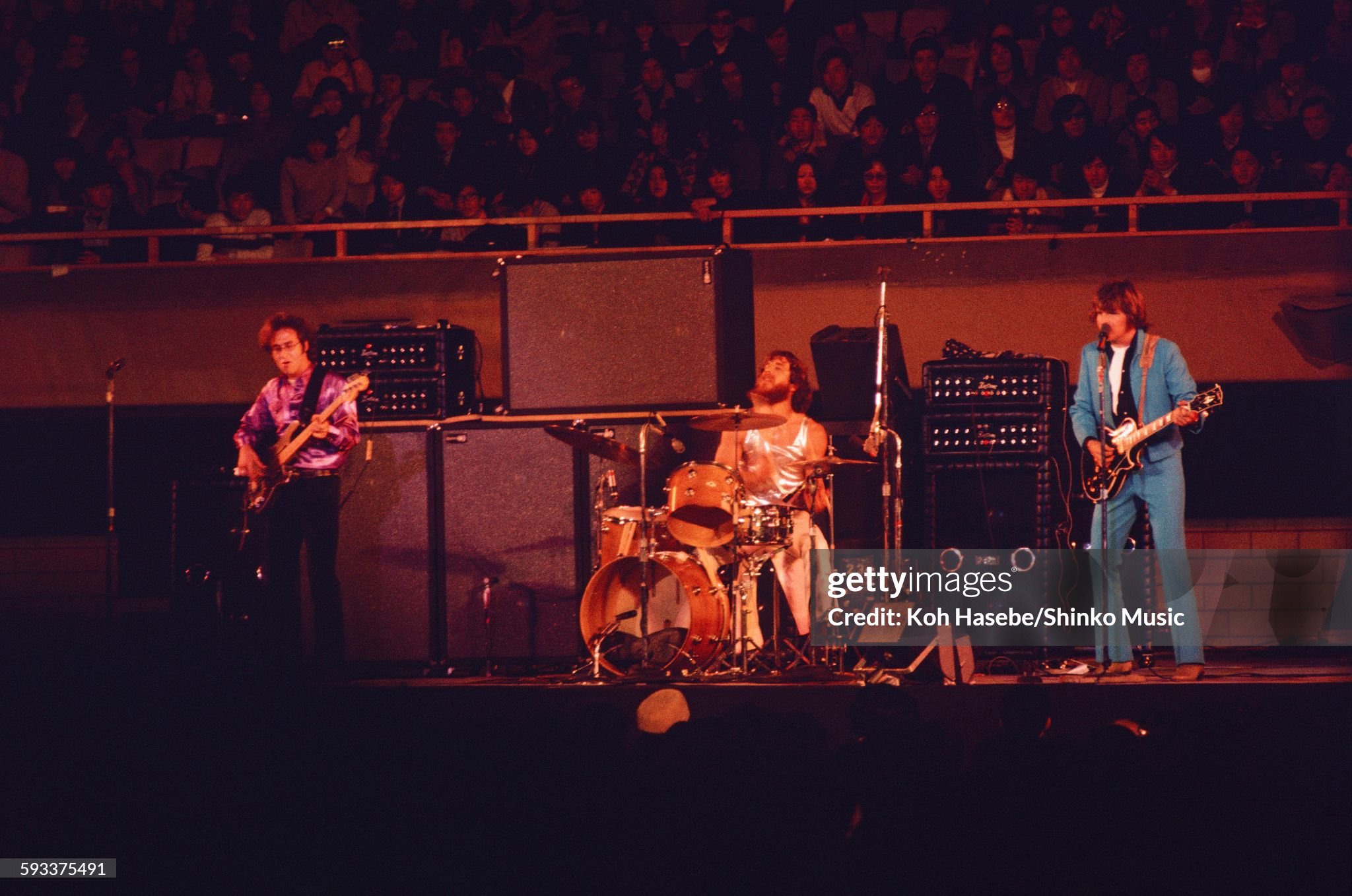
Try Try Try captures the sound of a future great band still searching for its name, its shape, and its place in the world.
There is something especially moving about hearing a song that history almost misplaced. “Try Try Try” by The Golliwogs, heard today through Fight Fire: The Complete Recordings 1964-1967, is one of those recordings. It does not arrive with the familiar weight of a classic-rock staple. It arrives more quietly than that, like a half-forgotten voice from a room just down the hall. And yet for listeners who know what The Golliwogs would eventually become, the song carries a special kind of electricity. This is not simply an obscure old track. It is a glimpse into the years before Creedence Clearwater Revival, when the pieces were still being assembled and the identity of the band was still hidden behind a name they would later leave far behind.
That context matters immediately. “Try Try Try” is most often encountered now through the retrospective collection Fight Fire: The Complete Recordings 1964-1967, an archival set that gathers the group’s pre-CCR work for Fantasy Records. In its own time, this material did not make the kind of national commercial impact that would later define the members’ careers. “Try Try Try” was not a major charting hit, and that is part of why it still feels like a private discovery. Unlike the towering singles that came later under the Creedence name, this song lived on the margins, known mainly to devoted collectors and listeners willing to dig beneath the legend.
Still, what makes the track fascinating is not simply rarity. It is the sound of direction emerging. The Golliwogs lineup included John Fogerty, Tom Fogerty, Stu Cook, and Doug Clifford, the same core musicians who would soon reshape themselves and make a much deeper mark on American rock. On “Try Try Try”, you can hear the young band working through the vocabulary of mid-1960s rock and beat music, absorbing the language of the British Invasion, garage rock, and American pop craftsmanship while still searching for the lean, swampy authority that would later become unmistakably their own.
The song’s title says much about its emotional center. “Try Try Try” is built around persistence, longing, and that familiar ache of wanting to reach someone who remains just out of reach. Like many songs from the era, it turns romantic frustration into motion. But there is also something deeper in hearing it now. In hindsight, the title almost feels symbolic of the band’s own story at that moment. They were trying to break through. Trying to be heard. Trying to find the sound that matched the force of their instincts. That accidental parallel gives the recording an added poignancy. What might once have sounded like a modest period piece now feels like a document of artistic becoming.
Musically, the track rewards close listening. The arrangement still belongs to its time, but it also hints at the discipline that would later serve John Fogerty so well as a writer, singer, and bandleader. The structure is compact. The melodic sense is direct. There is an eagerness in the performance, but not chaos. You hear young musicians learning how to deliver a song cleanly, memorably, and with enough conviction to make a simple phrase linger. That quality matters. Many forgotten mid-60s recordings have historical interest but little replay value. “Try Try Try” has both. It is historically interesting because of who made it, but it remains genuinely listenable because the craft was already there.
There is also an emotional pull in the very fact that this song sat in the shadows for so long. For many listeners, the discovery of pre-CCR material can be disorienting at first. The famous Creedence sound seems so fully formed in memory that it is easy to imagine it appeared all at once. But collections like Fight Fire: The Complete Recordings 1964-1967 remind us that great bands do not simply appear in finished form. They pass through uncertainty. They wear names that do not fit. They make records that barely ripple the surface. They learn, discard, sharpen, and begin again. In that sense, “Try Try Try” is more than a curiosity. It is a human document. It lets us hear talent before destiny became obvious.
The story behind The Golliwogs also gives the song a bittersweet historical shade. Fantasy Records had assigned the band that name during a period when label-driven image decisions were not uncommon, and it is a reminder of how awkward and compromised the early industry path could be. By the time the group emerged as Creedence Clearwater Revival, they had a stronger identity, a stronger catalog, and a clearer artistic voice. Hearing “Try Try Try” now, preserved in this complete-recordings context, allows us to feel the distance between those two chapters. Not as a failure and a triumph, exactly, but as the long road between anonymity and recognition.
That is why the song lingers. Not because it changed the charts. Not because it became a standard. It lingers because it reveals something many famous records hide: the unfinished self that came before the masterpiece. For longtime admirers of John Fogerty and the band that would become Creedence Clearwater Revival, “Try Try Try” is a small but resonant treasure. It sounds like youth, effort, hunger, and promise. And inside Fight Fire: The Complete Recordings 1964-1967, it stands as one of those rare discoveries that make music history feel intimate again—not a monument, but a doorway.
