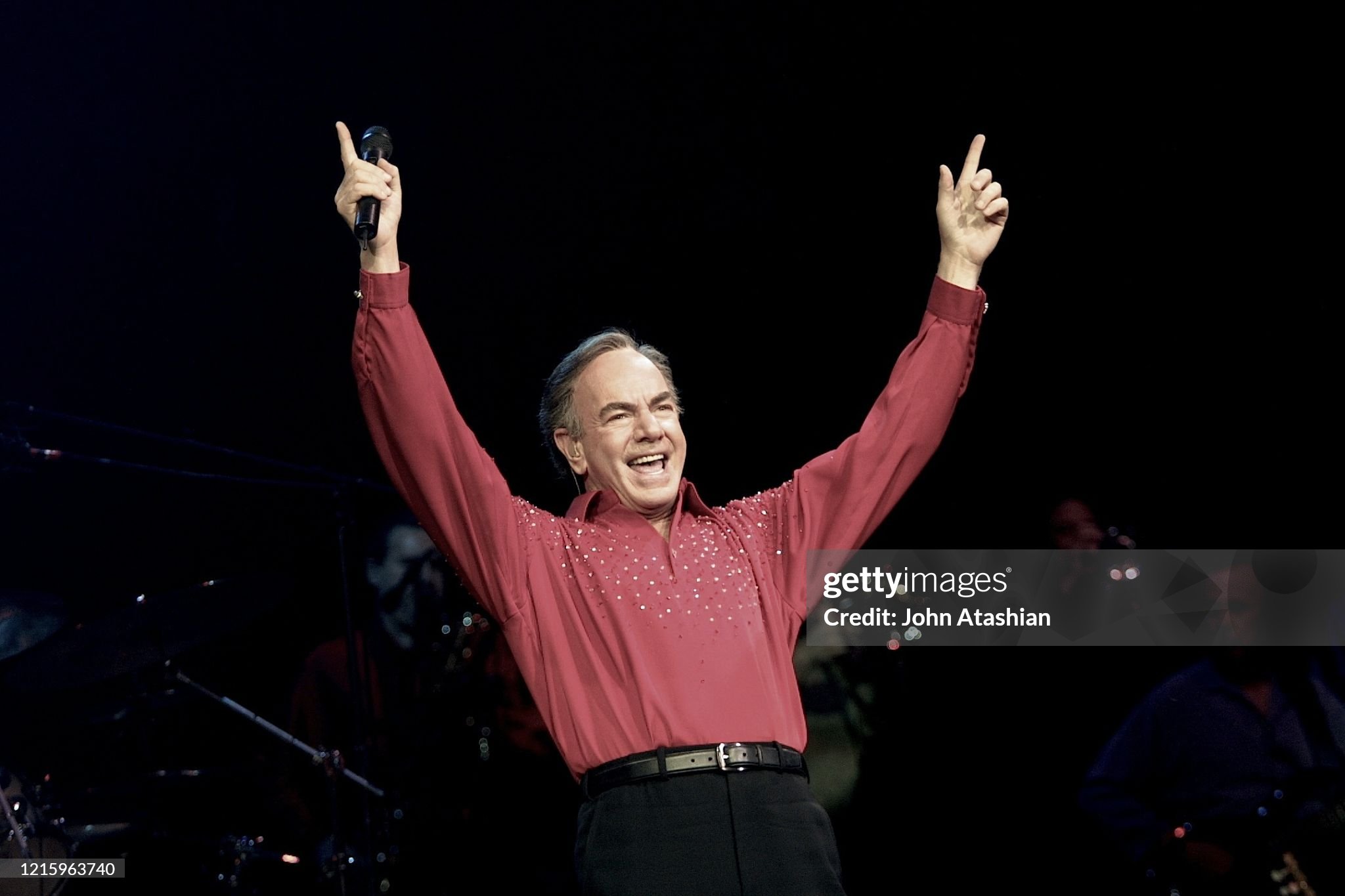
Neil Diamond‘s The Art Of Love is less about romance as fantasy and more about love as something learned slowly, imperfectly, and with a bruised but hopeful heart.
Some Neil Diamond songs arrive like old friends the moment their titles are spoken. Sweet Caroline, Cracklin’ Rosie, I Am… I Said and Hello Again all carry the weight of memory and instant recognition. The Art Of Love belongs to a different corner of his catalog. It is not one of the giant radio monuments that dominated his legend, and it did not become a major Billboard pop-chart event in the way his best-known singles did. That relative quiet is part of what makes the song so intriguing. It has the feel of a private conversation tucked inside the work of a songwriter who spent much of his career speaking to millions.
What gives The Art Of Love its staying power is the tension inside the title itself. The phrase sounds elegant, almost polished, as though love could be mastered with grace and certainty. But Neil Diamond was rarely interested in easy certainties. Across his finest writing, love is almost never effortless. It aches, it doubts, it remembers, it reaches. Even when he sings with confidence, there is usually a tremor underneath the voice, the sense that affection matters precisely because it can be lost, misunderstood, or only partly understood. That is the emotional current that makes this song resonate. It treats love not as a decorative feeling, but as a lifelong practice of listening, surrender, patience, and emotional courage.
In that sense, the song fits beautifully within the more reflective side of Neil Diamond‘s body of work. He was always capable of writing big choruses and crowd-pleasing melodies, but he was equally gifted at revealing the loneliness inside connection. That duality helped make him such a compelling songwriter. He could sound public and intimate at once. The Art Of Love carries that same mature sensibility. Rather than presenting romance as youthful intoxication alone, it suggests that love demands wisdom. It asks for tenderness, but also for discipline. It asks people to keep learning each other. That is a deeper and more durable idea than simple infatuation, and it is one reason the song lingers in the mind.
There is also something unmistakably characteristic about the way Neil Diamond approaches emotional language. He had a rare gift for making grand themes feel personal. When he sang about longing, faith, distance, or devotion, he did not reduce them to slogans. He gave them wear and weather. In The Art Of Love, that instinct matters. The song title may sound almost formal, but Diamond’s emotional world was never cold. He understood that the real art of loving someone is not performance. It is honesty. It is staying open even after disappointment. It is learning how to be gentle without becoming false. Songs like this remind listeners that Diamond’s romantic writing was often stronger when it moved away from spectacle and toward reflection.
Because The Art Of Love was not one of his defining chart smashes, it has often been appreciated as a deep-cut discovery rather than a universally overplayed classic. For many listeners, that can make the bond even stronger. A song that was not blasted endlessly across radio can feel more intimate decades later. It can seem less like a public anthem and more like something kept close. In a catalog as large and celebrated as Neil Diamond‘s, those quieter songs often reveal the writer most clearly. The hits tell us how he could command a room. The lesser-known songs tell us how he could sit alone with a feeling and shape it into something honest.
The backstory here is not built on scandal or some sensational recording-session tale. Its deeper story is artistic. By the time listeners encountered songs like The Art Of Love, Neil Diamond had already proven that he could dominate charts, concert halls, and popular memory. What remained fascinating was how he kept returning to the subject of human connection with fresh shades of meaning. He wrote about love from different ages of the heart: from desire, from regret, from hope, from reconciliation, and from the ache of trying again. That is why even a less commercially prominent song can feel so rich. It comes from a songwriter who had already learned that the most enduring emotional truths are often quiet ones.
The meaning of The Art Of Love becomes even more moving when heard in the wider arc of Diamond’s career. He was an artist who understood performance, but he also understood vulnerability. He knew how to project confidence while letting uncertainty remain visible around the edges. That combination gave his music unusual depth. In this song, love is not portrayed as conquest. It is portrayed as understanding. Not perfection, but practice. Not fantasy, but effort infused with feeling. The title invites sophistication, yet the heart of the song feels warmly human and wonderfully unfinished. It suggests that no one ever completely masters love. The closest we come is learning how to care more truthfully.
That may be the reason The Art Of Love still speaks so clearly now. Time has a way of stripping away novelty and leaving only what feels emotionally real. A song does not need towering chart numbers to survive if it contains a recognizable truth. Neil Diamond built his reputation on memorable melodies, but he kept it through emotional intelligence. This song stands as a reminder of that gift. It does not shout. It does not demand. It simply opens a door to a mature understanding of romance, one shaped by experience rather than illusion.
And perhaps that is the final beauty of The Art Of Love. It understands that love is not a fixed achievement. It is a way of paying attention. In the hands of Neil Diamond, that idea becomes tender, reflective, and quietly profound. Long after louder songs have finished making their case, this one stays behind like a thoughtful voice in the room, still saying something worth hearing.
