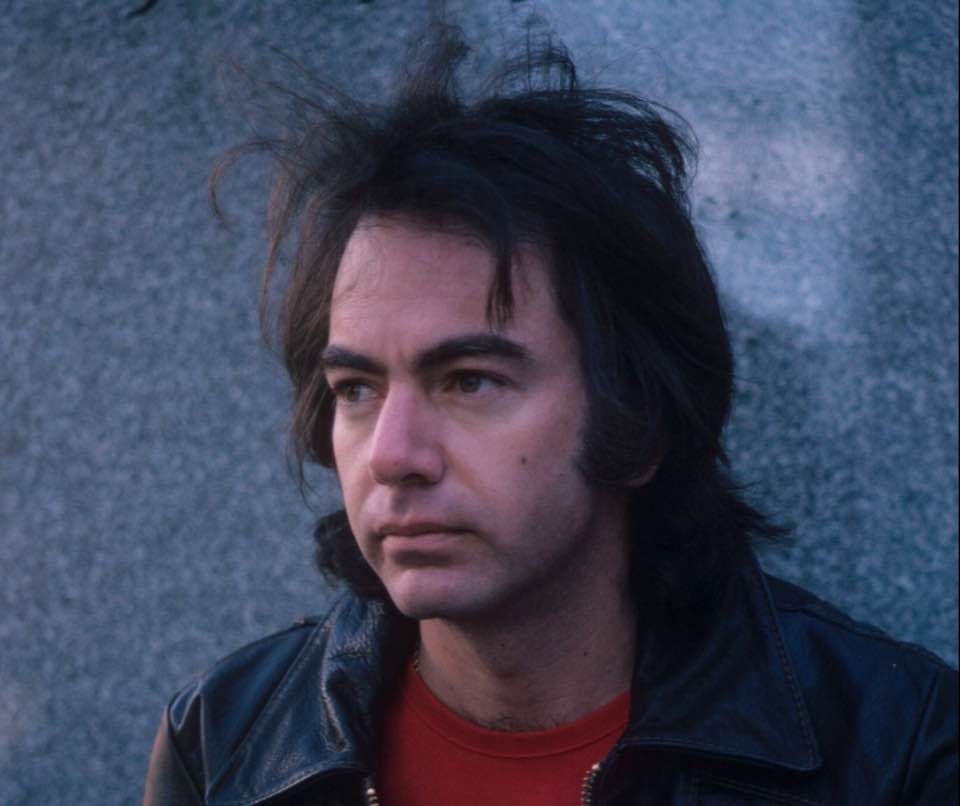
A tender song of reconciliation, Let Me Take You In My Arms Again reveals Neil Diamond in one of his most intimate modes—less showman, more wounded soul asking for one more chance.
There are songs in Neil Diamond’s catalog that arrive like monuments. Sweet Caroline, Cracklin’ Rosie, Song Sung Blue—these are records tied to chart peaks, radio memory, and the broad American soundtrack of the late 1960s and 1970s. Let Me Take You In My Arms Again belongs to a different, quieter tradition in his work. It is not generally remembered as one of Diamond’s major chart-defining singles, and it does not carry the same familiar Billboard profile as his biggest hits. That, in some ways, is exactly why it lingers. It feels less like a public event and more like a private confession that somehow escaped into song.
From the title alone, the emotional center is unmistakable: this is a plea, not a victory lap. The phrase “let me take you in my arms again” is full of humility. It does not demand love, and it does not presume forgiveness. It asks. That difference matters. In the hands of a lesser writer, such a sentiment could sound overly polished or sentimental. But Neil Diamond always had a rare gift for writing direct emotional language that still carried weight. He knew how to make a simple line sound lived-in, as though it had been forming in someone’s chest long before it ever reached a microphone.
What makes the song especially affecting is how well it fits the more vulnerable side of Diamond’s artistry. For all the grandeur associated with his career—the sold-out rooms, the chest-forward delivery, the dramatic crescendos—he was often at his best when he sounded slightly exposed. Let Me Take You In My Arms Again belongs to that family of songs where strength and tenderness meet. It is not about romantic conquest. It is about distance, regret, and the fragile hope that love might still answer if spoken to gently enough.
There is also something deeply characteristic here about Diamond’s writing worldview. Again and again, his songs return to longing: longing for home, longing for connection, longing for the person who once made the world feel less uncertain. Even when he wrote in larger-than-life colors, that ache was usually there underneath. In Let Me Take You In My Arms Again, the ache is not hidden behind brass, spectacle, or anthem-sized uplift. It stands near the front of the room. That gives the song a maturity many listeners find moving. It understands that reconciliation is never simple. Sometimes the hardest words in love are not declarations, but invitations.
As for the story behind the song, it is not one of those Neil Diamond recordings surrounded by a famous legend or a heavily repeated anecdote in the way some of his best-known songs have been. There is no single cultural myth attached to it on the scale of Sweet Caroline. Yet that lack of oversized mythology may be part of its strength. Songs like this remind us that Diamond’s catalog was never built on hits alone. It was built on emotional fluency—on his ability to step inside loneliness, desire, remorse, and devotion, then write them in language ordinary people recognized immediately.
Musically, the song sits in that warm, melodic space Diamond handled so well: accessible on the surface, quietly bruised underneath. Even when he reached for simplicity, he rarely sounded careless. The melodic movement in a song like this tends to support the emotional posture of the lyric—reaching forward, pulling back, then reaching again. That is the essence of the title itself. The song does not rush. It leans. It waits. It understands that when love has been strained, urgency alone cannot heal it.
For listeners who know only the towering public image of Neil Diamond, songs like Let Me Take You In My Arms Again can be a revelation. They show the craftsman behind the celebrity and the emotional intelligence behind the voice. Diamond was never simply a writer of singalong choruses. He was also a chronicler of human hesitation—the moments when people stand between pride and surrender, between memory and hope. That is where this song lives.
Its meaning, then, is both romantic and larger than romance. On one level, it is plainly about wanting someone back. On another, it is about the universal need to be allowed near what we fear we have lost. That is why the song keeps its power. It touches something older than fashion and quieter than nostalgia. It speaks to the part of life where love is no longer an idea but a reckoning.
In the end, Let Me Take You In My Arms Again may never stand among the most commercially celebrated titles in the Neil Diamond songbook, but that does not diminish its worth. If anything, it enhances it. The song survives not because it was overplayed, but because it was felt. And sometimes the songs that stay closest are not the ones that shouted the loudest. They are the ones that asked softly, and meant every word.
