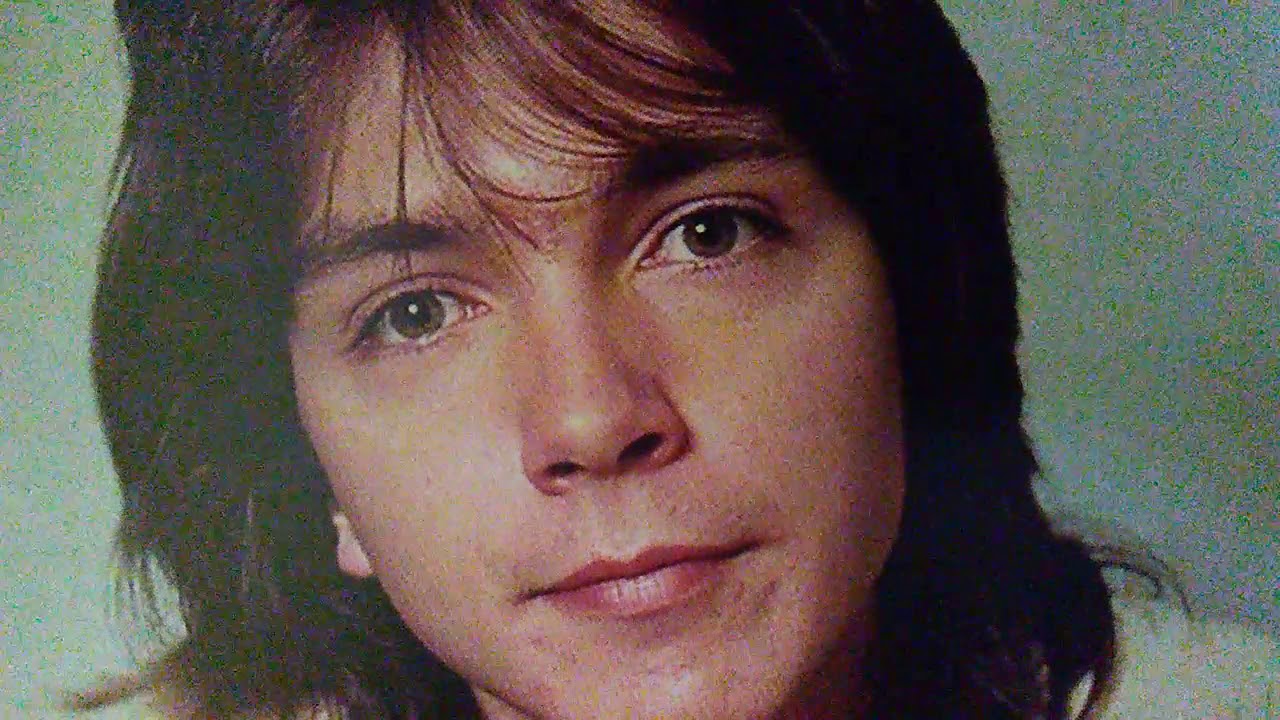
Officially a The Partridge Family single but remembered through David Cassidy’s voice, I’ll Meet You Halfway turned a simple promise into one of early-1970s pop’s warmest and most quietly affecting love songs.
Released in 1971 from the album Sound Magazine, I’ll Meet You Halfway came along at a crucial moment in the rise of David Cassidy. The record was billed to The Partridge Family, as so many of his early hits were, yet listeners instantly recognized whose voice gave it its soul. In the United States, the single climbed to No. 4 on the Billboard Hot 100 and also reached No. 9 on Billboard’s Easy Listening chart. Those chart peaks tell us it was a major hit, but they do not fully explain why the song still lingers. What endures is the feeling: gentle, hopeful, and touched by the kind of ache that only the best pop records can hide inside a sweet melody.
One reason the song has lasted is that it sits in that beautiful middle ground between television-era pop and something more intimate. David Cassidy was already becoming a phenomenon by then, his face everywhere, his fame accelerating almost faster than anyone could process. Yet I’ll Meet You Halfway never sounds inflated by celebrity. It sounds personal. That is the magic of the record. The arrangement is polished, certainly, with the smooth craftsmanship that defined so much of the Wes Farrell production style, but Cassidy’s lead vocal keeps the song human. He does not oversing it. He does not force emotion where the writing has already done the work. Instead, he leans into tenderness, letting the melody carry a promise that feels sincere rather than theatrical.
The song was written by Wes Farrell and Gerry Goffin, two writers who understood how to make pop music sound immediate without stripping it of emotional weight. On the surface, the lyric is simple: two people separated by distance, uncertainty, or hesitation decide that love is worth effort from both sides. But that idea of meeting halfway is more profound than it first appears. It is not only about romance. It is about vulnerability. It is about saying that pride is less important than connection. It is about the quiet courage of making yourself available to someone and hoping they will do the same. That is why the song still speaks across generations. It is soft, but it is not weak. Beneath its melodic brightness is a very mature idea: love survives not through grand speeches, but through mutual reaching.
Musically, the record is a lovely example of how early-1970s pop could shimmer without becoming weightless. There is a lightness in the rhythm, a graceful upward motion in the tune, and an almost conversational ease in the vocal phrasing. Cassidy gives the lyric a warmth that feels unguarded, which matters because a lesser singer could have let the song drift into prettiness alone. He understood something essential about this kind of material: gentleness needs conviction. His performance is soft-edged, but never casual. There is longing in it. There is patience in it. And there is that unmistakable sweetness that made him instantly recognizable, yet here it is shaped by restraint rather than teen-pop exuberance.
That is also part of the deeper story behind I’ll Meet You Halfway. For many people, David Cassidy was introduced through the enormous machine of The Partridge Family, a television success that could easily make listeners underestimate the records themselves. Cassidy later spoke openly about his frustrations with being dismissed as a manufactured teen idol, especially when he was working hard in the studio and taking his music seriously. This song now sounds like quiet evidence in his favor. It reminds us that behind the merchandise, the magazine covers, and the screaming crowds, there was a gifted vocalist who knew how to communicate vulnerability with remarkable ease. The record may have arrived wrapped in pop packaging, but its emotional center was real.
There is also something especially memorable about the emotional tone of the song. Unlike many love hits that depend on heartbreak or dramatic reunion, I’ll Meet You Halfway lives in a more delicate emotional space. It is a song of willingness. It does not demand. It offers. That may be why it feels so comforting even now. The title itself has entered everyday language because the phrase expresses a universal truth: relationships endure when both people move toward each other. In that sense, the song’s meaning is larger than its era. It belongs to anyone who has ever tried to bridge silence, close distance, or keep affection alive through compromise and faith.
Looking back, it is easy to hear why the song became such a treasured part of the David Cassidy story. It captured him before the pressures of fame hardened the public conversation around him, and before nostalgia would turn him into a symbol of a time rather than a singer with real interpretive gifts. Heard now, I’ll Meet You Halfway is more than a hit from 1971. It is a reminder of how much feeling could live inside a three-minute pop single. It is a reminder that tenderness can be every bit as persuasive as heartbreak. And it is one of those records that grows richer with time, because what once sounded merely sweet now sounds deeply generous. That is why it still matters. Not because it was famous, but because it was true to something simple and lasting in the human heart.
