
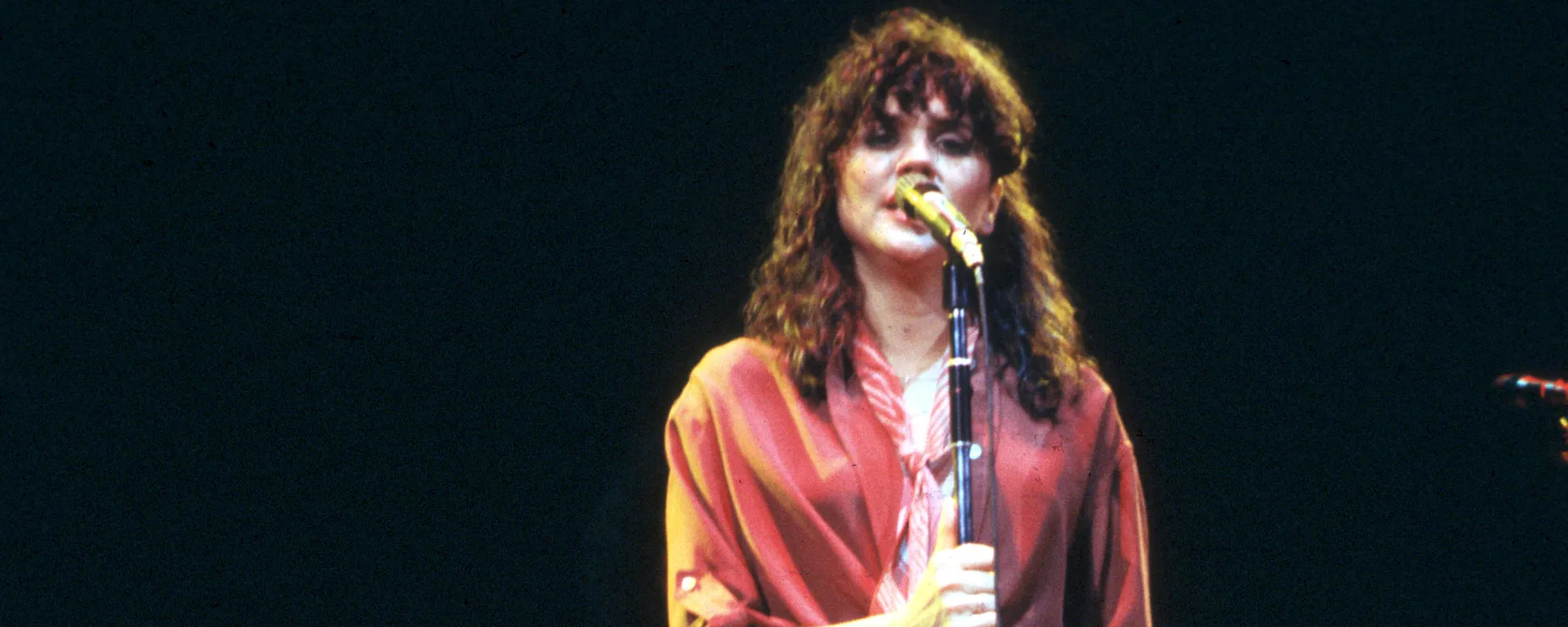
In I Believe in You, Linda Ronstadt turns belief into something soft, mature, and quietly devastating.
By the time Linda Ronstadt recorded I Believe in You for her 1993 album Winter Light, she was far beyond the stage of needing to prove her greatness. The wild force of the 1970s, the crossover queen who could move from rock to country to torch songs with disarming ease, had already secured her place in American music. What makes this recording so moving is that it does not sound like a singer reaching upward for a hit. It sounds like an artist turning inward. I Believe in You was not one of her major chart smashes, and the song itself was never treated as a big commercial event, but Winter Light did reach No. 92 on the Billboard 200. In a way, that modest chart life fits the song perfectly. This was never about noise. It was about feeling.
That is the first thing one notices when returning to I Believe in You now: its restraint. So much of Linda Ronstadt’s earlier fame was built on a voice that could soar, sting, ache, and command a room in a single phrase. Here, she chooses a different path. She does not overwhelm the song. She inhabits it. The performance feels intimate, as if the listener has wandered into a private hour rather than a carefully staged studio moment. There is great discipline in that kind of singing. It asks an artist to trust silence, shading, and emotional timing more than sheer vocal power. Ronstadt, of course, had all of that in reserve, and that is exactly why the gentleness here feels so convincing.
The deeper story behind I Believe in You is really the story of where Ronstadt stood in the early 1990s. She had already traveled through several musical lives: the country-rock trailblazer, the interpreter of classic American song, the artist willing to honor her Mexican heritage, the singer unafraid of elegance, vulnerability, or risk. Winter Light arrived in that later, reflective phase of her career, and its emotional tone was noticeably more autumnal than youthful. There is longing in the album, but also calm. Not resignation, exactly, but perspective. I Believe in You belongs to that mood. It sounds like a statement made after the illusions have faded and the heart has learned the cost of trust.
That is where the song’s meaning becomes especially rich. In lesser hands, a title like I Believe in You could drift into sentimentality. Linda Ronstadt avoids that entirely. She sings belief not as blind surrender, but as a conscious act. This is not infatuation. It is not the dazzled emotion of someone who sees no flaws. It is closer to choosing faith despite uncertainty. That makes the song feel adult in the best sense of the word. It understands that love is not always fireworks. Sometimes it is steadiness. Sometimes it is staying emotionally present when life has already taught you how fragile promises can be.
One of Ronstadt’s greatest gifts, throughout her career, was her ability to make a song written by someone else feel as if it had been waiting for her all along. She was not a confessional songwriter in the usual sense, but she was one of the finest interpreters popular music has ever had. She could take a lyric and reveal its hidden weather. That is exactly what happens here. In her voice, I Believe in You becomes less a declaration than a confession whispered after midnight. She gives the song dignity. She gives it history. She gives it the sound of experience.
The arrangement on Winter Light helps create that atmosphere. Like much of the album, the production leans toward softness and space rather than drama for its own sake. Nothing feels forced. The instrumental backdrop leaves room for Ronstadt’s phrasing, and that is where the real drama lives. Listen closely and the performance reveals a remarkable balance: tenderness without weakness, sorrow without collapse, warmth without sweetness becoming cloying. That balance is difficult to achieve, and it is one reason the song lingers. It asks very little on the surface, but it leaves a surprisingly deep impression.
For listeners who came to Linda Ronstadt through bigger radio staples such as You’re No Good, When Will I Be Loved, or Blue Bayou, this track can feel like discovering another room in a familiar house. The bravura is still there, but refined into something quieter and, perhaps, more revealing. It reminds us that maturity in music is not a dimming of emotion. Often it is the opposite. The feeling becomes more concentrated. The gestures become smaller. The truth becomes harder to fake.
That is why I Believe in You still resonates. It captures a quality that many great late-career recordings possess: the sound of an artist who no longer needs to reach for effect because she has already lived enough to understand what matters. In Linda Ronstadt’s hands, belief is not naive. It is brave. It is worn in, tested, and offered anyway. And maybe that is why the song can catch a listener off guard even now. Its power does not announce itself. It simply stays, like a memory that grows clearer and more meaningful with time.
