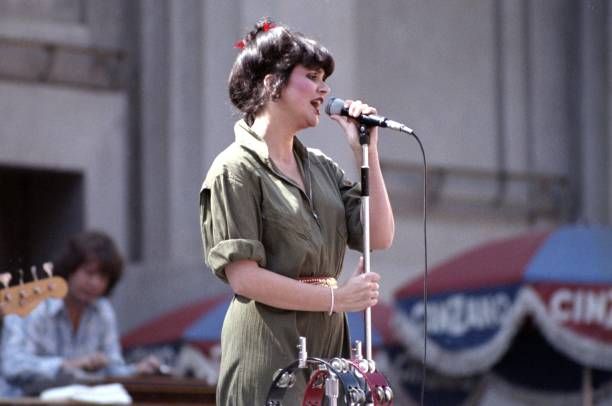
“Silver Threads and Golden Needles” is a gentle but unshakable vow: keep your riches—only true love is worth keeping.
When Linda Ronstadt sang “Silver Threads and Golden Needles,” she wasn’t merely covering an old country standard—she was placing a bright, clear line in the sand. The song’s moral is simple enough to remember and hard enough to live: affection cannot be purchased, and devotion cannot be negotiated with glitter. Ronstadt’s most chart-visible moment with the tune came via her country-rock era: her 1974 single (from Don’t Cry Now, released October 1, 1973) reached No. 20 on Billboard’s U.S. country chart and No. 67 on the Billboard Hot 100—a modest-looking pair of numbers that nevertheless signaled something important. It marked one of the early mainstream steps toward the Ronstadt decade to come, when her voice would be everywhere, but still somehow feel personal.
There’s a particular elegance to the timing. The single was issued in February 1974, then entered the Hot 100 dated April 6, 1974, on its way to that No. 67 peak. And on the country side, documentation of her country hits notes a debut week of March 2, 1974 (with the record ultimately peaking at No. 20). In other words: it arrived like many classic songs do—not with a trumpet blast, but with steady accumulation, finding ears that were ready for it.
The backstory stretches farther than the 1970s. “Silver Threads and Golden Needles” was written by Dick Reynolds and Jack Rhodes, and first recorded by Wanda Jackson in 1956. Long before Ronstadt, the song had already traveled—and proved it could wear different clothes without losing its spine. A particularly historic waypoint came in September 1962, when the UK trio The Springfields (with Dusty Springfield) took it to No. 20 on the Billboard Hot 100, an early and notable moment for British pop on American radio. That lineage matters, because it explains why the song feels almost inevitable: it has the durable architecture of folk wisdom, built to cross borders and decades.
Ronstadt’s relationship with the song is also richer than a single chart run. She recorded it twice: first as a straight country reading on her 1969 debut Hand Sown… Home Grown, and later as the more crossover-friendly Don’t Cry Now version that became the 1974 single. That alone tells you something about her artistry: she didn’t treat country as a costume she wore once for effect. She returned to songs—tested them under new light—because she believed the material could bear repeated truth.
So what is that truth? The lyric is a refusal, but it never raises its voice. “Lonely mansions,” “tear in every room”—the imagery is domestic and quietly devastating, like a house that looks grand from the road and feels cold the moment you step inside. The singer turns down wealth and display (“silver threads,” “golden needles”) because she’s asking for something money can’t imitate: faithful love, plain and steady, without spectacle. In an era (any era) when charm can be performative and gifts can be used as leverage, the song feels like a small miracle of self-respect. It doesn’t beg. It doesn’t bargain. It simply tells the truth and lets the silence afterward do the persuading.
And Linda Ronstadt is the perfect messenger for that kind of dignity. Her voice—clear as mountain air, yet warm with grain—has a way of making refusal sound like heartbreak and healing at once. She doesn’t sing the song as if she’s scorning someone; she sings as if she finally understands what she cannot accept, even if it costs her. That’s why “Silver Threads and Golden Needles” endures: beneath its simple country directness is a grown-up ache, the kind that comes when you stop confusing glitter for light—and choose, at last, what your heart will no longer settle for.
