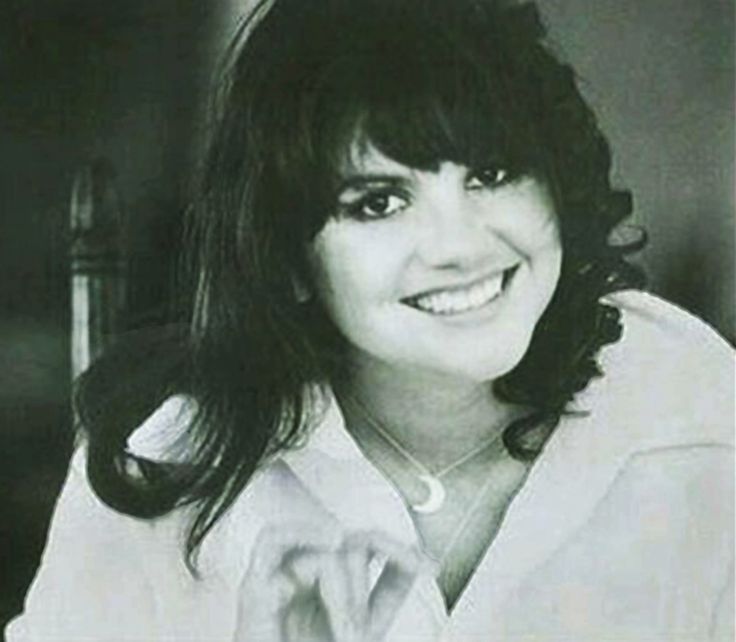
A fragile heart that found its strength in the ache of love and time
There are certain albums that do not merely play — they linger. They stay with us like an old letter, tucked inside a drawer, carrying the scent of another era. “Heart Like A Wheel”, released in November 1974, is one such treasure. It was the fifth studio album by Linda Ronstadt, a name already familiar to those who followed the rise of California’s country-rock movement in the late 1960s and early ’70s. But it was this record — tender yet unflinchingly honest — that turned her into one of the defining voices of her generation. Upon its release, the album reached No. 1 on the Billboard 200 chart in early 1975, while its lead single, “You’re No Good,” soared to No. 1 on the Billboard Hot 100. For an artist who had long walked the line between folk purity and rock rebellion, Heart Like A Wheel became both a revelation and a homecoming.
At its core, Heart Like A Wheel is an exploration of vulnerability — the kind that comes not from weakness, but from living fully. The title track, written by Anna McGarrigle, is a haunting meditation on love’s power to wound and heal in equal measure. Ronstadt sings it not as a lament, but as quiet acceptance: that to love deeply is to risk breaking open one’s own heart. That emotional truth resonated deeply with listeners then, and perhaps even more so now, when we look back through the lens of time and memory.
Behind its beauty lies a story of artistic courage. By 1974, Ronstadt had already experienced modest success with albums like Don’t Cry Now, yet she was still searching for her true sound — something more personal than pop gloss and more nuanced than straight country. She found it by surrounding herself with musicians who shared her vision: producer Peter Asher, whose gentle precision framed her voice like sunlight through lace; session players like Andrew Gold and Danny Kortchmar, whose arrangements breathed life into each song; and background harmonies from friends within the Los Angeles folk-rock circle that shaped so much of American music in that decade.
Every song on Heart Like A Wheel feels chosen with care — part confession, part homage. Her cover of “When Will I Be Loved” reclaimed an Everly Brothers classic with a woman’s raw defiance; “It Doesn’t Matter Anymore” carried Buddy Holly’s youthful melancholy into adulthood; while “Faithless Love”, penned by J.D. Souther, became a whisper of heartbreak too familiar to ignore. There was no artifice here — only life rendered through music’s simplest truths.
Critics recognized it immediately as a turning point. The album earned Linda Ronstadt her first Grammy Award, for Best Country Vocal Performance (Female), and received a nomination for Album of the Year in 1976. But beyond trophies or charts, what mattered most was how it felt. The record captured the delicate space between loss and resilience — that moment when pain softens into memory, when longing becomes wisdom.
Listening to Heart Like A Wheel today is like walking through a gallery of emotions you once thought you’d forgotten: first loves fading at dusk, quiet drives along winter roads, letters never sent but always remembered. It reminds us that every heart carries its own wheel — sometimes broken, always turning — guided by music that still knows how to understand us long after words fail.
In that sense, Heart Like A Wheel isn’t just an album; it’s a reflection of how time teaches tenderness. Through Linda Ronstadt’s voice — strong yet trembling with humanity — we remember what it means to keep loving despite everything we’ve lost along the way.
