
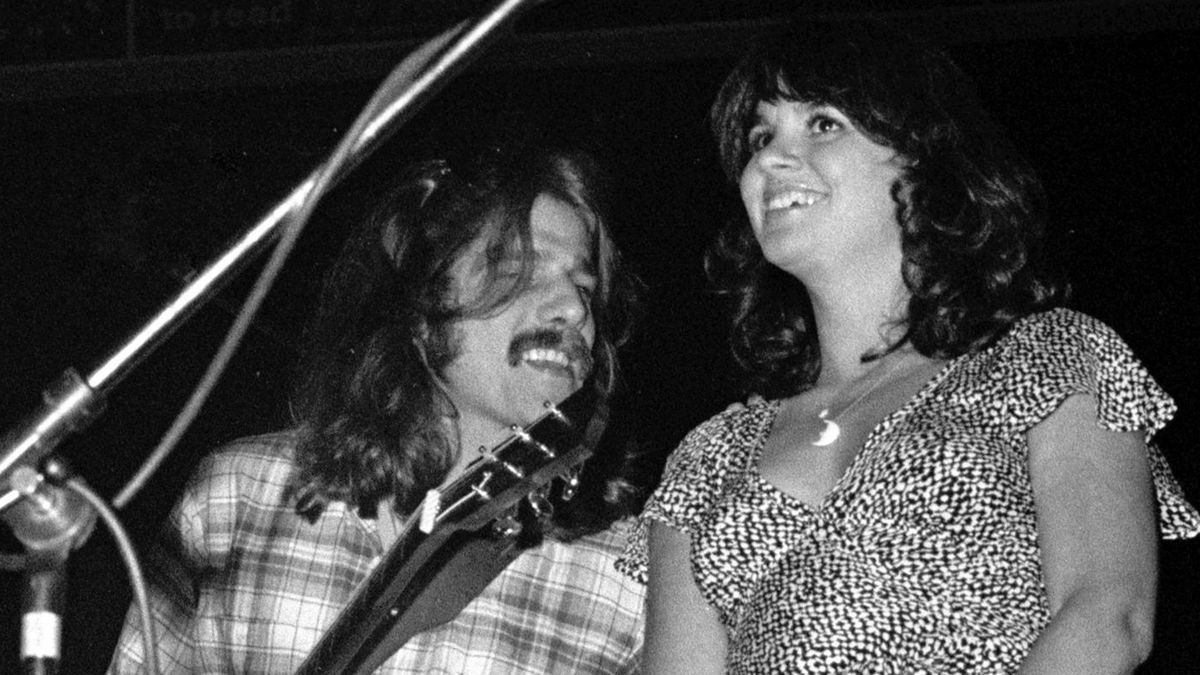
How Do I Make You turns desire into a trembling challenge, and Linda Ronstadt sings it with the kind of urgency that made 1980 feel like a new chapter instead of a comfortable encore.
When Linda Ronstadt released How Do I Make You in 1980, it was more than just another hit single from a singer who already seemed incapable of making an uninteresting record. It was a signal. A sharp one. The song became the opening track and first single from Mad Love, and it climbed into the Top 10 of the Billboard Hot 100, peaking at No. 10. That chart success mattered, of course, but what mattered even more was the feeling it carried. This was not the easygoing California warmth many listeners had first associated with Ronstadt in the 1970s. This was leaner, quicker, tighter, and more restless. It had the pulse of the new decade in it.
That is one reason How Do I Make You still stands out. It arrived at a moment when Ronstadt could easily have repeated herself and remained enormously successful. Instead, she leaned into a harder, nervier sound on Mad Love, an album produced by Peter Asher that brought together rock, pop, new wave edges, and emotional directness. The album itself reached No. 3 on the Billboard album chart, and its opening seconds told listeners immediately that this would not be a sleepy victory lap. Ronstadt sounded alive to change, unafraid of speed, and fully committed to the emotional temperature of the material.
The song was written by Billy Steinberg, long before his name became widely known as one of the great pop songwriters of the 1980s. Years later, many would know Steinberg for writing or co-writing songs such as Like a Virgin, True Colors, Alone, and Eternal Flame. But How Do I Make You belongs to that earlier, hungrier chapter, when the writing still had a rough urgency to it. In Ronstadt’s hands, that urgency never gets polished away. She does not smooth the question into romance. She leaves it exposed.
And that question is the heart of the song. How Do I Make You is built around longing, but not the dreamy kind. It is about desire mixed with impatience, attraction mixed with doubt. The lyric does not come from someone who feels secure. It comes from someone trying to bridge a distance she can feel but cannot fully explain. That is why the title line lands so strongly. It is not a glamorous line. It is vulnerable. It admits that love, or even attention, cannot simply be commanded. Something is missing, and the singer knows it.
Ronstadt was always one of the great interpreters of emotional ambiguity. She could sing heartbreak, devotion, defiance, loneliness, and desire without reducing any of them to clichés. On How Do I Make You, she does something especially memorable: she sounds both powerful and uncertain at the same time. That balance is not easy to achieve. Many singers can project confidence. Many can project sadness. Far fewer can inhabit the uneasy space in between, where wanting someone makes a person feel strong one second and exposed the next. Ronstadt understood that territory better than most.
Musically, the record is a thrilling departure without ever feeling like a costume change. The guitars bite. The rhythm section pushes forward. The arrangement is compact and urgent, very much in step with the fresh, energetic sound that was reshaping pop and rock radio at the turn of the decade. Yet Ronstadt never sounds like she is chasing fashion. That is what keeps the performance timeless. She did not borrow this style to seem current. She stepped into it because the song gave her room to be sharper, more immediate, and more emotionally dangerous than before.
There is also something quietly brave about where How Do I Make You sits in Ronstadt’s career. By 1980, she had already built a towering reputation through albums like Heart Like a Wheel, Simple Dreams, and Living in the USA. She was one of the defining American voices of her era. Artists in that position are often rewarded for staying recognizable. But Mad Love showed that Ronstadt was still listening, still moving, still interested in tension. She chose songs by younger, sharper writers and gave them authority. In doing so, she kept her own work from turning into nostalgia while she was still in the middle of making it.
That may be the deepest meaning of How Do I Make You. On the surface, it is a song about romantic frustration. Beneath that, it is about the unsettling truth that need can make even the strongest voice sound human in a new way. Ronstadt had one of the clearest and most commanding voices in popular music, yet here she lets the repeated plea do the work. She does not overdecorate it. She does not sentimentalize it. She lets the tension remain unresolved, and that is why the song still feels alive. Some songs answer their own question before they end. This one never does.
For listeners returning to it now, that is part of the lasting pleasure. How Do I Make You is exciting, catchy, and radio-ready, but it also carries a tremor of loneliness inside its hook. It reminds us that some of the best pop records are not built on certainty at all. They are built on the ache of not knowing how to reach another person, even when every feeling is already there. Linda Ronstadt took that ache and turned it into something sleek, forceful, and unforgettable.
In the end, How Do I Make You remains one of the clearest examples of why Ronstadt mattered so much. She did not simply sing songs well. She found the emotional pressure points inside them. She knew when to soar, when to hold back, and when to let one repeated line reveal everything that pride would rather hide. In 1980, with one of the decade’s most arresting openings, she proved that reinvention does not have to be loud to be profound. Sometimes it arrives as a question that keeps echoing long after the record stops spinning.
