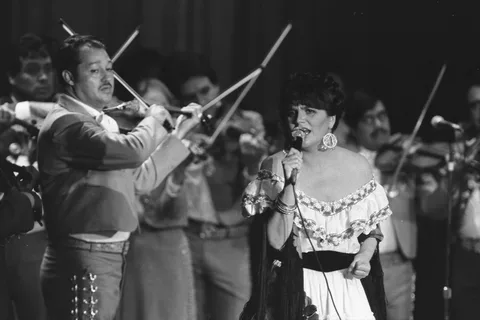
With “Different Drum”, Linda Ronstadt did more than land a breakthrough hit in 1967—she revealed an interpretive power so clear, so emotionally precise, that it changed the way listeners heard her forever.
There are songs that become hits, and then there are songs that seem to announce a future. “Different Drum”, recorded by Linda Ronstadt and the Stone Poneys, belongs to the second kind. Released in 1967 from Evergreen, Volume 2, it rose to No. 13 on the Billboard Hot 100, giving the group its defining national success and giving Ronstadt her first unmistakable moment of arrival. Plenty of records climb the chart and then drift into oldies radio as pleasant memories. This one did something more lasting. It made people stop and ask: who is that voice?
What made the record so striking was not simply that Ronstadt could sing beautifully. Many singers could. What made “Different Drum” feel different, then and now, was the way she could inhabit a song from the inside. Written by Michael Nesmith, the lyric is direct, almost conversational. It is a parting song, but not a bitter one. The narrator is not attacking love, nor mocking the person she is leaving. She is simply refusing a future that does not fit her spirit. “You and I travel to the beat of a different drum” remains one of the cleanest, most elegant declarations of emotional independence in 1960s pop. In lesser hands, the song might have sounded merely bright, clever, or lightly defiant. In Ronstadt’s voice, it sounded personal.
That is the true breakthrough hidden inside the chart story. By the late 1960s, radio was crowded with strong personalities, changing styles, and a restless sense that pop music itself was growing up. Yet Ronstadt brought something that was neither theatrical nor showy. She sang the song with tenderness, hesitation, firmness, and a trace of regret all at once. She did not flatten the lyric into a slogan. She let it breathe. You can hear attraction in the performance, but also caution. You can hear affection, but also self-knowledge. That balance is exactly why the record still feels so modern. The woman in the song is not cruel. She is clear.
The arrangement helped the record stand apart as well. The Stone Poneys had roots in the folk-rock world, but “Different Drum” arrived with a polished, radio-ready elegance that set Ronstadt squarely in the spotlight. Its pop sheen, melodic bounce, and memorable instrumental texture gave the song immediate appeal, yet the emotional center was always the vocal. Even in a record designed to catch the ear quickly, Ronstadt brought patience and shading. She understood that the strongest heartbreak songs are not always the ones that sound wounded. Sometimes the deeper ache is in restraint, in the moment when someone tells the truth gently because anything harsher would be dishonest.
It is also important to remember where this performance sits in the larger arc of her career. This was years before Heart Like a Wheel, before her reign as one of the defining voices of 1970s American popular music, before the records that would make her one of the most admired interpreters of rock, country, torch songs, standards, and traditional music. On “Different Drum”, the essential quality was already there. Ronstadt did not need to write a song to stamp it with identity. She had the rarer gift of revelation. She could take a composition someone else had written and uncover the emotional life hidden inside it. That would become one of the great themes of her career.
For the Stone Poneys, the hit was both a triumph and a turning point. Success gave the group visibility, but it also made the balance of attention impossible to miss. Audiences responded powerfully to Ronstadt, and the single effectively pushed her to the center of the frame. That kind of breakthrough can be exhilarating, but it also changes a group’s internal gravity. In hindsight, “Different Drum” feels like the moment when the path toward Linda Ronstadt’s solo stardom first became visible to everyone else.
The song’s meaning has lasted because it speaks in a voice that never grows old: the voice of someone refusing to live a life chosen by another person’s expectations. There is freedom in it, but not a careless kind of freedom. It is thoughtful freedom. Responsible freedom. The narrator knows that affection is not enough if two people are moving toward different futures. That theme still lands with unusual force because Ronstadt never treats it as a clever pose. She sings it as a difficult truth.
And that may be why this 1967 hit still feels so revealing. When listeners first heard Linda Ronstadt on “Different Drum”, they were hearing more than a young singer with perfect pitch and striking tone. They were hearing the beginnings of one of the finest interpreters in modern American music. The chart position mattered. The breakthrough mattered. But the deeper story was in the phrasing, in the emotional intelligence, in the graceful strength of a performance that refused exaggeration. Long before the awards, the classic albums, and the larger legend, “Different Drum” had already told the truth: Linda Ronstadt knew how to make a song feel lived, not merely sung.
