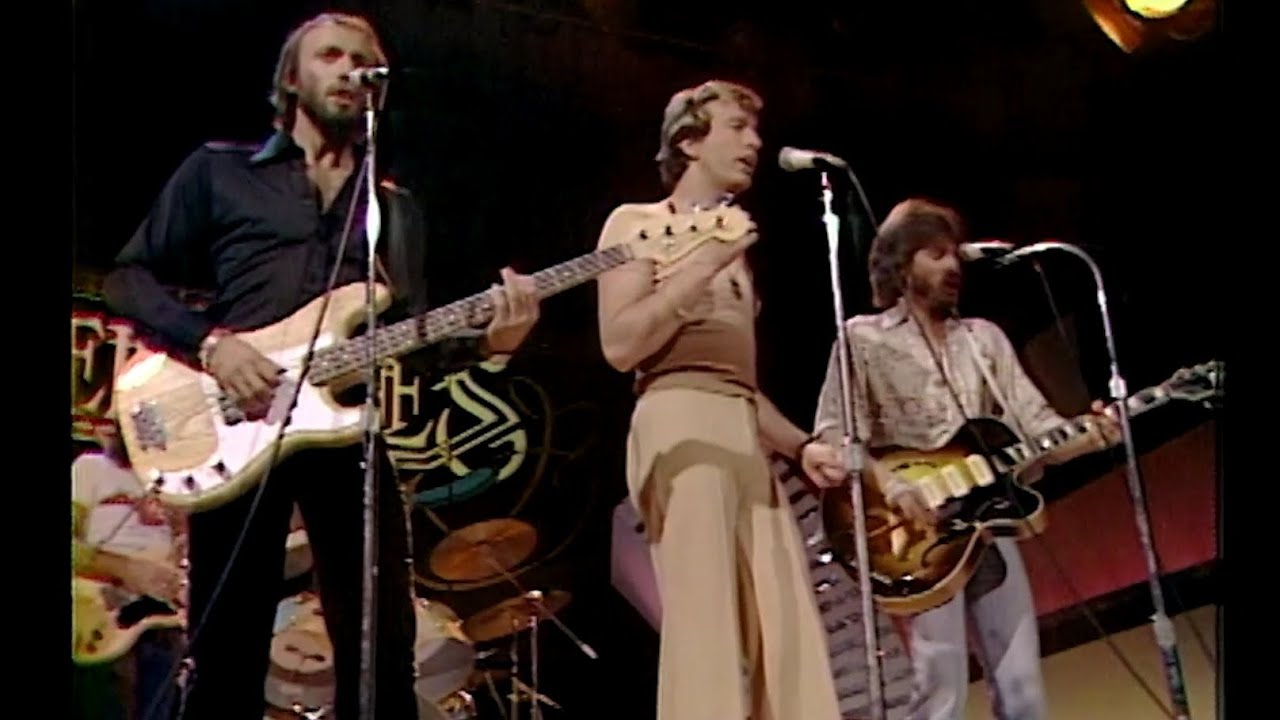
At the 25-year mark, This Is Where I Came In sounds like the Bee Gees turning back toward their beginnings even as they gently close the last chapter of their studio-album journey.
A quarter-century on, This Is Where I Came In carries a special kind of weight. Released in 2001 as the title track of the Bee Gees‘ final studio album, it was more than a new single from a legendary group. It was a self-portrait in motion. In Britain, the single reached No. 18 on the UK Singles Chart, while the album This Is Where I Came In climbed to No. 6 on the UK Albums Chart. Those numbers mattered, of course, but they tell only part of the story. What gives the song its lasting power is the way it sounds like a circle being completed: not with fanfare, not with sentimentality, but with deep musical self-recognition.
That is why the song feels richer at the 25-year mark than it may have felt in the moment. On the surface, it is bright, tuneful, and unforced, built on a crisp, guitar-led pop framework that deliberately steps away from the glossy expectations many listeners still attached to the group after the disco years. But underneath that easy motion is a thoughtful act of looking back. Barry Gibb and Robin Gibb trade lead vocals, and that choice is central to the song’s emotional identity. Barry brings the earthy drive, Robin the yearning ache. Together, they do not simply sing the song; they embody the history of the Bee Gees inside it. With Maurice Gibb present as co-writer and essential musical anchor, the record becomes a full-brother statement, one last studio-era reminder of how distinctive their blend really was.
The song was written by Barry, Robin, and Maurice Gibb, and its title says almost everything that matters. This Is Where I Came In is not a line of surrender. It is a line of identity. After decades of reinvention, global fame, critical overcorrection, and the strange burden of being remembered too narrowly by casual listeners, the Bee Gees chose to make a title track that quietly reclaimed the full map of who they were. Before they became shorthand for an era, they were craftsmen of melody, harmony, and reflective pop writing. They came out of beat-group energy, British pop, soul, and strong song structure. This record nods back to those roots without becoming a museum piece. It sounds alive, not archival.
That may be the most moving thing about it. Plenty of legacy acts look backward and end up sounding trapped by their own past. The Bee Gees did something subtler. They made a song that remembers where they began while still standing firmly in the present tense. The arrangement has a relaxed confidence. The melody moves with ease. The vocal exchange feels conversational, almost like two brothers glancing over old roads and finding that the old roads still lead somewhere worth going. There is no strain in it, no desperate attempt to chase youth or fashion. Instead, there is clarity. The song says that origins still matter, that the first instincts were not erased by fame, and that an artist can return to the beginning without moving backward.
Its meaning also deepens when heard as the opening declaration of the album This Is Where I Came In. As a title track, it announces the theme before the listener has fully settled in. It invites us to hear the album as a reckoning with continuity: who the brothers were, what survived all the commercial highs and changing musical climates, and what remained unmistakably theirs. Heard in that light, the song becomes more than a catchy single. It becomes a mission statement. Not a grand one, and not a dramatic one, but a deeply human one. The Bee Gees were saying that after everything, they still recognized themselves in the music.
There is also a quiet irony in how modest the song feels. For a group associated with one of the biggest pop identities of the twentieth century, This Is Where I Came In refuses spectacle. That is precisely why it endures. It does not need a giant chorus to prove its importance. Its power lies in poise. Barry and Robin’s traded lines create a sense of movement between memory and present reality, between public legend and private musical instinct. The record sounds like brothers still listening to one another. For listeners who followed the group across many eras, that intimacy can be unexpectedly affecting.
With time, history gave the song an added finality. It stands as the final lead single from the final studio album released by the Bee Gees, and that alone would make it notable. Yet what makes it unforgettable is that it does not sound like an ending trying to announce itself. It sounds like an introduction spoken one last time, as if the group understood that the truest summary of a long career was not a victory lap but a return to first principles. That is a rare kind of wisdom in popular music.
Twenty-five years later, This Is Where I Came In feels less like a late-career footnote and more like one of the most eloquent closing statements in the Bee Gees catalogue. It reminds us that their story was never only about one era, one style, or one commercial peak. It was always about songs, voices, and the instinct to keep finding themselves inside the music. In that sense, the title was true in more ways than even the brothers may have realized. This was where they came in, yes. And for their studio-album story, it was also where they left us: with grace, memory, and the sound of home rediscovered.
