A love song built on uncertainty, “Don’t Know Much” endures because Linda Ronstadt and Aaron Neville turned simple words into one of pop’s most unforgettable conversations.
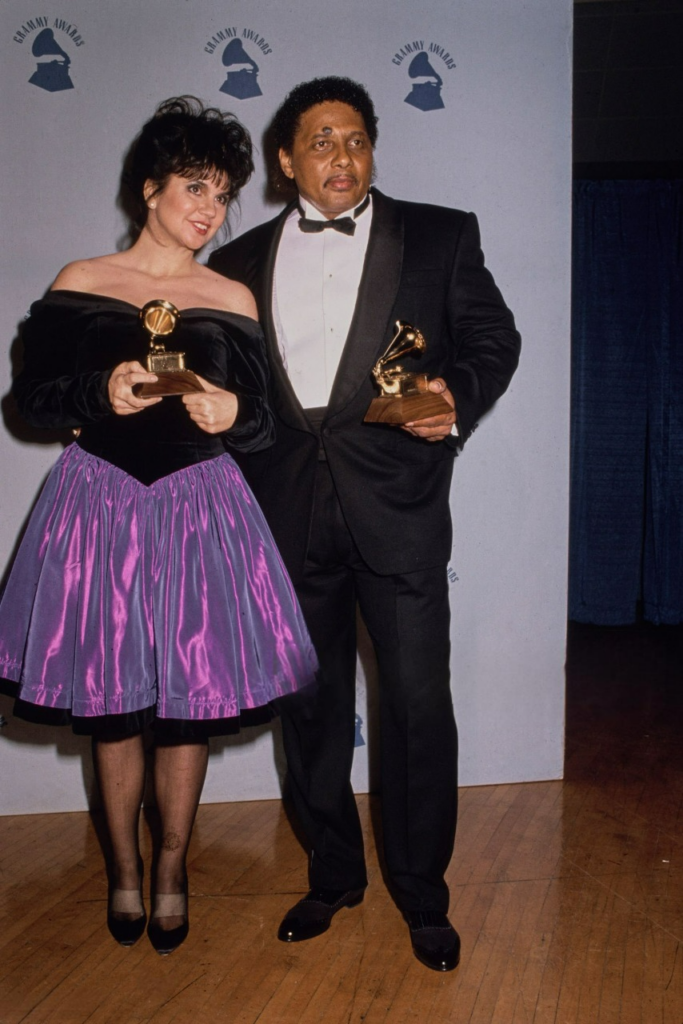
There are duets that sound polished, and there are duets that feel destined. “Don’t Know Much” belongs in the second category. Released from Linda Ronstadt’s 1989 album Cry Like a Rainstorm, Howl Like the Wind, the recording rose to No. 2 on the Billboard Hot 100 and reached No. 1 on the Adult Contemporary chart. Not long after, it earned Ronstadt and Aaron Neville the Grammy Award for Best Pop Performance by a Duo or Group with Vocal. Those facts matter because they tell us this was not simply a tasteful adult-pop success. It was a major musical moment, one that restored Ronstadt to the center of mainstream pop conversation and introduced a wide audience to the trembling beauty of Neville’s voice in a whole new way.
What still makes the record feel all-time caliber is the contrast. Linda Ronstadt sings with clarity, control, and emotional firmness. Aaron Neville answers with that high, fragile, almost prayer-like tenor that seems to quiver on the edge of feeling. On paper, those textures should be difficult to blend. In practice, they make the song unforgettable. She sounds grounded. He sounds airborne. She brings steadiness; he brings vulnerability. And somewhere between those two qualities, the heart of the song takes shape.
The song itself had a history before they touched it. Written by Barry Mann, Cynthia Weil, and Tom Snow, “Don’t Know Much” had existed for years before becoming a signature hit. But the Ronstadt-Neville version is the one that finally revealed the song’s full emotional design. The lyric is almost disarmingly plain: a person admits what he does not know about the world, schoolbook facts, or grand theories, and then lands on the one truth that matters most: love. Lesser singers could have made that sentiment sound lightweight. These two make it sound hard-won. Their performance turns simplicity into wisdom.
Part of the achievement lies in timing. By 1989, Linda Ronstadt had already lived several artistic lives. She had been a rock voice, a country-rock interpreter, a standards singer, a performer unafraid to move beyond the safe boundaries of pop commerce. That restless intelligence made her admired, but it also meant that her chart identity had become less predictable than it had been in the 1970s. “Don’t Know Much” felt like a return, though not a retreat. She was not trying to sound younger, louder, or trendier than the era around her. She simply found the right song, the right partner, and let maturity become the record’s strength.
For Aaron Neville, the moment carried another kind of resonance. He had long been admired, especially by listeners who knew the ache and elegance of “Tell It Like It Is”, but “Don’t Know Much” brought him back into the broad pop spotlight with remarkable force. If the song felt like a comeback, it was because it reminded listeners that a truly distinctive voice never ages out of relevance. Neville did not overpower the record. He haunted it. Every time he enters, the song opens wider.
Producer Peter Asher also deserves credit for understanding that the arrangement should never crowd the emotional center. The production is smooth, but not sterile; elegant, but not distant. It gives the singers room to breathe, to lean into one another’s phrasing, and to let silence do some of the work. That restraint is one reason the recording has aged so gracefully. It belongs to its era, yes, but it is not trapped by it. The record still sounds human before it sounds fashionable.
And then there is the deeper reason the duet lasts. “Don’t Know Much” is not a song about certainty dressed up as romance. It is a song about humility. The narrator does not claim brilliance, mastery, or complete understanding. He confesses limitation and offers love anyway. That emotional posture is rare in pop, and perhaps even rarer in hit duets, which so often chase drama, fireworks, or vocal competition. Here, there is no contest. The power comes from mutual surrender. Each singer makes room for the other. Each one sounds changed by the presence of the other.
That is why the record still lands with such force decades later. It is not only nostalgic, though it carries the warmth of late-1980s radio beautifully. It is not only technically superb, though the phrasing and balance are exquisite. It is not only commercially important, though the No. 2 chart peak and Grammy win firmly place it among the defining duets of its time. It lasts because it captured something rare: two voices so different that they reveal the emotional truth of the song simply by meeting in the same space.
Many hit duets are remembered because they were popular. Linda Ronstadt and Aaron Neville’s “Don’t Know Much” is remembered because it feels necessary. When those voices come together on the final lines, one steady and one trembling, one earthbound and one almost celestial, the song stops being a pleasant adult-pop success and becomes something richer. It becomes a reminder that great records are not always built from complexity. Sometimes they are built from contrast, trust, and the courage to sing one simple truth without ornament: I may not know much, but I know this feeling is real.
