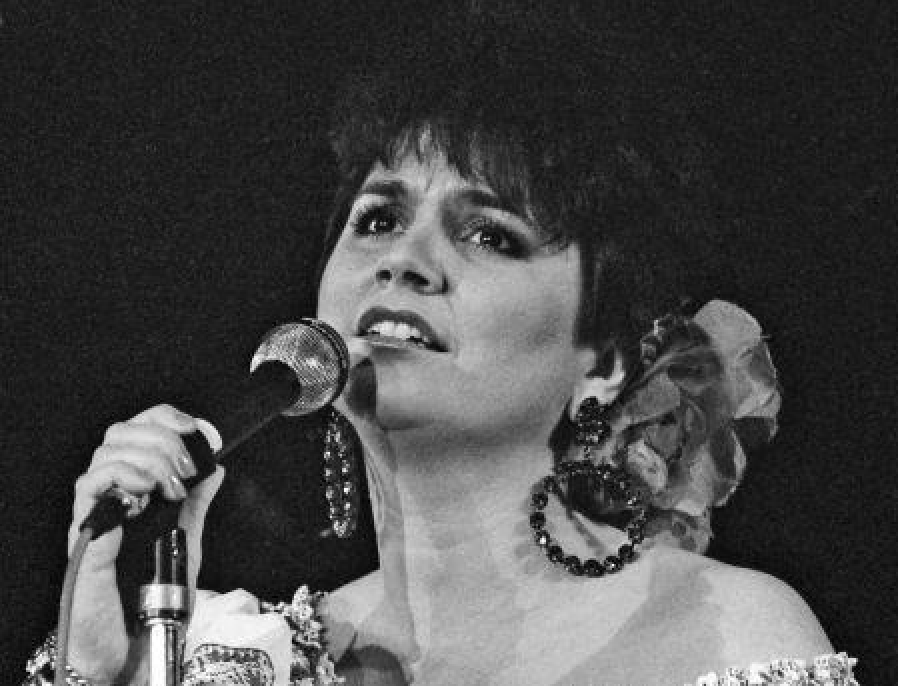
Ooh Baby Baby became something quietly unforgettable in the hands of Linda Ronstadt: a soft confession, a wounded apology, and one of the most tender pop performances of her career.
When Linda Ronstadt recorded Ooh Baby Baby for her 1978 album Living in the USA, she was not taking on just another old favorite. She was stepping into one of the most beloved songs in the Motown canon. The original, written by Smokey Robinson and Pete Moore and first recorded by Smokey Robinson & the Miracles in 1965, had already become a standard of romantic regret. Ronstadt understood exactly how delicate that legacy was. Instead of trying to out-sing the song or remake it into something flashy, she did something far more difficult: she trusted its sadness, entered it gently, and let the ache speak for itself.
That decision paid off in a major way. Released as a single from Living in the USA, Ronstadt’s version reached No. 7 on the Billboard Hot 100 and climbed to No. 2 on the Adult Contemporary chart. It became one of her signature late-1970s hits and helped confirm what listeners already knew: few singers of her era could inhabit a song so completely without sounding as though they were trying to prove anything. The album itself was another triumph, reaching No. 1 on the Billboard 200, a reminder that by this point Ronstadt was not simply a successful singer. She was one of the defining voices in American popular music.
What makes Ooh Baby Baby so enduring is that its lyric is built on a very human kind of defeat. This is not a grand declaration of love. It is an admission of failure. The famous opening idea, that the singer did someone wrong and lost them in the process, gives the song its emotional gravity. There is no self-pity in the best readings of it, only remorse and longing. In the original Miracles recording, that feeling was carried by Smokey Robinson’s feather-light tenor, a voice so intimate it seemed to float. That version reached No. 16 on the Billboard Hot 100 and No. 4 on the R&B chart in 1965, and for many listeners it remains untouchable.
But Ronstadt’s version does not compete with the original so much as it reframes it. Where the Motown recording moves with a quiet soul pulse, Ronstadt and producer Peter Asher place the song in a smoother, late-1970s pop setting. The arrangement is restrained and luminous, giving her room to stretch each phrase just enough to let the emotion settle. She never hurries it. She sings as though the words have already been lived with for years. That is the secret of the performance: it feels less like an interpretation than a recollection.
This mattered because Linda Ronstadt had already built her career on a rare gift for interpretation. She could move from country-rock to pop, from Mexican traditional songs to American standards, and still sound unmistakably herself. Yet Ooh Baby Baby stands apart even in that extraordinary catalog. It is not driven by vocal power in the obvious sense. There are no dramatic flourishes meant to stop the room. Its strength lies in discipline, in vulnerability, in the wisdom to know that a song about regret can be shattered by too much performance. Ronstadt gives it space, and that space is where the feeling deepens.
There is also something quietly moving about the fact that she chose this song at the height of her commercial fame. By the time Living in the USA arrived, Ronstadt had already delivered hit after hit and could have leaned toward safer, more predictable material. Instead, she kept following songs with emotional depth and strong melodic bones, wherever they came from. Her affection for the great American songbook was always wider than genre labels. In Ooh Baby Baby, she honored a soul classic not by dressing it up in nostalgia, but by finding a fresh emotional center inside it.
The meaning of the song has always been simple on paper and devastating in practice. It is about apology after the damage is already done. It is about recognizing, too late, the cost of carelessness. Yet in Ronstadt’s voice, the song gains another shade: not only sorrow, but tenderness toward the person who failed. She does not excuse the mistake, but she understands the weakness. That balance is what keeps the performance from becoming merely sad. It becomes compassionate. It sounds like someone looking back with full knowledge of what cannot be repaired.
That is why the record still lands with such force. Many hit singles announce themselves immediately; this one lingers. It stays in the room after it ends. Fans who know Ronstadt for bigger, more overtly dramatic recordings sometimes come back to Ooh Baby Baby later in life and hear something even richer there: patience, maturity, and emotional truth without ornament. It reminds us that quiet songs often reveal the most. They do not ask for attention. They earn it.
In the end, Linda Ronstadt’s Ooh Baby Baby remains one of the great cover records of its era because it understands a timeless rule of popular music: a beautiful song survives not through imitation, but through honest feeling. Ronstadt brought that honesty in full. She took a classic of wounded love and made it sound as if it had been waiting for her voice all along.
