
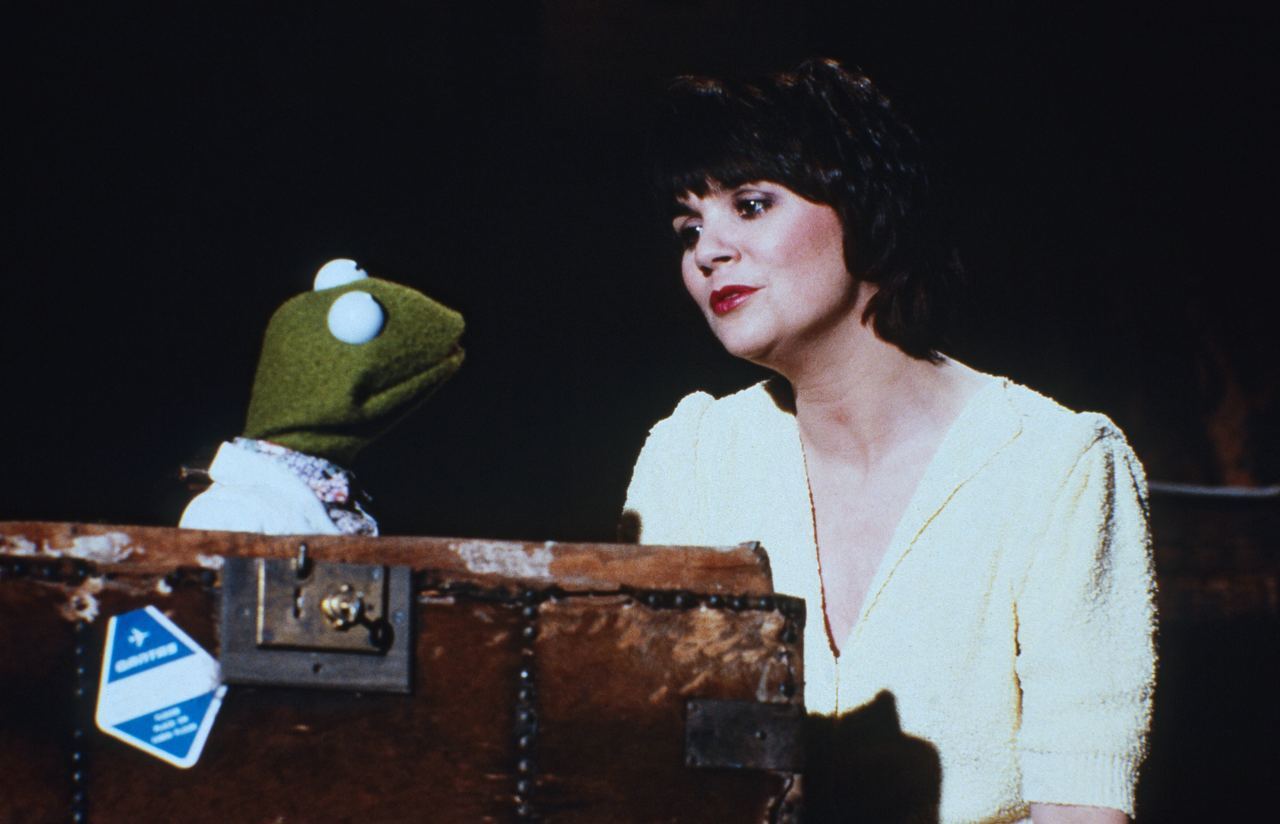
A song that sounds gentle on the surface, My Funny Valentine becomes, in Linda Ronstadt‘s hands, a tender meditation on loving what is fragile, imperfect, and deeply human.
There are songs that arrive with thunder, and there are songs that survive by whispering. My Funny Valentine belongs to the second kind. Written by Richard Rodgers and Lorenz Hart for the 1937 musical Babes in Arms, it has lived many lives across American music, but in the orbit of Linda Ronstadt, it takes on a particular kind of ache: elegant, unforced, and quietly devastating. Unlike the radio-conquering singles that made Ronstadt one of the defining voices of the 1970s, this song was never chiefly about chart power in her catalog. It belongs instead to the more intimate, interpretive side of her artistry, the side that came into full bloom when she turned toward the classic American songbook.
That context matters. When Linda Ronstadt joined forces with the great arranger Nelson Riddle in the 1980s, she surprised much of the industry by stepping away from the rock and country-rock sound that had made her a star. The gamble paid off beautifully. What’s New in 1983 reached No. 3 on the Billboard 200, proving that audiences were more than ready to follow her into a richer, older, more emotionally nuanced repertoire. In that artistic chapter, a song like My Funny Valentine feels utterly natural. Even when it was not presented as a big commercial event, it fit her voice and sensibility with remarkable grace.
And what a song it is. On paper, My Funny Valentine almost reads like a contradiction. The lyric does not praise conventional beauty. It does not flatter in the usual way. Instead, it lingers on imperfections, odd charms, and emotional truth. “Your looks are laughable, unphotographable,” Hart wrote, in one of the most daring love lyrics ever to become a standard. It is affectionate, yes, but it is also vulnerable, almost trembling in its honesty. This is not a song about idealized romance. It is about devotion that sees clearly and stays anyway. That is why the song has always carried such unusual emotional weight. It offers love without illusion, and that may be the rarest kind.
Linda Ronstadt was uniquely equipped to understand that balance. Her greatest gift was never only vocal strength, though she had that in abundance. It was the ability to sound both disciplined and exposed at once. In her more pop-centered years, she could soar above a band with thrilling force. But in the world of standards, she often did something harder: she trusted stillness. A song like My Funny Valentine does not need grand gestures. It needs phrasing, breath, patience, and emotional intelligence. Ronstadt had all four. She knew how to let a line rest just long enough for the feeling underneath it to rise.
That is one reason her approach to classic material still resonates so strongly. She never treated these songs as museum pieces. She sang them as living emotional documents. With My Funny Valentine, that means resisting the temptation to oversell its sadness or decorate its melody too heavily. The power lies in restraint. The lyric already contains the wound; the singer only has to reveal it. Ronstadt’s interpretive style, especially in her mature standards years, was built for exactly that kind of revelation. She could make a familiar song sound less performed than remembered.
There is also a deeper shadow behind the song itself. For decades, listeners have heard Lorenz Hart‘s lyric as carrying traces of personal insecurity, even self-recognition. While scholars are careful not to reduce the song to autobiography, it is impossible to miss the emotional complexity in words that cherish someone while naming their flaws so directly. That tension is part of what gives the song its staying power. It is tender, but it is not naive. It loves, but it sees. In the hands of Linda Ronstadt, that tension becomes especially moving, because she understood how to sing heartbreak without turning it melodramatic.
As for chart history, it is important to be precise. My Funny Valentine was not one of Linda Ronstadt‘s major standalone pop-chart hits in the way songs like You’re No Good or Blue Bayou were. It did not define her career through a headline-grabbing Billboard Hot 100 peak. But that does not diminish its importance. If anything, it reminds us that some performances matter for reasons charts cannot measure. Ronstadt’s standards period was commercially successful in album terms, and that success created the artistic space for songs like this to be heard with the seriousness they deserve.
What remains so affecting now is how grown-up the song feels. There is no posturing in it. No fantasy. No rush toward a grand climax. Just the hard-won tenderness of someone choosing to love what is real. That emotional honesty was central to Linda Ronstadt‘s finest interpretive work. She could take a lyric that might look slight on the page and fill it with memory, regret, warmth, and acceptance. My Funny Valentine becomes, in that light, not merely a standard, but a quiet statement of emotional courage.
That may be why the song lingers long after it ends. It reminds us that the deepest love songs are not always the ones that promise forever in glowing terms. Sometimes they are the ones that admit the awkwardness, the sorrow, the imperfection, and still choose tenderness. Linda Ronstadt understood that truth better than most singers of her generation. And when she stepped into material shaped by Rodgers and Hart, she brought with her not only technical mastery, but a kind of wisdom that can only be heard, never faked.
In the end, My Funny Valentine is one of those songs that seems to grow older with dignity. So does Linda Ronstadt‘s art. Together, they create something rare: a performance space where vulnerability is not weakness, where elegance is not coldness, and where the smallest emotional inflection can break your heart more completely than a shout ever could.
