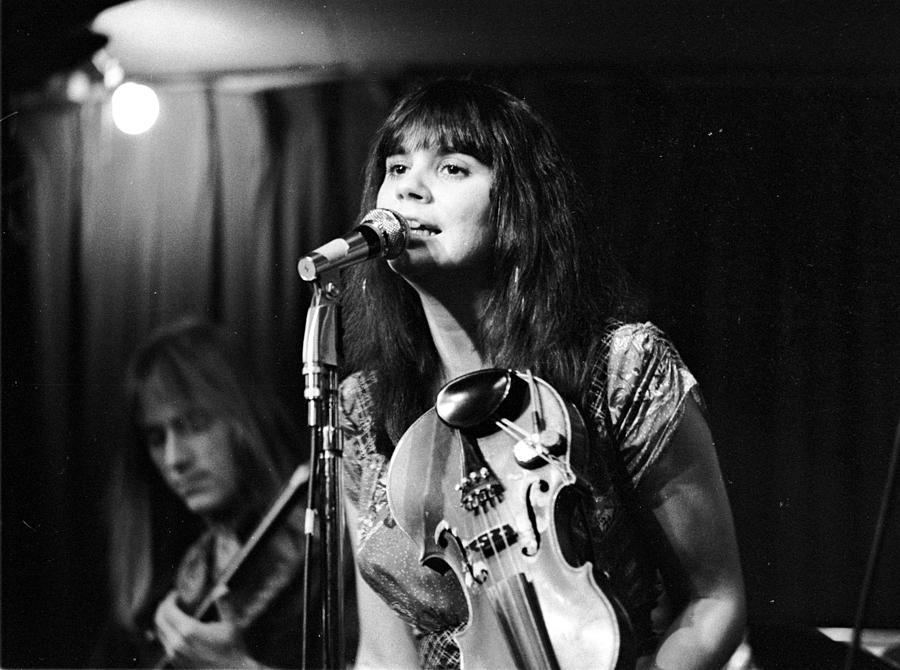
Love Has No Pride may be one of Linda Ronstadt‘s quietest recordings, but it remains one of her most revealing: a song about dignity slipping away in the shadow of love, sung so honestly that the hurt seems to deepen with every passing year.
There are songs that announce their sadness with thunder, and then there are songs like Love Has No Pride, which seem to walk into the room with lowered eyes and say everything in a near whisper. When Linda Ronstadt recorded the song for her landmark 1974 album Heart Like a Wheel, she gave it a kind of emotional clarity that still stops listeners cold. Released as a single in 1975, her version reached No. 51 on the Billboard Hot 100 and climbed to No. 8 on Billboard’s Easy Listening chart. Those numbers tell only part of the story. The real measure of the song’s power is how deeply it stayed with people who recognized the feeling immediately: loving someone after pride has already been worn down to almost nothing.
The song itself was written by Eric Kaz and Libby Titus, two writers who understood that heartbreak is not always loud. Sometimes it is weary. Sometimes it is humiliating in ways a person can barely admit, even to themselves. Before Ronstadt recorded it, Bonnie Raitt had already introduced the song on her 1972 album Give It Up. Raitt’s version is deeply felt and beautifully earthy, but Linda Ronstadt brought something different to it: a cleaner line, a more suspended ache, and a voice that could make vulnerability sound both fragile and unavoidably strong.
That duality is what makes the performance so unforgettable. Love Has No Pride is built on a painful contradiction. The singer knows the relationship is damaging. She knows better. She knows what it costs her to remain emotionally available. And yet the door is still open. That is the devastating brilliance of the lyric. It is not about romantic fantasy. It is about the moment self-respect and longing become tangled together. In lesser hands, the song might have turned melodramatic. In Ronstadt’s hands, it becomes almost unbearably human.
Much of that power comes from restraint. During the Heart Like a Wheel period, Linda Ronstadt was proving that she could move between country, rock, folk, and pop with unusual ease, but she never treated emotional songs like this as vocal showcases. Produced by Peter Asher, the recording gives her room rather than clutter. The arrangement does not crowd the lyric. It lets the ache breathe. Instead of pushing every line toward a dramatic peak, she allows the sorrow to gather quietly, which is often far more affecting. You hear not just loss, but the exhaustion that follows loss when someone keeps returning to the same wound.
That was one of Ronstadt’s greatest gifts as an interpreter. She could sing another writer’s words and make them feel as if she had lived beside them for years. On Heart Like a Wheel, that gift was everywhere, and the album would become a breakthrough triumph, reaching No. 1 and establishing her as one of the defining voices of the 1970s. Yet even on a record that also contained major hits and more radio-friendly moments, Love Has No Pride stood apart. It did not need swagger. It did not need a huge chorus. It only needed that plain, bruised truth at its center.
There is also something timeless about the way the song understands emotional surrender. The title alone is brutal in its honesty. Pride is often what people imagine will protect them, the final wall that keeps heartbreak from taking everything. But this song knows that love can make a person cross their own boundaries, ignore their own warnings, and wait longer than they meant to wait. That is why the song still lands so hard. It does not flatter the listener. It recognizes weakness without mocking it.
And Linda Ronstadt never sings the weakness as weakness alone. That is important. There is dignity even in the admission. She does not perform the song as a victim. She sings it as someone fully aware of the emotional cost, which somehow makes it even sadder. The voice is open, clear, and beautifully controlled, but underneath that control is a tremor of resignation. It is the sound of someone telling the truth after all the excuses have run out.
Decades later, Love Has No Pride remains one of the finest examples of why Linda Ronstadt mattered so much. She did not simply sing well. She knew how to locate the emotional center of a song and stay there without forcing it. In a catalog filled with celebrated performances, this one endures because it trusts silence, understatement, and wounded honesty. It reminds us that some of the deepest heartbreak in popular music is not shouted. It is confessed quietly, by someone who already knows the answer and still cannot help hoping for another one.
That is why the song still lingers. Not because it promises healing, and not because it offers grand resolution, but because it understands the lonely terrain between love and self-respect with such painful precision. In Linda Ronstadt’s Love Has No Pride, the sorrow is not theatrical. It is lived-in. And that may be why it feels even more true now than it did then.
