
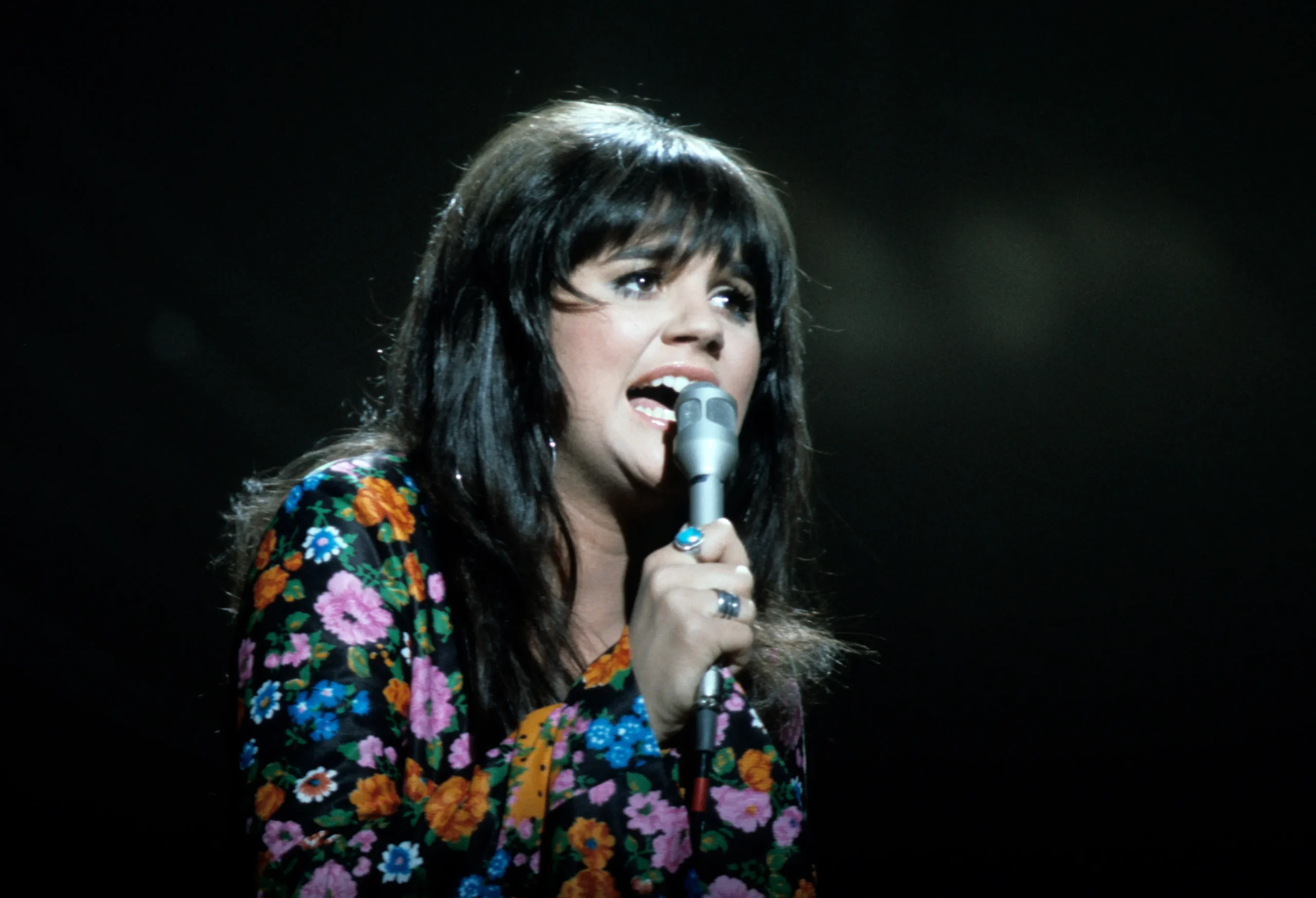
I Ain’t Always Been Faithful reveals the side of Linda Ronstadt that never needed a big chart number to leave a lasting bruise on the heart.
Some songs arrive with trophies, radio saturation, and chart statistics. Others arrive more quietly and stay for years in a deeper place. I Ain’t Always Been Faithful belongs to that second category. In the vast and remarkable songbook of Linda Ronstadt, it is not remembered as one of the major Billboard smashes that carried titles like You’re No Good, When Will I Be Loved, or Blue Bayou into the mainstream. It did not become a defining chart single in the same commercial sense, and that is precisely part of its power. This is a song that lives less in the public spotlight and more in private memory, where confession always sounds louder.
What makes I Ain’t Always Been Faithful so affecting is the way it refuses to tidy up human weakness. There is no grand speech in it, no easy plea for innocence, no polished attempt to come out looking noble. Instead, the song carries the plainspoken ache of someone admitting fault without drama and without disguise. That kind of writing has deep roots in country and American popular songwriting, but it took an interpreter of Linda Ronstadt’s emotional intelligence to make it feel this personal. One of her great gifts, throughout her career, was the ability to sing a song written by someone else and make it sound as though she had lived every line herself. Here, that gift becomes almost unsettling in its honesty.
By the time listeners encountered material like this in Ronstadt’s catalog, they already knew her as an artist who could move effortlessly between rock, country, pop, folk, and torch-song elegance. Yet beneath all that versatility was something even more important: credibility. She never sang down to a lyric. She never coated pain with unnecessary theatrics. On I Ain’t Always Been Faithful, she leans into the vulnerability of the narrator, but never in a way that begs for sympathy. That distinction matters. The song is not asking to be forgiven by the listener. It is merely telling the truth, and truth, in music like this, is often more moving than innocence.
The meaning of the song rests in that difficult emotional territory where love and failure coexist. The title itself says almost everything. It is a confession, yes, but it is also a recognition of human inconsistency. People are not always what they meant to be. Hearts are not always steady. Promises are not always kept. In weaker hands, that idea could have sounded defensive. In Linda Ronstadt’s voice, it sounds weary, reflective, and painfully adult. She gives the lyric a kind of moral gravity. You hear not only what was done, but what it cost.
That is why the song lingers. It does not trade in melodrama. It understands that disappointment often enters a room softly. Ronstadt’s phrasing lets the spaces between the words do some of the work. She had that rare instinct for not over-explaining a feeling. A slight change in emphasis, a note held just long enough, a line delivered without decoration, and suddenly the whole emotional weather of the song shifts. This is where her artistry becomes unmistakable. She was never simply a vocalist with range. She was an interpreter of emotional weather, and songs like I Ain’t Always Been Faithful prove it.
There is also something deeply traditional about the song’s emotional structure. American roots music has always made room for flawed narrators, for people who know they have fallen short and are brave enough to say so aloud. This song stands in that lineage. It does not offer a sermon. It offers recognition. Many listeners return to songs like this not because they celebrate failure, but because they understand that honesty in music can be a form of mercy. It lets people hear themselves without being judged too quickly.
That may be why the song continues to resonate even without the commercial mythology attached to Ronstadt’s biggest releases. Not every important recording becomes a chart event. Some become companions. Some become songs people discover later, after years of living, and realize were waiting for them all along. In that sense, I Ain’t Always Been Faithful may be one of those quieter treasures in the Linda Ronstadt catalog: less famous, perhaps, but no less revealing. If anything, its modest public profile has protected its intimacy.
When people speak about Linda Ronstadt, they often begin with the obvious triumphs, and rightly so. But a full understanding of her artistry has to include performances like this one, where she chose emotional truth over grandeur. I Ain’t Always Been Faithful reminds us that some of her finest moments were not built on spectacle, but on restraint, empathy, and the courage to inhabit a song that tells an uncomfortable truth. Long after louder records have faded from the room, that kind of honesty is what remains.
