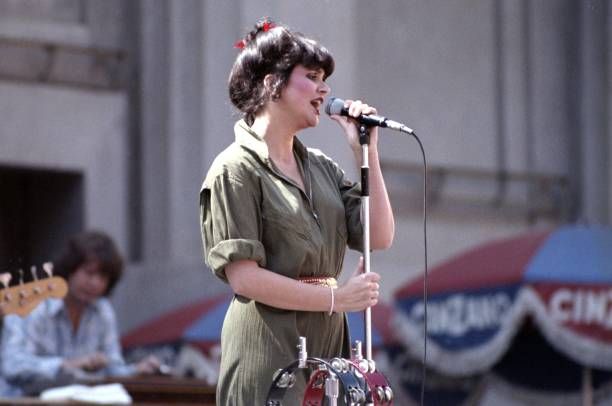
With How Do I Make You, Linda Ronstadt stepped into a sharper, more restless sound in 1980, proving that reinvention could still land with the force of a Top 10 hit.
When Linda Ronstadt released How Do I Make You from Mad Love in 1980, it was more than another successful single from a proven star. It was a turning point. The song climbed to No. 10 on the Billboard Hot 100, giving Ronstadt another major pop hit at a moment when radio was changing quickly and listeners were moving toward leaner, sharper, more modern sounds. Mad Love itself became a major album success, reaching the Top 5 on the Billboard 200. Those chart numbers mattered, of course, but what mattered even more was what they represented: a beloved voice from the 1970s refusing to coast on familiarity.
By the time How Do I Make You arrived, Ronstadt had already built one of the most admired catalogs in popular music. She had moved gracefully through country-rock, pop, ballads, and standards-in-waiting, always sounding as if she understood not just the melody of a song, but its hidden bruise. That is why How Do I Make You felt so bracing. It did not drift in on warmth or soft melancholy. It came in with hard edges, clipped energy, and an urgency that belonged to the new decade. The guitars were tighter, the pulse was tenser, and the emotional atmosphere was less about comfort than pursuit.
The song was written by Billy Steinberg, a writer who would later become widely known for major pop compositions in the years ahead. Here, though, what stands out is the directness of the writing. How Do I Make You is built around a question, but it is not a gentle one. It sounds like longing pushed to the point of impatience. There is desire in it, yes, but also frustration, uncertainty, and the sting of emotional imbalance. The narrator is not serenely waiting to be understood. She is right in the middle of the ache, asking how much more plainly love can be offered before it is finally returned. That tension gives the song its backbone.
What made Ronstadt such an extraordinary interpreter was her ability to sing from inside that tension without overplaying it. On How Do I Make You, she does not turn the lyric into melodrama. She keeps it taut. Her voice is strong, controlled, and unsentimental, yet there is still a tremor of vulnerability running beneath it. That balance is exactly why the performance works. In lesser hands, the song might have sounded merely aggressive or merely desperate. Ronstadt makes it sound human. She gives it steel, but she also gives it hunger.
Mad Love was the album where that stylistic shift became unmistakable. Produced by Peter Asher, the record drew from the energy of new wave and power pop at a time when those styles were pushing into the American mainstream. Ronstadt also recorded songs by Elvis Costello for the album, which tells you a great deal about the territory she was willing to explore. This was not an accidental brush with a trend. It was a serious artistic move toward material that was nervier, cooler, and more contemporary in shape. Yet because it was Ronstadt, the music never lost its emotional core. Even when the arrangements became leaner and more angular, the feeling stayed full.
That is one reason the chart success of How Do I Make You remains so meaningful. Reaching No. 10 on the Billboard Hot 100 showed that this was not simply a respected artist taking a creative detour while the public looked away. People listened. People responded. The single proved that Ronstadt could walk into a more modern sonic world without surrendering the qualities that made audiences trust her in the first place. She did not sound like someone borrowing a fashionable jacket for one season. She sounded like herself, only sharpened by a new frame.
There is something deeply memorable about that kind of artistic courage. Many singers find a successful formula and protect it. Ronstadt was never built that way. Her career has always felt guided by curiosity and by songcraft rather than by caution. How Do I Make You captures that spirit beautifully. It lives at the meeting point between her 1970s stardom and the harder, brisker sound of 1980s pop-rock. It is not just a hit single from a strong album. It is the sound of an artist testing the air of a new era and deciding not to retreat.
Even now, the record carries that thrill. You can hear the moment of transition in every beat. You can hear a singer with nothing left to prove still pushing herself toward something unfamiliar. And perhaps that is why How Do I Make You still lands with such force. Its success was not only commercial. It was symbolic. In three fierce minutes, Linda Ronstadt reminded everyone that longevity in popular music is not only about holding on to what once worked. Sometimes it is about stepping forward, letting the sound change around you, and meeting it without fear.
That is the real legacy of How Do I Make You. Yes, it was a Top 10 hit. Yes, it helped define the identity of Mad Love. But more than that, it marked a moment when Ronstadt showed that reinvention could be bold, elegant, and emotionally true all at once. For listeners who remember hearing it when it was new, and for those discovering it again now, the song still carries that unmistakable spark of an artist moving into the future with her eyes open.
