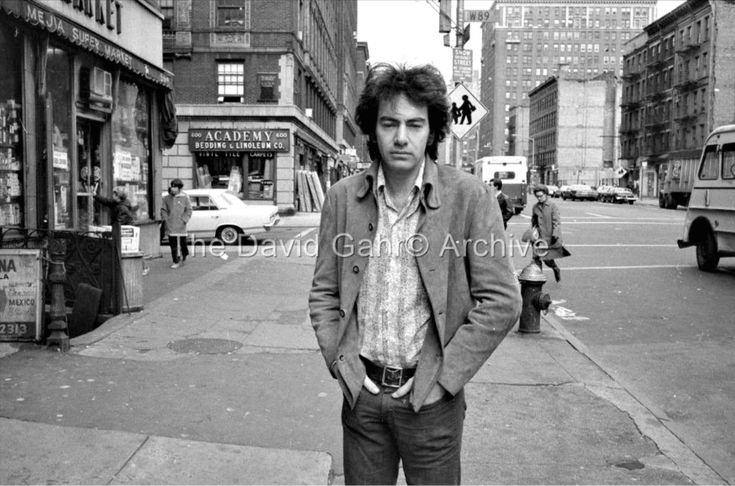
On Stones, Neil Diamond did not try to overpower Leonard Cohen’s Suzanne; he brought it into his own emotional weather, where warmth, longing, and restraint meet.
Neil Diamond’s 1971 version of Suzanne, tucked into his album Stones, is one of those performances that reveals more about an artist than any obvious hit ever could. It was not the record’s big chart single, and it was never pushed as the kind of anthem that would dominate radio. Yet that is exactly why it remains so intriguing. In the United States, Stones climbed to No. 14 on Billboard’s Top LPs chart, and while Suzanne did not have an independent chart life as a major single, its place on that album gave it a quiet importance. It showed that Diamond, already a major star by then, was willing to step into more reflective territory and stand beside a songwriter as singular as Leonard Cohen.
To understand why this recording matters, it helps to remember what kind of song Suzanne already was by 1971. Leonard Cohen had written it after being inspired by Suzanne Verdal in Montreal, and the piece first lived as a poem before it became a song. Judy Collins recorded it in 1966, introducing it to many listeners before Cohen released his own version on Songs of Leonard Cohen in 1967. By the time Neil Diamond approached it for Stones, the song already carried a near-mythic reputation. Its imagery was literary, spiritual, and sensual all at once: tea and oranges, the river, broken saints, human desire, and holy mystery all flowing through the same current. It was not an easy song to cover, because too much force could ruin it, and too much imitation could flatten it into mere homage.
That is what makes Diamond’s version so compelling. He does not sing Suzanne the way Cohen sang it. Cohen’s original often feels like a private meditation spoken just above a whisper, almost as though the singer is still discovering the thought while he utters it. Neil Diamond, by contrast, gives the melody more lift and shape. His phrasing is fuller, warmer, and more openly melodic. He sounds less like a poet murmuring from the corner of a dim room and more like a man stepping forward into the light, carrying the same ache but expressing it in a different language. That change is not a betrayal of the song. It is the entire point of a meaningful cover.
On Stones, that approach fits beautifully. The album itself sits in a fascinating place in Diamond’s career. He had already proven he could deliver enormous pop moments, but Stones also made room for quieter shades of feeling. The presence of Suzanne tells us that Diamond was not only interested in performance; he was deeply interested in songwriting as a form of emotional architecture. He recognized, as many great interpreters do, that certain songs are built so well that they invite new kinds of truth from each singer who enters them.
The arrangement of Diamond’s recording helps explain its effect. It is gentler than some of his more dramatic work, and that gentleness matters. Rather than crowding the lyric, the performance leaves room for the images to breathe. There is still polish in the presentation, of course, but it is not the kind of polish that scrubs away mystery. Instead, it softens the song’s austerity and makes it more accessible without stripping it of depth. Where Cohen’s version can feel almost ascetic, Diamond’s feels companionable. He makes the listener lean in for different reasons. Cohen draws you into enigma; Diamond draws you into feeling.
The meaning of Suzanne has always resisted simple explanation, and that is part of its enduring power. It is a song about attraction, but not merely romance. It is a song about spiritual hunger, but not in any narrow or doctrinal sense. It is about the strange places where human closeness and transcendence seem to overlap. The woman in the song is real, yet also symbolic. The river is a place, but also a passage. The references to Jesus do not function as conventional religion so much as part of the song’s wider meditation on mercy, suffering, and longing. In Neil Diamond’s hands, those themes feel a little less remote. He brings them nearer to the heart. His reading does not solve the mystery of Suzanne; it lets the mystery arrive in a more tender, melodic way.
There is also something quietly courageous about a star of Diamond’s stature choosing to record this song in 1971. He did not need to prove he had taste, literary curiosity, or reverence for great writing. But by placing Suzanne on Stones, he did exactly that. He acknowledged Leonard Cohen not as a fashionable influence, but as a songwriter worthy of serious interpretation. And he trusted his own voice enough not to mimic Cohen’s haunted stillness. He sang it as Neil Diamond, which is why the performance still lingers.
Many listeners remember Stones for the larger hits around that era, and naturally so. But albums often reveal their deepest character in the songs that were never meant to shout. Suzanne is one of those moments. It captures Diamond in dialogue with another writer’s vision, yet somehow sounding more like himself in the process. That is the paradox at the center of all great covers: the borrowed song becomes a mirror.
More than fifty years later, Neil Diamond’s Suzanne still feels worth returning to because it honors the poetry of the original while opening another emotional door. It reminds us that songs travel through time not only because they are well written, but because different voices can reveal different shades of their truth. On Stones, Diamond did not try to claim Suzanne as his own. He did something more graceful than that. He stood beside it, listened carefully, and sang it with deep respect and unmistakable feeling.
