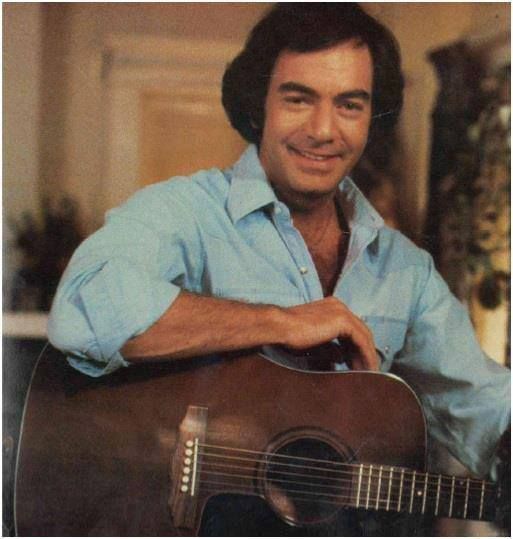
By 1979, Neil Diamond was no longer revisiting a pop trifle when he returned to “I’m a Believer”—he was singing his own history back to himself, with more weight, more warmth, and far more life behind the words.
Most people first met “I’m a Believer” through The Monkees, and for good reason. Written by Neil Diamond, the song exploded in late 1966 and became one of the defining pop singles of its era. The Monkees’ version spent seven weeks at No. 1 on the Billboard Hot 100 and also topped the UK Singles Chart for four weeks. It was bright, immediate, irresistible—a rush of rhythm, hooks, and sudden romantic certainty. But when Neil Diamond returned to the song on his 1979 album September Morn, he did not simply reproduce that old hit. He reshaped it.
That is what makes the 1979 reworked version so interesting. This was not a novelty, and it was not a casual look backward. By the time September Morn arrived, Diamond had already lived through enormous success as a songwriter and performer. He was no longer the young craftsman handing songs to others and watching them become classics. He was now a mature recording artist with a voice that carried grain, weather, and authority. On September Morn—an album that reached No. 7 on the Billboard 200—he gave “I’m a Believer” a distinctly late-1970s treatment, smoothing the edges, broadening the arrangement, and letting the song breathe in a different emotional register.
The original Monkees recording is all momentum. It feels youthful in the best possible way, almost like disbelief turning into joy in real time. Diamond’s 1979 version, by contrast, feels more grounded. The excitement is still there, but it is no longer naive. The beat is fuller, the production more polished, and the vocal point of view has changed. When Diamond sings the same lyric himself, especially after all the years that had passed, the line “Then I saw her face, now I’m a believer” no longer sounds like a boyish revelation. It sounds like conviction earned the hard way.
That is the deeper beauty of this alternate version. “I’m a Believer” has always been a song about emotional conversion. Its narrator begins in doubt, almost amused by the very idea of love. Then, in one instant, certainty arrives. In 1966, that shift sounded dazzling and almost breathless. In 1979, in Diamond’s own hands, the same transformation sounds steadier and more reflective. He is not merely celebrating romance; he is revisiting the moment when skepticism gives way to trust. There is maturity in the phrasing, and even tenderness in the way the song unfolds.
It also says something meaningful about Neil Diamond as an artist. Many songwriters are remembered for the hits they gave away, but not all of them return to those songs later with anything new to add. Diamond did. His version on September Morn is compelling precisely because it does not try to erase the Monkees memory. It lives beside it. He seems to understand that the public already owns one part of the song’s legacy. What he offers here is another side of it: the writer’s side, the seasoned singer’s side, the man who knows that a lyric can change simply because the voice carrying it has changed.
The placement of the song on September Morn matters too. This was an album built in a more adult contemporary space, with lush arrangements and a mellow, often autumnal emotional tone. The title track, “September Morn”, became the major chart single from the album, reaching No. 17 on the Billboard Hot 100 and No. 1 on the Adult Contemporary chart. Inside that setting, “I’m a Believer” does not feel like an old souvenir dropped into the track list for easy recognition. It feels integrated into the mood of the record. The song is still catchy, still accessible, still unmistakably built for listeners to remember after one spin—but it now carries the richer color of late-career reinterpretation.
And perhaps that is why this version lingers. It reminds us that songs do not stay frozen in the year they first became famous. They move with the artists who made them. A song born in the sparkling machinery of 1960s pop can return, years later, with a deeper center. In Neil Diamond’s 1979 reading, “I’m a Believer” is no longer just the sound of instant infatuation. It becomes something more durable: a songwriter revisiting his own creation and finding that belief, once tested by time, can sound even more persuasive.
For listeners who only know the Monkees smash, this alternate take is worth hearing not as a replacement, but as a revelation. It shows how the same melody can carry a different age of life. And it proves that when Neil Diamond finally sang one of his most famous compositions again in the world of September Morn, he did not merely look back. He deepened the song.
