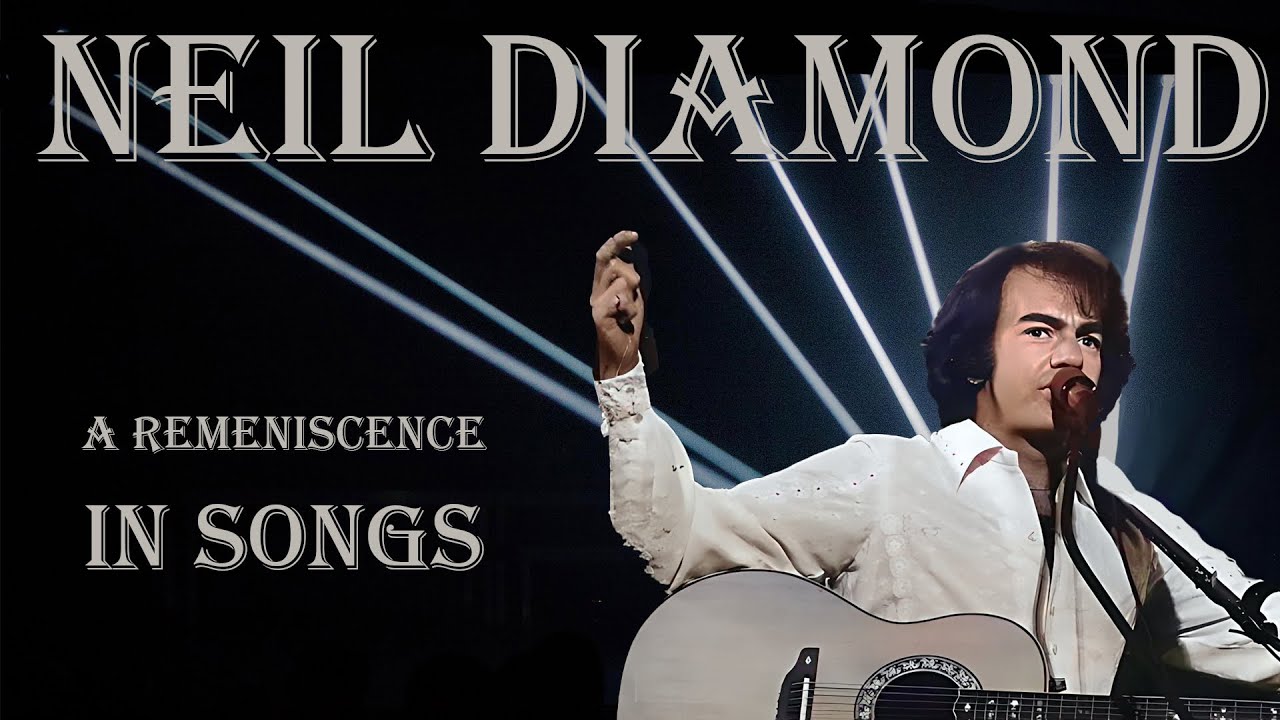
On Hell Yeah, Neil Diamond did not chase youth or nostalgia. He answered time itself with humor, grit, gratitude, and one of the finest late-career performances of his life.
When Neil Diamond released 12 Songs in November 2005, it felt less like a routine new album and more like a reckoning. Produced by Rick Rubin, the record reached No. 4 on the Billboard 200, a remarkable chart showing for an artist whose place in American music had long been secure. But charts only tell part of the story. The deeper surprise was artistic. Hell Yeah, one of the album’s most revealing tracks, emerged as a late-career statement with uncommon weight: reflective, wry, bruised, and unmistakably alive.
It is important to understand Hell Yeah inside the exact context of the 2005 Rick Rubin era. This was not simply another Neil Diamond song arriving in the shadow of old hits. Rubin’s approach was to strip away polish and let the songs breathe. Instead of surrounding Diamond with lush, protective production, he pushed him closer to the bone: acoustic textures, room around the voice, and an atmosphere where the writing had nowhere to hide. In that setting, Hell Yeah sounds almost like a confession delivered with a crooked smile.
The title can fool people at first. It sounds brash, maybe even playful, but the heart of the song is far more layered than that. This is not youthful rebellion. It is seasoned affirmation. Diamond does not sing like a man pretending the years have not happened; he sings like someone who has lived fully enough to know what the years cost. That is why the song lands so deeply. Beneath its defiance is gratitude. Beneath its humor is fatigue. Beneath its confidence is the quiet knowledge that memory is never simple.
By 2005, many listeners still loved Neil Diamond for the towering songs that had already become part of the culture: Sweet Caroline, Solitary Man, Cracklin’ Rosie, I Am… I Said. Yet Hell Yeah made it clear that he was not interested in becoming a museum piece, preserved by nostalgia and separated from the present. He was still writing from lived experience. He was still capable of surprise. That may be the most moving thing about 12 Songs. It does not ask the listener to remember who Diamond was. It asks the listener to hear who he still is.
The backstory of the song is woven into the larger story of the album. Rick Rubin had already become known for working with major artists in ways that cleared away excess and restored focus to voice, songcraft, and truth. With Neil Diamond, that philosophy opened a door to something intimate. 12 Songs feels handcrafted rather than manufactured, and Hell Yeah may be the album’s clearest emotional mission statement. It sounds like a man taking inventory of a life in public while holding on to what is still private, still unresolved, still human.
That is where the meaning of Hell Yeah truly lives. It is a song about aging without surrendering dignity. It refuses self-pity, but it also refuses false brightness. Diamond does not flatten the emotional weather of a long life into a slogan. He allows the contradictions to remain. There is pride here, but not vanity. There is weariness here, but not defeat. There is gratitude here, but it has been tested. In that balance lies the song’s power. The answer in the title is not careless. It is earned.
Musically, the restraint matters as much as the lyric. The arrangement does not crowd the song with unnecessary decoration. That choice lets the phrasing do the work. Diamond’s voice, older and roughened in all the right places, carries the authority of someone who no longer needs to prove anything. In younger years, a title like Hell Yeah might have sounded like a challenge thrown outward. Here it feels more like a verdict delivered inward, after the noise has faded and the mirrors are harder to avoid.
There is also a broader reason the song endures. In popular music, late-career songs are often treated as afterthoughts unless they imitate earlier triumphs. Hell Yeah does something far rarer. It accepts time, lets experience speak, and turns maturity itself into the emotional subject. That gives the song a resonance beyond biography. Even listeners who know nothing of industry reinvention or catalog legacy can hear what makes it matter. It speaks to the strange mixture of scars, humor, memory, and endurance that collects over a lifetime.
So while Hell Yeah was not a major chart single on its own, its place in the story of 12 Songs is enormous. The album’s No. 4 peak on the Billboard 200 gave the Rubin collaboration public validation, but songs like this gave it soul. They proved that Neil Diamond was not merely revisiting old ground. He was reclaiming the part of himself that had always mattered most: the songwriter willing to say something honest. That is why Hell Yeah remains one of the defining moments of Diamond’s later work. Not because it tries to sound young, and not because it trades on memory, but because it faces time directly and still finds the courage to answer yes.
