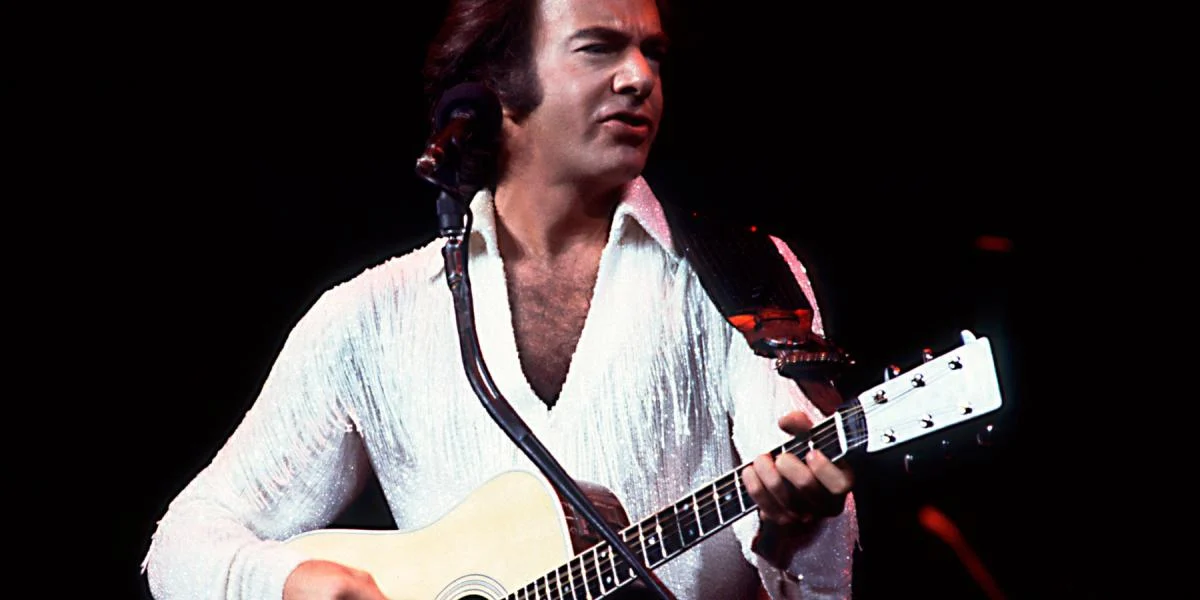
A Song of Longing and Tender Awakening — the Gentle Ache of Growing Up
When Neil Diamond first released “Girl, You’ll Be a Woman Soon” in 1967, few could have predicted how deeply this song would echo across generations. It was issued as a single on the Bang label and later appeared on his album Just for You. Upon release, the song rose steadily on the Billboard Hot 100, reaching No. 10 in April 1967 — a remarkable feat for a young songwriter who, only a few years earlier, had been penning hits for others. Yet behind its chart success lies something more enduring: a tender confession wrapped in melody, a bittersweet reflection on innocence meeting experience.
Neil Diamond, still early in his career at that time, had already begun shaping his distinctive sound — blending folk sensibility with pop craftsmanship and an undertone of raw emotion. “Girl, You’ll Be a Woman Soon” is one of his most haunting pieces from that era, standing as both a declaration of love and an observation on the fragile passage from youth to womanhood. The arrangement is modest by modern standards — gentle acoustic guitar lines, restrained percussion, and Diamond’s unmistakable baritone voice delivering every line with sincerity. But within that simplicity lies an emotional depth that transcends decades.
At its core, the song speaks about transformation — that tender threshold where adolescence gives way to maturity. The narrator’s voice trembles with both admiration and apprehension, sensing change that cannot be stopped. There is something deeply human in that message: the awareness of time’s quiet push forward, the ache of letting go of innocence while stepping into self-discovery. Many listeners who grew up with this song recall it as part of their own coming-of-age soundtrack — the tune that played softly in cars after sunset or drifted through transistor radios on summer nights when emotions ran high but words were scarce.
The story behind the song also reflects Diamond’s own artistic growth. He was just entering his late twenties when he wrote it, standing at his own crossroads — no longer an untested songwriter but not yet the global icon he would become. His ability to weave personal sensitivity into universal themes became his hallmark, and “Girl, You’ll Be a Woman Soon” stands as an early testament to that gift.
Decades later, this song found new life when it appeared in Quentin Tarantino’s 1994 film Pulp Fiction through a cover version by Urge Overkill. That reinterpretation brought Diamond’s words to a new generation and sparked renewed interest in his original recording. Yet even amidst modern reinterpretations, nothing replaces the intimacy of Diamond’s first performance — that slow rhythm like a heartbeat and his voice hovering between reassurance and longing.
For those who lived through the late ’60s, hearing this song again can stir deep memory: the crackle of vinyl under a needle, dim lights in small rooms, love letters never sent but felt all the same. It captures not just one relationship but an entire mood of an era — when pop music still believed in quiet sincerity and songs could feel like private conversations set to melody.
Half a century later, “Girl, You’ll Be a Woman Soon” remains more than just a hit; it is a reflection on time itself — how we grow older but still remember the trembling beauty of youth. And perhaps that is why it continues to move us: because in Neil Diamond’s warm baritone we hear not only love but life unfolding — gently, inevitably, beautifully so.
