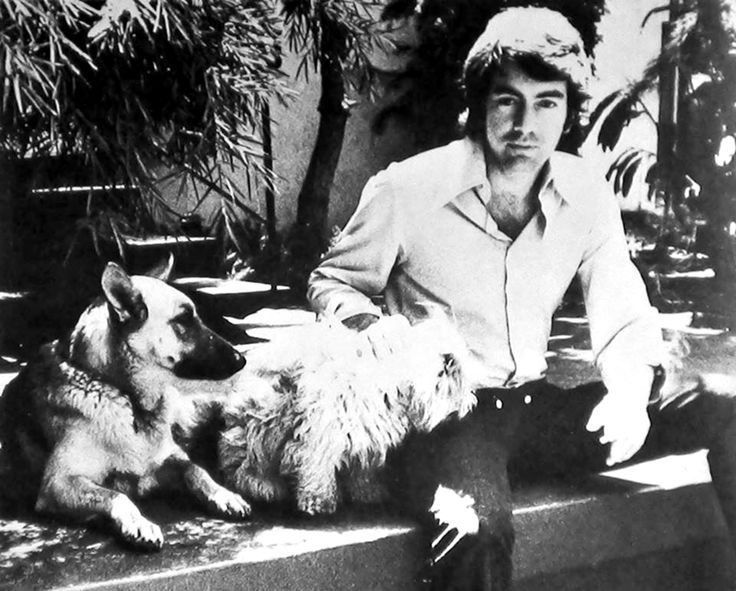
More than a movie companion, Jonathan Livingston Seagull gave Neil Diamond one of his most spiritual and enduring statements, a soundtrack that rose far beyond the screen in 1973.
When Neil Diamond released Jonathan Livingston Seagull in 1973, it arrived as the soundtrack to Hall Bartlett’s film adaptation of Richard Bach’s best-selling novella. But almost immediately, the album began to live a life of its own. It climbed to No. 2 on the Billboard 200, its most widely known song, Be, became a Top 20 hit on the Billboard Hot 100, and the project later won the Grammy Award for Best Original Score Written for a Motion Picture or Television Special. Those facts tell part of the story. The deeper truth is that this was one of those rare soundtrack albums that did not merely serve a film. It outgrew it.
That may be the most fascinating thing about Jonathan Livingston Seagull. The movie itself divided opinion, but the music found listeners in a more personal way. On record, stripped from the demands of the screen, Neil Diamond sounded reflective, searching, almost prayerful. This was not the punchy, radio-ready confidence of a simple pop vehicle. It was a sustained meditation on aspiration, loneliness, grace, and the difficult hope of becoming something more than the world expects of you.
Richard Bach’s original story was already unusual material for a major soundtrack. Jonathan Livingston Seagull is not a conventional plot-heavy tale. It is a fable about discipline, freedom, and the refusal to accept ordinary limits. A bird learns that flight is not only survival, but a path toward self-perfection and inner awakening. That spiritual frame mattered enormously to Diamond’s writing. Rather than composing a collection of anonymous background cues, he created songs that translated the book’s philosophical yearning into the language he knew best: melody, rhythm, and emotional confession.
That is why this album often feels less like a soundtrack in the traditional sense and more like a fully realized Neil Diamond statement shaped by the emotional arc of a film. Be works almost like the record’s thesis, a song about becoming, unfolding, and answering a higher calling. Lonely Looking Sky carries the ache of distance and longing. Dear Father reaches toward guidance with a humility that still feels moving. Skybird drifts with a kind of tender wonder, full of open air and inward motion. Even the instrumental and transitional passages contribute to the feeling that the album is charting a journey, not merely decorating one.
There was also something brave about the timing. By 1973, Neil Diamond was already one of the defining singer-songwriters of his era, a performer with enormous commercial power and unmistakable presence. He could have delivered something safer, something more conventionally cinematic, something built only to satisfy the marketplace. Instead, Jonathan Livingston Seagull leaned into uplift, contemplation, and spiritual reach. For some listeners then, that may have seemed almost too earnest. But that same sincerity is exactly what gives the album its staying power now. It does not wink at its own emotions. It means every note.
Musically, the record has a grandness that suits the sky-bound imagery of the story, yet it never loses Diamond’s human warmth. The arrangements are expansive without becoming cold. The melodies rise and stretch like horizon lines, while his voice keeps bringing everything back to earth. He sings not as an observer describing a fable, but as someone who understands the private hunger underneath it. That hunger is familiar: to be freer, clearer, less afraid, less confined by habit, disappointment, or the roles assigned to us.
That emotional quality is one reason the soundtrack still resonates so strongly. Many albums from the early 1970s are remembered for fashion, production trends, or chart dominance. Jonathan Livingston Seagull is remembered for something more elusive. It carries a mood of searching. It suggests that personal growth is not neat, and that transcendence is not some dramatic miracle but a series of inner choices. In that sense, the album was perfectly matched to the era’s appetite for self-discovery, but it also escaped the era by speaking in timeless terms.
Its chart success mattered because it proved listeners were willing to follow Neil Diamond into more thoughtful territory. Reaching No. 2 on the Billboard 200 was no small achievement for a soundtrack built around such reflective themes. And the success of Be on radio helped carry the album’s central message into everyday life. People did not need to know every detail of the film to feel what the music was saying. The soundtrack’s appeal was emotional before it was cinematic.
In hindsight, that may be the true legacy of Jonathan Livingston Seagull. It stands as a reminder that a soundtrack can become the most lasting expression of a film’s idea. Long after the debates around the movie softened, the songs remained. They still sound like open sky, private prayer, and determined hope. They still carry that unmistakable Neil Diamond gift for taking large feelings and making them feel intimate. And they still ask the question at the heart of the story itself: what if we were meant to rise beyond the boundaries we accepted too easily?
That is why this Grammy-winning soundtrack album continues to matter. Not simply because it was successful, and not only because it belongs to the rich catalog of Neil Diamond. It matters because it captured a rare combination of commercial reach and spiritual ambition. In 1973, Jonathan Livingston Seagull was a soundtrack. Over time, it became something closer to a companion for anyone who has ever felt the pull of a larger horizon.
