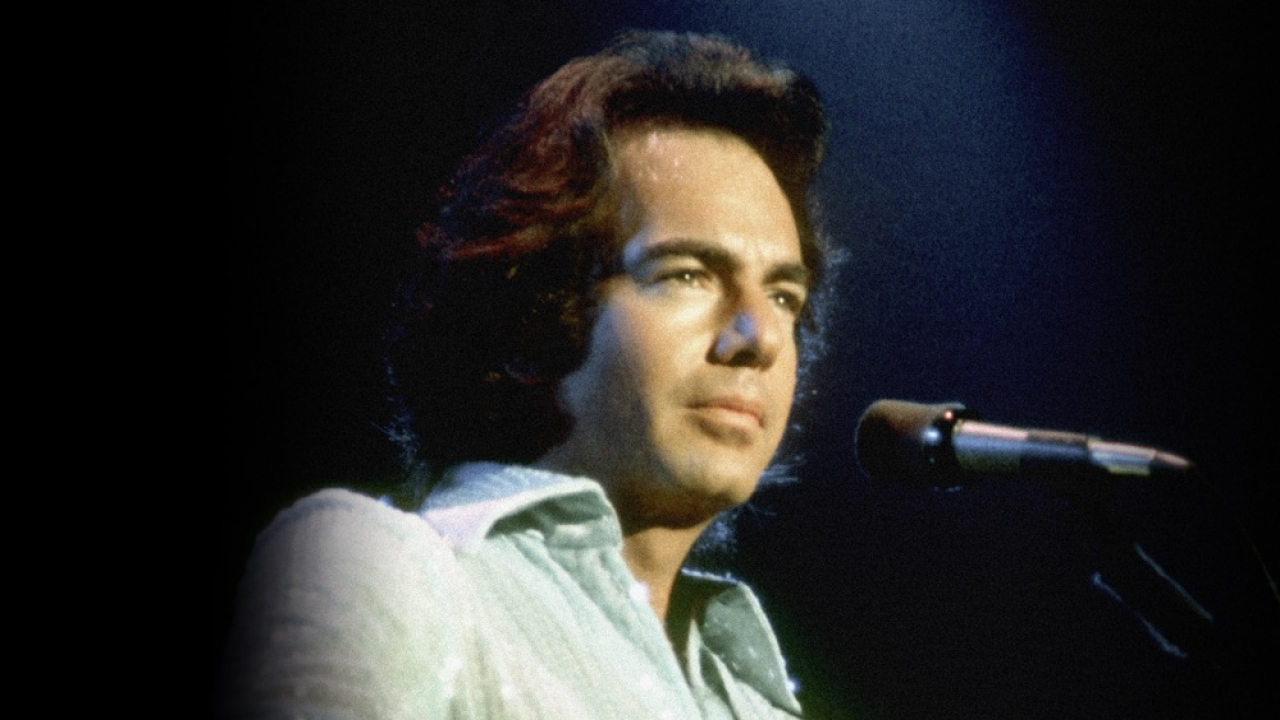
Caught between New York memory and Los Angeles success, I Am… I Said became Neil Diamond’s most revealing confession of identity, loneliness, and the cost of trying to put real life on the record.
Some hit singles arrive sounding polished, inevitable, almost effortless. Neil Diamond’s I Am… I Said was not one of them. Released in 1971, the song went on to reach No. 4 on the Billboard Hot 100, No. 2 on Billboard’s Easy Listening chart, and No. 4 on the UK Singles Chart. Those numbers tell us it was a major record. They do not tell us how hard it was to make. By Diamond’s own recollection, this was a song that fought him for months. He struggled to write it, and then struggled again to record it, returning to it over and over because the material was simply too personal to fake.
That long 1971 battle is central to the song’s power. I Am… I Said is not just a well-made single from a golden era of singer-songwriters. It is the sound of an artist trying to pin down something slippery and painful inside himself. Diamond had already proven he could write hits, and he had already built a public image strong enough to fill rooms and command radio. But this song asked for something different. It asked for vulnerability. It asked him to speak plainly. And for a performer as skilled as he was, plainness may have been the hardest thing of all.
The song grew from a period when Diamond was reflecting deeply on who he was and where he belonged. The push and pull between New York and Los Angeles is everywhere in the lyric. One city is home in memory; the other is where success has carried him. Neither feels complete. That tension gives the song its ache. When he sings about the laid-back glow of L.A. and then turns toward the emotional gravity of New York, he is not merely comparing places. He is measuring the distance between the self he once knew and the self he had become. It is a theme that resonates far beyond geography. Many listeners heard their own divided lives in it: the old town and the new town, the private self and the public self, the dreams that came true and the comfort they quietly took away.
There is also a remarkable stillness inside the lyric. For all its success as a radio record, I Am… I Said contains one of the loneliest lines in popular music: the moment when Diamond confesses that no one heard him at all, “not even the chair.” It is a startling image because it feels so small, so strange, and so true. A chair cannot answer. A room cannot comfort. Yet in that line, the silence becomes almost unbearable. This is exactly why the song has lasted. It does not rely on grand statements alone. It trusts the odd, intimate detail that cuts deeper than a dramatic flourish ever could.
The months-long recording struggle matters because the final performance still carries that tension. You can hear a singer refusing to glide past the difficult parts. The arrangement, guided by longtime collaborator Tom Catalano, does not bury the confession under excess. Instead, it lets the song build patiently. The instrumentation supports the voice rather than competing with it. Diamond’s phrasing feels deliberate, as if each line had to be tested for truth before it could be left on the tape. That kind of performance cannot be rushed. A quicker, easier session might have produced a tidy hit. What we got instead was something more valuable: a record that sounds lived in.
Later included on the album Stones, I Am… I Said stands as one of the defining pieces of Diamond’s early-1970s work, when his writing grew more introspective without losing melodic sweep. That balance is part of the song’s genius. It is deeply personal, yet never locked inside one man’s biography. Listeners did not need to know every detail of Diamond’s life to understand the emotional weather of the song. They only had to recognize that feeling of speaking into a room and hearing nothing answer back.
There is another reason the song continues to matter. In an era when many records still carried a polished distance, Neil Diamond let this one remain bruised around the edges. He did not turn uncertainty into a slogan. He turned it into music. The title itself, I Am… I Said, feels unfinished, almost suspended in mid-thought. That hesitation is the whole point. Identity is being declared, but it is also being questioned. It is not certainty we hear; it is the need for certainty. That emotional contradiction gives the song its uncommon weight.
For many fans, the record has always felt bigger with time. A younger listener may first hear a beautifully written 1971 single. Years later, the same song can sound like an argument with memory, ambition, distance, and loneliness. That is the mark of lasting work. It grows because life grows around it. And when Diamond sings it, even now in the memory of the original recording, one can sense why it took so long. Some songs are written to be admired. I Am… I Said was written to be endured, and only then completed.
That is what makes the months-long struggle behind the record so important. It was not a footnote to the song’s history. It was the history. The difficulty is in the grooves. The hesitation is in the phrasing. The honesty is in the fact that Neil Diamond could not finish it until it sounded like something he truly meant. And that is why this 1971 single still reaches people with such force. Beneath the elegant melody and the chart success lies something far more enduring: the sound of an artist trying to say who he is, and discovering how hard that can be.
