
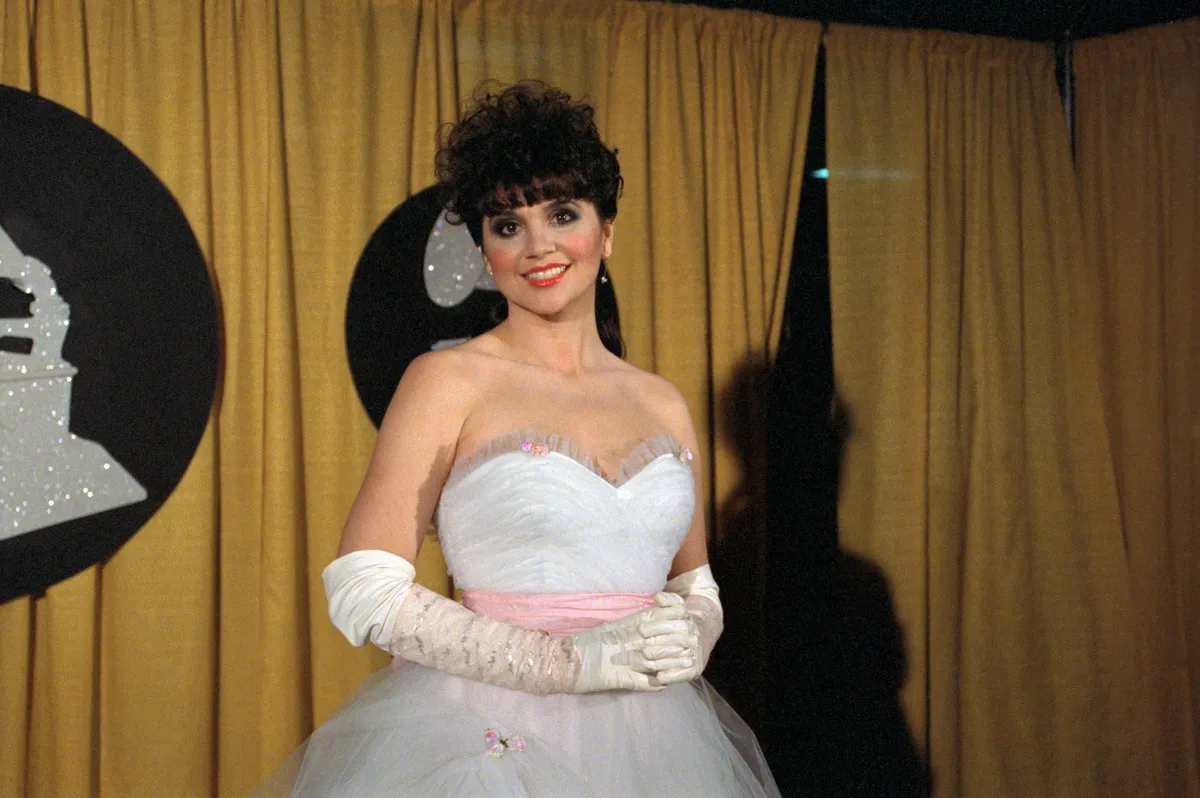
Goodbye My Friend turns a simple farewell into something larger: the quiet grief of letting go, the dignity of memory, and the kind of sadness that never has to shout to be unforgettable.
There are songs that arrive like a dramatic storm, and then there are songs like “Goodbye My Friend”, which seem to enter the room softly, sit beside you, and say what many people spend years trying not to say aloud. In the version associated with Linda Ronstadt and Aaron Neville, the song carries that rare kind of emotional restraint that makes it linger even longer. It belongs to the same late-1980s creative world that produced some of Ronstadt’s most beloved work, especially on Cry Like a Rainstorm, Howl Like the Wind, the 1989 album that reached No. 7 on the Billboard 200 and reminded listeners just how much feeling could live inside a beautifully controlled performance.
Unlike the album’s major charting highlights such as “Don’t Know Much”, which climbed to No. 2 on the Billboard Hot 100, and “All My Life”, which became another celebrated Ronstadt-Neville duet, “Goodbye My Friend” was never the big chart story. It did not need to be. Some songs do not conquer the radio in the obvious way; they settle into people’s lives more privately. That is often where the deepest songs live. They are not always the loudest hits. Sometimes they are the ones that come back years later, when experience has given their words a fuller weight.
The song itself was written by Karla Bonoff, one of the finest American songwriters of her era and an artist deeply connected to Ronstadt’s catalog. That connection matters. Ronstadt had long understood Bonoff’s writing—its gentleness, its intelligence, and the way it could carry sorrow without turning sentimental. In “Goodbye My Friend”, Bonoff wrote a farewell song that feels painfully mature. This is not a dramatic breakup anthem built on blame. It is a reckoning with absence, memory, and the reality that some goodbyes are not caused by cruelty at all. Sometimes life simply moves, and the heart must somehow move with it.
That is where Linda Ronstadt was unmatched. Her voice had clarity, but never coldness. She could sing a line plainly and still make it feel like it had been lived in for years. On a song like “Goodbye My Friend”, that gift becomes everything. She does not oversell the ache. She trusts it. Every phrase feels measured, almost careful, as if the song knows that true sorrow often speaks quietly. If Aaron Neville is part of the version a listener carries in memory, his presence only deepens that atmosphere. His unmistakable tenderness, with that high, almost prayerful vocal quality, complements Ronstadt’s steadiness in a way that makes farewell sound less like a scene and more like a human truth.
And that may be the song’s greatest strength: it understands that goodbye is rarely just one emotion. There is sadness here, certainly, but also gratitude, disbelief, and the strange stillness that follows when words have finally been said. The lyric does not fight the moment. It accepts it, and that acceptance is what makes the song feel so grown, so honest, and so enduring. Many farewell songs are about what was lost. “Goodbye My Friend” is also about what remains—memory, affection, and the quiet understanding that love does not simply vanish because a chapter has closed.
Placed in the emotional landscape of Cry Like a Rainstorm, Howl Like the Wind, the song fits beautifully. That album was full of adult feeling: longing, regret, devotion, vulnerability. It was produced with elegance, and it gave Ronstadt room to sing with both strength and fragility. The Aaron Neville collaborations on that project became its public signature, but songs like “Goodbye My Friend” reveal the album’s deeper heart. They show why Ronstadt mattered so much as an interpreter. She never treated a song as a mere melody to be delivered. She entered it, listened to it, and then gave it back with more life than it had before.
That is why this song still lands. It does not belong to one era only. It belongs to anyone who has had to say farewell with grace while carrying more feeling than words could hold. In Ronstadt’s hands, and especially in the emotional orbit created by her work with Aaron Neville, “Goodbye My Friend” becomes more than a song about parting. It becomes a meditation on how people endure change, how memory softens pain without erasing it, and how the gentlest songs are sometimes the ones that leave the deepest mark.
There is a certain kind of wisdom in that. Not every classic announces itself immediately. Some wait quietly, like an old letter in a drawer, until the right season of life arrives. Then suddenly, one line, one voice, one farewell says everything.
