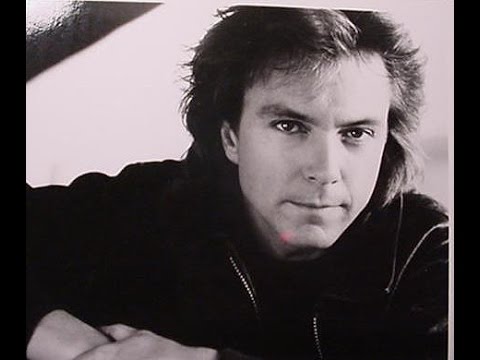
In Stranger In Your Heart, David Cassidy stepped into 1990 not as a preserved memory, but as an artist trying to make his old fame answer to an adult voice.
David Cassidy recorded Stranger In Your Heart for his 1990 self-titled comeback album, David Cassidy, and the song carried an unusually revealing set of credits: it was co-written by Cassidy with Mike Reno, best known as the lead singer of Loverboy, and Mark Spiro, a writer and musician deeply connected to the polished melodic pop-rock language of the late 1980s and early 1990s. That combination matters. It places the song not simply inside Cassidy’s catalog, but inside a specific cultural moment, when former teen idols, classic pop names, and radio-era survivors were trying to find a way to sound current without pretending their past had never happened.
By 1990, Cassidy was no longer the impossibly bright young face beamed into living rooms through The Partridge Family. He had already lived through the dizzying peak of teen-idol fame, the burden of being treated as an image before a musician, and the long afterlife of a pop phenomenon that could both open doors and trap an artist inside one public memory. The self-titled David Cassidy album arrived as a comeback effort at a time when pop radio was crowded with sleek adult rock, glossy production, big choruses, and a strange tension between sincerity and surface. The album’s best-known comeback marker was Lyin’ to Myself, which returned Cassidy to the U.S. Top 40 conversation. But Stranger In Your Heart offers another kind of evidence: less about chart revival and more about how Cassidy wanted to be heard.
The presence of Mike Reno and Mark Spiro gives the song a telling edge. Reno’s association with Loverboy brings the shadow of arena-era urgency, the kind of rock melodicism built for emotional directness rather than restraint. Spiro’s name suggests craftsmanship, shape, and the highly polished pop-rock sensibility that defined so much radio music just before alternative rock changed the atmosphere. With Cassidy in the center, the song becomes a meeting point between three musical identities: the former television and pop idol seeking adult credibility, the rock frontman connected to high-impact radio drama, and the professional songwriter attuned to hooks that could still travel through speakers with immediacy.
What makes Stranger In Your Heart interesting is not only its melody or its period sound, but the way its title seems to brush against Cassidy’s own public position. A “stranger” in someone’s heart is an intimate contradiction: close enough to matter, distant enough to feel unrecognized. For an artist like Cassidy, that idea carried an unintended resonance. Millions knew his face, his voice, his television persona, and the songs tied to his youth. Yet the adult musician standing in 1990 had to ask for a different kind of recognition. He was familiar, but not always truly heard. He was remembered, but memory can be a narrow room.
That is why the song belongs to a broader cultural story. The late 1980s and early 1990s were full of artists negotiating the distance between who the public remembered and who they had become. Production styles were changing quickly. Music videos mattered. Radio formats had hardened into lanes. A former teen idol could no longer simply return with a pleasant song and expect the culture to make room. The sound had to be contemporary enough to stand beside current releases, but personal enough to avoid feeling like a costume. Stranger In Your Heart sits right in that pressure point. It does not erase Cassidy’s past; it tries to build a bridge across it.
There is a particular vulnerability in comeback albums, especially for artists whose early fame was so visually and emotionally overwhelming. A debut can be innocent because no one knows what to expect. A comeback is different. It arrives under the weight of comparison. Every vocal choice seems to answer an old photograph. Every arrangement suggests a negotiation with the present. On David Cassidy, the 1990 album, that negotiation takes the form of bright studio textures, adult pop-rock confidence, and songs that push toward emotional seriousness rather than adolescent fantasy. Stranger In Your Heart belongs to that effort because it lets longing sound grown, guarded, and slightly wounded.
The song also reminds us how easy it is to flatten Cassidy’s career into one image. The Partridge Family years were enormous, but they were not the whole story. Cassidy spent decades dealing with the consequences of being loved in a way that was sometimes louder than it was attentive. His 1990 comeback did not require listeners to forget the boy on the lunchboxes and magazine covers. Instead, it asked whether that boy could be allowed to become a man in song, with a voice shaped by experience rather than fantasy. That question gives Stranger In Your Heart its deeper charge.
He was not alone in that struggle. Many artists from earlier pop eras entered 1990 facing a changed musical world. Some leaned hard into nostalgia. Others tried to chase trends too aggressively. Cassidy’s self-titled album exists somewhere more revealing: it carries the sheen of its time, but it also carries the quiet ache of someone trying to reclaim authorship over his own name. Co-writing Stranger In Your Heart with Reno and Spiro was not just a credit-line detail. It signaled participation, intention, and the desire to stand inside the song rather than simply perform it from the outside.
Heard now, Stranger In Your Heart feels like more than a track from a comeback record. It feels like a small document of a transitional pop moment, when the old machinery of fame had not disappeared, but the rules of survival were changing. The song’s emotional language is romantic on the surface, yet the cultural undertone is broader: the fear of becoming a stranger to people who once claimed to know you completely. For David Cassidy, that was never just a lyric-shaped idea. It was one of the central tensions of his public life.
That may be why the song still deserves attention. Not because it towers over all of 1990, and not because it rewrites the history of pop, but because it catches an artist in the act of reintroducing himself under difficult circumstances. Stranger In Your Heart asks for the kind of listening that fame often denies. It invites us to hear past the remembered face, past the inherited narrative, and into the fragile space where a comeback is not just a career move, but a plea to be recognized again with more honesty than nostalgia can provide.
