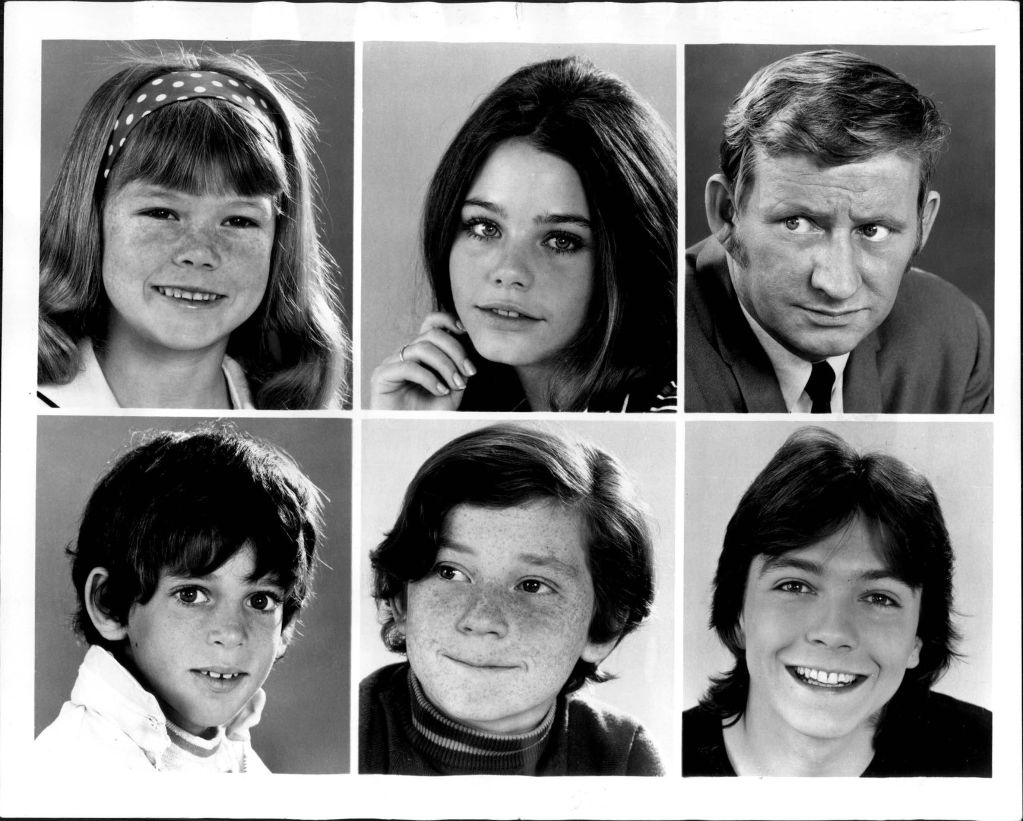
On the final Partridge Family studio album, a familiar teen-idol voice begins to scrape against the edges of adulthood.
“I Wouldn’t Put Nothin’ Over On You” belongs to The Partridge Family’s final 1973 studio album, Bulletin Board, a late-period record that arrived as the television phenomenon was nearing the end of its run and David Cassidy was beginning to sound less like the perfectly packaged face of a family pop show and more like a young singer pushing against the frame built around him. That tension is what gives the track its quiet fascination. It is not simply another bright entry in the Partridge catalog; it is a small but telling sign of transition, a place where Cassidy’s voice seems to reach toward a rougher, more adult pop language.
By 1973, The Partridge Family existed in two overlapping realities. On television, the group still belonged to the cheerful fantasy of a musical household, polished for prime-time warmth and youthful escapism. On record, however, the machinery was always more complicated. The albums were professional pop productions, built with seasoned studio craft, with Cassidy’s lead vocal serving as the emotional center that made the fiction feel personal. Early hits such as “I Think I Love You” had turned that formula into something far larger than a sitcom accessory. But by the time Bulletin Board appeared, the sweetness of the original image had begun to feel too small for the singer standing at the microphone.
“I Wouldn’t Put Nothin’ Over On You” catches that shift in miniature. Even the title feels more street-corner than school-locker, more conversational and slightly crooked than the clean romantic declarations people often associate with the Partridge name. The phrasing has a little swagger in it, a hint of mischief, a sense that the singer is no longer asking to be adored so much as testing the boundaries of charm, trust, and self-possession. Cassidy’s performance matters because he does not sing it as a child of the bubblegum era. He leans into the words with a firmer edge, letting the vocal carry a rasp of impatience and confidence that points beyond the show’s sunny surface.
That is why the track feels meaningful in hindsight. It does not need to be treated as a grand declaration of rebellion to be important. Its power is subtler. Cassidy had become a genuine pop star through a role that both elevated and trapped him. The audience saw Keith Partridge, the smiling teenage dream, while Cassidy himself was trying to establish an identity as a serious performer with adult instincts, adult appetites, and a voice capable of more than television-friendly romance. In that context, a song like “I Wouldn’t Put Nothin’ Over On You” becomes more than a deep album cut. It becomes evidence of a singer beginning to color outside the lines he had been handed.
The late Partridge records are often heard through the shadow of what came before. The biggest singles, the lunchboxes, the fan magazines, the screaming audiences, and the bright Bell Records pop finish can make it easy to overlook the more restless corners of the catalog. But Bulletin Board deserves attention precisely because it comes from the end of the arc. Final albums often carry a strange atmosphere, even when they are not designed as farewells. They can sound like rooms being quietly packed up, with familiar sounds still present but no longer behaving exactly the same way. The arrangements may still belong to the same pop universe, yet the emotional temperature has changed.
On “I Wouldn’t Put Nothin’ Over On You”, Cassidy’s voice seems to know that change. It has less of the open-faced ache that made his early performances so instantly accessible and more of a tightened, slightly hardened presence. He sounds as if he is singing from inside the old format while looking toward a different stage. The song’s appeal lies in that in-between quality. It is still recognizably Partridge Family pop, shaped for immediacy and melody, but there is a grain in the delivery that suggests he wanted the listener to hear the man behind the character.
That grain would become central to the way many fans later reconsidered Cassidy. His fame was enormous, but enormous fame can flatten a performer into a symbol. Songs like this help restore dimension. They remind us that behind the posters and television scripts was a working singer trying to negotiate image, expectation, and artistic hunger in real time. He was not merely aging out of a role; he was trying to sing his way into another version of himself.
Heard now, “I Wouldn’t Put Nothin’ Over On You” feels like a late-afternoon track in The Partridge Family story: not the bright morning of breakthrough, not the full night of aftermath, but that complicated hour when the light changes and familiar colors turn sharper. David Cassidy is still there inside the polished pop framework, but he is pressing harder against it. The song’s lasting interest comes from that pressure. It lets us hear a transition not as a headline, but as a tone in the voice, a roughened edge in the phrase, a young star beginning to outgrow the sound that made him famous.
