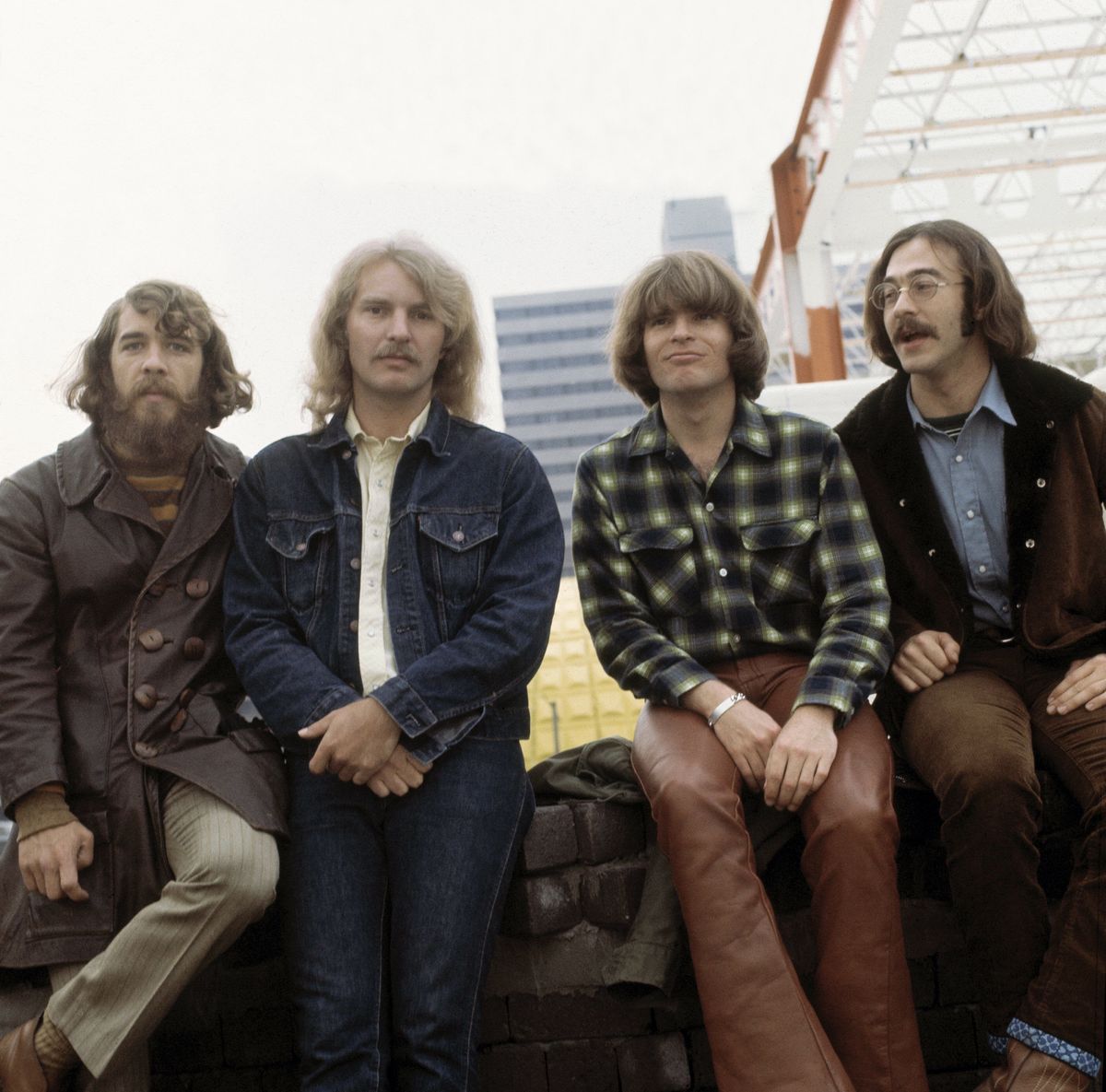
John Fogerty’s 2009 Garden Party became more than a cover when two Eagles voices joined him around Rick Nelson’s hard-earned lesson.
In 2009, John Fogerty recorded a version of Rick Nelson’s Garden Party for The Blue Ridge Rangers Rides Again, and the choice of guests gave the song a quietly revealing power. With Don Henley and Timothy B. Schmit adding their voices, the track did not simply revisit a familiar country-rock standard. It placed Fogerty, a songwriter forever linked to the explosive authority of Creedence Clearwater Revival, in conversation with two singers from the Eagles orbit, a band that helped define a smoother but no less durable strain of American roots music.
The original Garden Party, written by Rick Nelson and released in 1972 by Rick Nelson and the Stone Canyon Band, came from a very specific wound. Nelson had been a teenage television and pop idol before becoming a serious country-rock artist, and the song grew out of his uneasy experience at a 1971 rock and roll revival concert at Madison Square Garden. The crowd had arrived wanting the comfort of the old image, the old hits, the old outline of who they believed he was. Nelson had already moved elsewhere. Out of that tension came one of rock’s most graceful statements about artistic independence: a song that smiles on the surface while refusing to surrender underneath.
That is why Fogerty’s 2009 version carries such an interesting emotional charge. Fogerty knew something about being trapped inside public expectation. His voice had powered some of the most recognizable American rock records of the late 1960s and early 1970s, but his later career was also shaped by the long shadow of those songs, the legal and personal complications surrounding his catalog, and the difficulty of moving forward when listeners want an artist to remain forever fixed in one golden frame. By choosing Garden Party, he was not merely picking a well-loved song. He was stepping into a lyric about survival, self-definition, and the cost of disappointing people who think they own your past.
The album context matters as well. The Blue Ridge Rangers Rides Again returned to an idea Fogerty had first explored on his 1973 solo album The Blue Ridge Rangers, where he paid tribute to country, gospel, and early rock influences in a notably self-contained way. The 2009 sequel opened the room. Instead of sounding like one man alone with his record collection, it often felt like Fogerty inviting fellow travelers into a shared map of American music. On Garden Party, that invitation becomes especially fitting because Henley and Schmit bring with them a history of harmony, restraint, and country-rock polish that sits naturally beside Nelson’s original world.
Fogerty’s lead presence gives the song a different center of gravity. Where Nelson’s original had the air of a man turning an insult into an elegant shrug, Fogerty’s version feels like a veteran looking back across several decades of applause, misunderstanding, separation, and persistence. His singing has always carried a kind of weather in it: bayou grit, gospel urgency, roadhouse directness, and a stubborn refusal to sound ornamental. Against that grain, the guest vocals from Don Henley and Timothy B. Schmit do something important. They do not soften the lesson so much as widen it. The song begins to feel less like one artist’s private conclusion and more like a chorus of men who understand the strange bargain of public love.
Henley’s association with sharp observation and moral unease gives his presence a certain bite, even when he is not dominating the track. Schmit’s high, clean vocal identity adds another layer, recalling the harmony tradition that made country-rock so adaptable to both confession and radio glow. Together, they help frame Fogerty not as a guest in Nelson’s story but as part of a lineage. These are musicians who came from different corners of American popular music, yet all of them understood the same pressure: the audience remembers one version of you, while the artist has to keep living beyond it.
That is the quiet beauty of this collaboration. It does not need to turn Garden Party into a dramatic reinvention. The song’s power is already in its balance: friendly melody, conversational phrasing, and a message that lands harder the longer a career goes on. Fogerty, Henley, and Schmit honor that balance by making the recording feel communal. The famous lesson at the heart of the song is no longer just Rick Nelson’s answer to one difficult night. In Fogerty’s hands, with those Eagles voices beside him, it becomes a seasoned reminder that pleasing everyone is not a career plan, and memory can become a cage if an artist lets it.
Heard now, Fogerty’s 2009 Garden Party feels like a meeting place between generations of American rock: Nelson’s country-rock self-respect, Fogerty’s rough-hewn independence, and the Eagles’ harmony-rich sense of movement across folk, country, and pop. It is a cover built less on spectacle than recognition. Three familiar voices gather around an old song and reveal that its central truth had not aged out of usefulness. It had simply waited for more artists to arrive at the same door.
