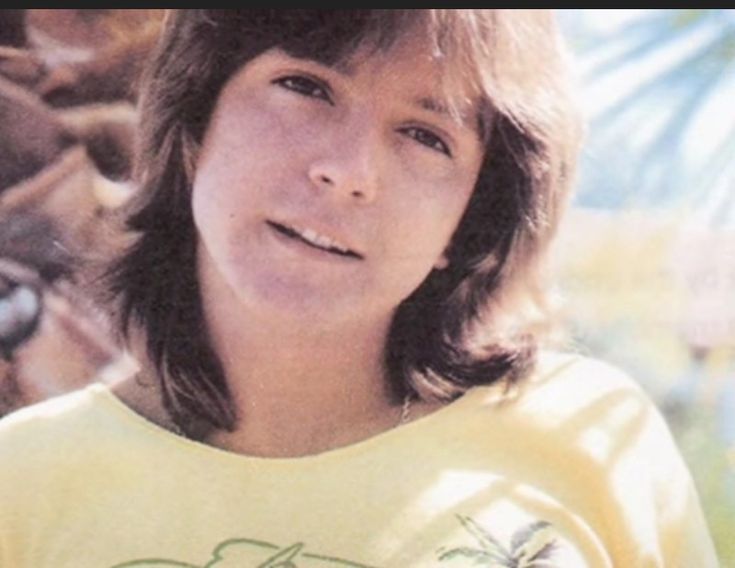
On New York City Life, David Cassidy stepped away from teen-idol memory and wrote like an adult still searching for a place to belong.
David Cassidy’s self-penned New York City Life, from his 2003 album A Touch of Blue, belongs to a very different chapter from the one most casual listeners attach to his name. By then, Cassidy had long since passed through the glare of The Partridge Family, the stadium screams, the posters, and the strange blessing and burden of becoming a household face before he had been allowed to define himself fully as a musician. A song like New York City Life matters because it does not ask to be heard as nostalgia. It asks to be heard as a late-career piece of adult pop writing by an artist who still cared about craft, mood, melody, and the emotional weather of grown-up experience.
Released in 2003, A Touch of Blue arrived at a time when Cassidy’s public image was already fixed in many minds. For some, he would always be Keith Partridge, the smiling young singer on television with a voice polished for radio and a face that belonged to the early 1970s. But artists often live longer, more complicated creative lives than their most famous image allows. Cassidy had spent decades working in music, stage performance, and recording, and his later material often revealed an interest in more mature pop textures: softer edges, reflective arrangements, romantic uncertainty, city-night atmosphere, and songs that felt less concerned with youth than with memory, longing, and survival.
New York City Life fits that late-career frame with unusual clarity. The title alone suggests motion, density, loneliness, and possibility. New York, in pop music, has often served as more than a location; it becomes a mirror. It can be the city of reinvention, ambition, exile, romance, and exhaustion, sometimes all in the same verse. For Cassidy, a performer whose life had been shaped by public attention from an early age, the idea of city life carries an additional resonance. The song’s setting can be heard not merely as scenery, but as a space where a man measures himself against noise, memory, and the need to keep moving forward.
What makes the track especially meaningful is the fact that Cassidy wrote it himself. That detail changes the emotional temperature. It moves the listener away from the idea of a performer simply interpreting someone else’s polished material and toward the more personal territory of an artist shaping his own language. Self-written songs do not automatically reveal autobiography in a literal sense, and it would be careless to pretend to know more than the record gives us. But authorship does matter. It tells us that New York City Life was part of Cassidy’s continuing attempt to speak in his own adult voice, not just occupy the old role assigned to him by fame.
There is also something quietly defiant in the very existence of a record like A Touch of Blue. Late-career albums by former teen idols are often received through a narrow lens, as if the public must decide whether the artist has successfully escaped the past. But music does not always work that way. Sometimes the past is not escaped; it is absorbed. The younger voice remains somewhere in the grain, but it is joined by later knowledge, by restraint, by disappointment, by humor, by weariness, by persistence. In that sense, New York City Life does not need to announce reinvention loudly. Its adult-pop character is its statement: here is Cassidy still writing, still arranging emotion into melody, still interested in the shape of a song.
The phrase adult-oriented pop can sound clinical, but in Cassidy’s hands it points to a specific kind of musical ambition. It suggests songs built less for adolescent impact than for atmosphere and reflection. It leaves room for polished melodies, intimate vocals, and arrangements that do not chase fashion as much as they try to create a mood. In the early 2000s, when mainstream pop was moving through a very different sound world, Cassidy’s approach on A Touch of Blue felt connected to older traditions of singer-centered pop: the kind that values phrasing, emotional understatement, and the ache that can sit inside a seemingly elegant line.
For listeners willing to meet him there, New York City Life becomes a small but revealing doorway into the second half of Cassidy’s artistic identity. It is not the record that made him famous, and that is part of its power. It does not carry the cultural explosion of his earliest success. Instead, it carries the quieter dignity of an artist working after the noise has changed shape, after the screams have faded into history, after the world has decided what it thinks it knows. Late-career statements are not always grand. Sometimes they are simply a song written by a man who still had a melody in him and still wanted that melody to sound like an adult life.
That is why New York City Life deserves attention beyond its place in a discography. It shows David Cassidy not as a frozen image from television history, but as a working pop musician with an ear for mood and a desire to keep writing in a language that suited the years he had lived. The song stands in the shadow of his fame, but it is not swallowed by it. Instead, it lets the listener hear something quieter and perhaps more fragile: an artist stepping into the city’s glow, carrying the past with him, but still trying to turn the present into song.
