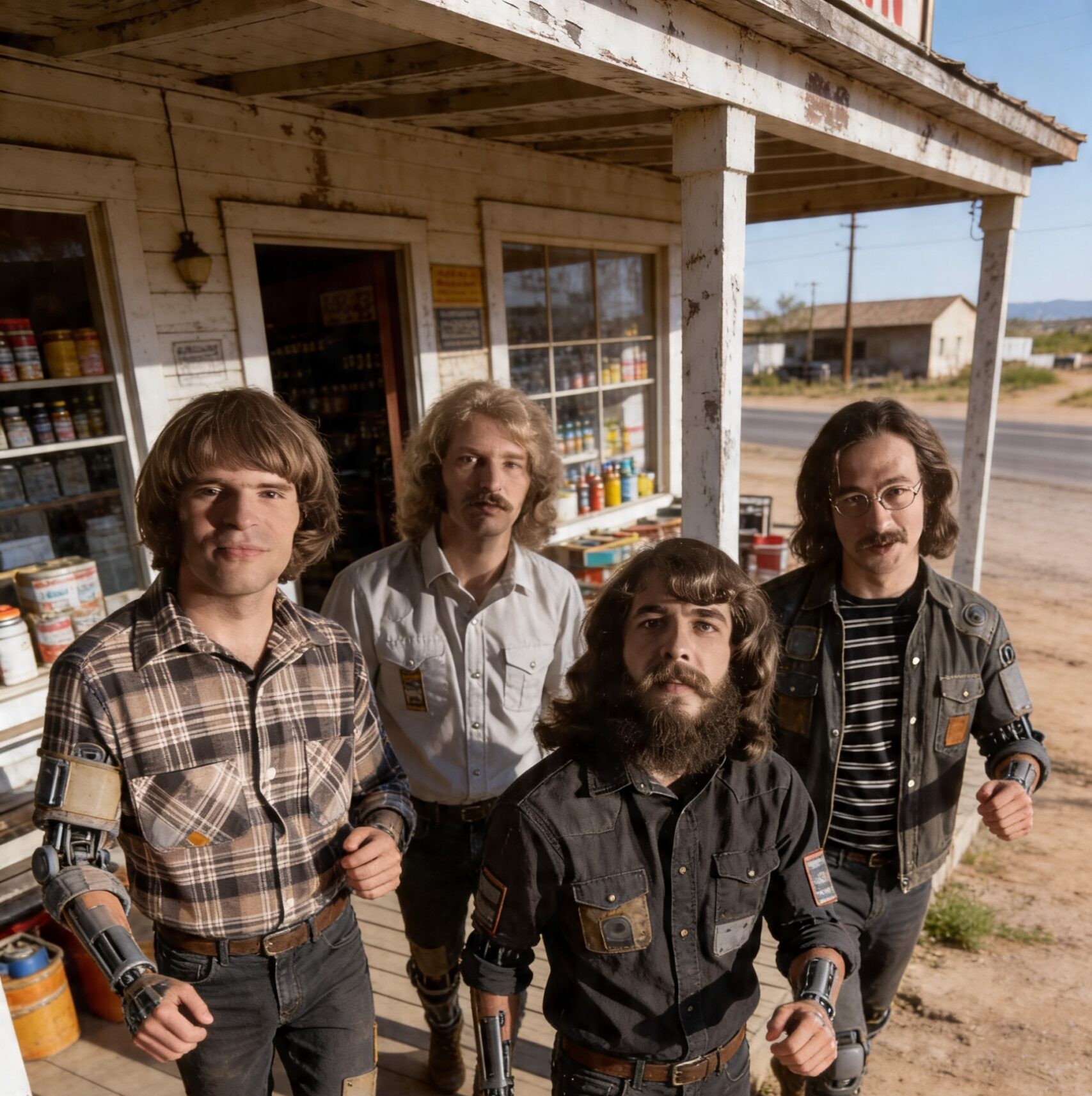
Before it sounded like a Southern river myth, Green River was a California childhood memory tightened into a three-minute rock-and-roll pulse.
Creedence Clearwater Revival released Green River in 1969 as the title track of the band’s third studio album, with John Fogerty writing, singing, playing lead guitar, and shaping the record’s lean production. The song has often been folded into CCR’s larger swamp-rock identity, as if it must have come from some humid Southern back road. Yet its source was far more personal and more surprising. Fogerty has connected the title to a soda pop-syrup label from childhood, while the emotional landscape of the song drew heavily from memories of Putah Creek near Winters, California, a place of summer water, dust, family outings, and the kind of remembered freedom that becomes sharper after it is gone.
That tension is part of what makes the recording still feel alive. Green River does not behave like a nostalgic postcard. It moves too quickly for that. The band comes in with a riff that feels clipped, dry, and physical, almost like a gate swinging open before the listener has time to prepare. Fogerty’s guitar has no unnecessary decoration; it states the rhythm with certainty and then lets the song run. Behind him, Stu Cook and Doug Clifford give the track a tight, unshowy current, while Tom Fogerty helps thicken the rhythm without crowding it. The result is not a lush remembrance but a working band turning memory into momentum.
The recording arrived during CCR’s remarkable 1969 run, a year in which the group moved with a speed that now seems almost impossible. After Bayou Country, they followed with Green River and then Willy and the Poor Boys, all while sending single after single into American radio. The Green River single climbed to No. 2 on the Billboard Hot 100, becoming one of the band’s defining hits, but its commercial success never fully explains its strange durability. Plenty of rock songs from that period were bigger, louder, or more elaborately arranged. This one endures because it sounds carved down to the part that matters.
Fogerty’s gift in Green River was not simply inventing a place. It was making a real memory feel like folklore without draining it of its ordinary origins. The soda pop-syrup label could have remained a private fragment, the kind of childhood object most people forget. Putah Creek could have remained a family location rather than a rock-and-roll destination. But when the two merged inside the song, they became something broader: a river that belonged to memory more than geography. It is one of the quiet ironies of Creedence Clearwater Revival that a band from the Bay Area could make California recollection sound as if it had been pulled from an older American songbook.
The lyric images work because they are concrete but not overexplained. Water flows, roads stretch into night, and figures from childhood seem to step in and out of the frame. Fogerty does not pause to tell the listener exactly what every detail means. He trusts the rush of the rhythm to carry the feeling. That is why the song can sound joyous and restless at the same time. It is not only about going back; it is about knowing that going back is never simple. The place has changed, the singer has changed, and the only way to return is through the record itself.
As the title track of Green River, the song also helped define the album’s emotional weather. The LP includes darker shadows and wider American scenes, from the warning signals of Bad Moon Rising to the lonely small-town ache of Lodi. But Green River opens a central door into Fogerty’s imagination: the place where personal history, regional myth, radio simplicity, and rock discipline all meet. There is nothing careless about its brevity. The band sounds as if it knows exactly where the song should begin and exactly when it should leave.
Heard today, the recording carries an extra layer because its origins are so specific. Once you know about the soda label and Putah Creek, the song does not become smaller; it becomes more human. It reminds us that some of the most durable musical places begin as odd little sparks: a label on a bottle, a creek bank remembered from childhood, a road walked in the dark, a name that feels good in the mouth. Fogerty took those pieces and gave them a groove strong enough to make millions of listeners feel they had been there too.
That may be the real power of Creedence Clearwater Revival on Green River. The band did not need a grand arrangement to make memory feel large. They needed a riff, a voice with grit in it, a rhythm section that never lost the ground, and a songwriter who understood that childhood places often come back to us disguised as songs. The river in the record is not only Putah Creek, and it is not only a name borrowed from a soda syrup. It is the sound of a private map becoming public, one sharp three-minute current at a time.
