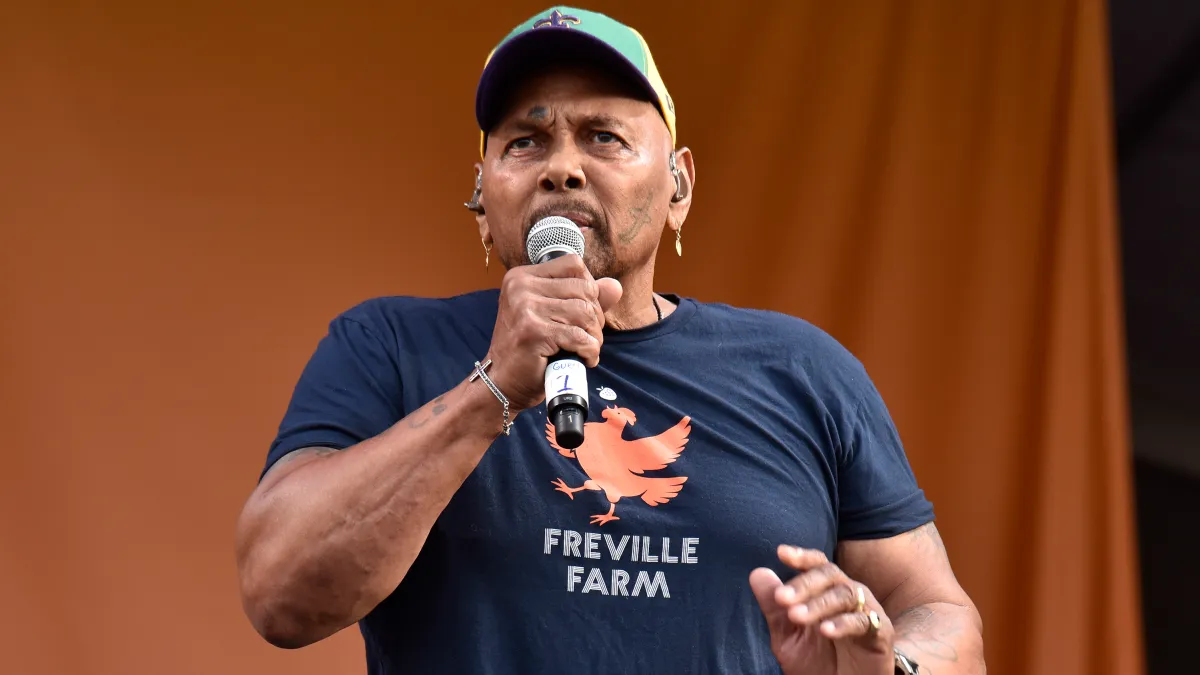
In “Don’t Know Much,” Linda Ronstadt and Aaron Neville turned uncertainty into devotion, letting two very different voices meet at the exact point where love stops needing perfect answers.
Released in 1989 on Linda Ronstadt’s album Cry Like a Rainstorm, Howl Like the Wind, “Don’t Know Much” became one of the defining popular duets of its era. Sung with Aaron Neville, the recording reached a broad audience at a moment when polished adult pop, classic songcraft, and emotionally direct vocal performances could still command the center of mainstream radio. The song was written by Barry Mann, Cynthia Weil, and Tom Snow, and in Ronstadt and Neville’s hands it became not merely a love ballad, but a meeting of textures: her strong, luminous phrasing against his trembling, high, unmistakable tone.
The record’s success was not only commercial; it was also formally recognized. Linda Ronstadt and Aaron Neville won the Grammy Award for Best Pop Performance by a Duo or Group with Vocal for “Don’t Know Much”, a fitting honor for a performance built almost entirely on the fragile chemistry between two singers. The song also became a major hit, reaching near the top of the Billboard Hot 100 and becoming a fixture on adult contemporary radio. Yet statistics alone cannot explain why the duet has remained so deeply attached to memory. Its power lives in the way it sounds as if both singers are standing on opposite sides of the same confession.
By the time she recorded Cry Like a Rainstorm, Howl Like the Wind, Ronstadt had already traveled through more musical landscapes than most singers attempt in a lifetime. She had moved from country-rock and folk-rooted material into standards, pop, rock, Mexican traditional music, and carefully chosen collaborations. Her career was never simply about genre; it was about the act of listening closely enough to inhabit a song honestly. On this album, produced by Peter Asher, she leaned into expansive arrangements and songs that allowed her voice to rise with dramatic clarity without losing emotional restraint.
Aaron Neville brought a different kind of gravity. His voice had a quality that seemed both weightless and weathered, capable of floating above a melody while still carrying the ache of lived experience. When he enters “Don’t Know Much”, the song changes temperature. Ronstadt’s voice grounds the melody with fullness and confidence; Neville answers with vulnerability, his vibrato giving the line a searching, almost prayerlike quality. The duet works because neither singer tries to overpower the other. They do not perform love as conquest. They sing it as recognition.
The lyric is built on a modest admission: the speaker does not know much, but knows love is real. In lesser hands, that sentiment could become sentimental or overly simple. Ronstadt and Neville avoid that trap by treating the words with seriousness. Their delivery suggests that not knowing is not ignorance, but humility. The song’s emotional center lies in the idea that a person can be uncertain about the world, history, the future, even the self, and still cling to one truth with quiet conviction. That is why the refrain lands so strongly. It does not pretend to solve life. It simply offers one steady hand in the dark.
Musically, “Don’t Know Much” belongs to the grand ballad tradition of the late 1980s, with a carefully arranged setting that supports rather than distracts from the voices. The production is polished, but the duet avoids becoming sterile because the human grain of the singing remains at the center. Ronstadt’s phrasing has a measured sweep, while Neville’s tone introduces a quiver that makes each phrase feel slightly suspended. Together, they create tension without conflict. The listener hears two people not merely agreeing, but gradually trusting the same emotional truth.
The album title, Cry Like a Rainstorm, Howl Like the Wind, feels almost like a weather report for the music inside it: dramatic, open, full of movement. “Don’t Know Much” fits that atmosphere beautifully. It is not loud in the way rock songs are loud, but it has scale. It feels like a room widening around two voices. There is a sense of private feeling being given a public shape, of something intimate becoming large enough for radio, award shows, weddings, long drives, and late-night recollection.
Part of the duet’s lasting appeal comes from contrast. Ronstadt and Neville did not sound alike, and that was the point. Her voice could be clear and commanding, his could bend and shimmer in unexpected places. When blended, they made the song feel less like a single viewpoint and more like a conversation. In the best duets, the emotional meaning comes not only from the lyric, but from the distance between the voices and the way that distance closes. “Don’t Know Much” does exactly that. It lets difference become harmony.
More than three decades later, the recording still carries the atmosphere of a particular era while resisting being trapped inside it. The arrangement may belong unmistakably to its time, but the feeling underneath remains direct: two people admitting that certainty is rare, love is risky, and sometimes a simple declaration is the bravest thing a song can offer. The Grammy, the chart success, and the album context all matter, but the deeper reason the duet endures is simpler. Linda Ronstadt and Aaron Neville made doubt sound tender, and they made tenderness sound strong.
