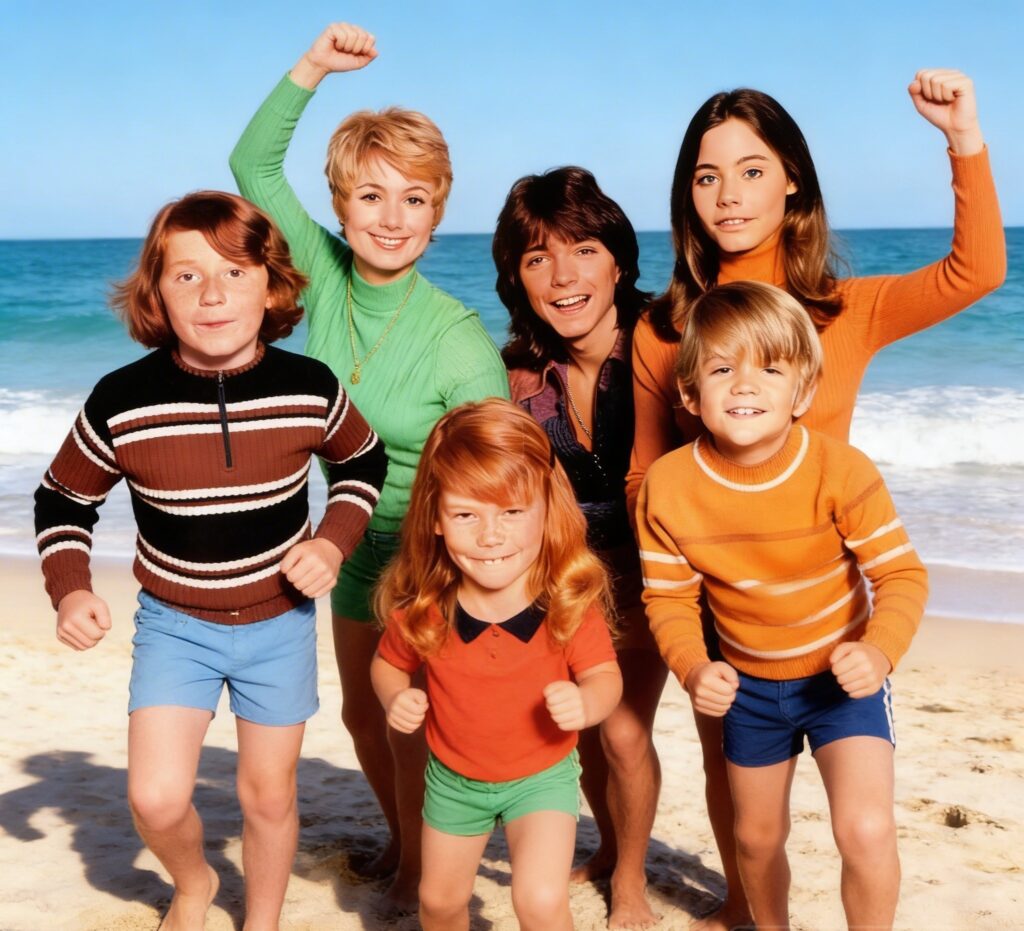
More than a sweet TV-pop tune, Friend and a Lover catches the exact emotional line between innocence and desire, with David Cassidy sounding more human than the tidy image built around The Partridge Family.
In early 1971, when The Partridge Family were still one of the brightest fixtures in American pop culture, Friend and a Lover arrived not as a headline single but as a revealing album track on Up to Date. That detail matters. The song itself did not earn a separate Billboard Hot 100 peak because it was not pushed as a major stand-alone U.S. single, yet the album that carried it was no minor release. Up to Date climbed to No. 3 on Billboard’s Top LPs chart, and its hit single Doesn’t Somebody Want to Be Wanted reached No. 6 on the Hot 100. So even without its own chart line, Friend and a Lover belonged to a record that was very much part of the national conversation.
That is one reason the song feels like such a rich cultural artifact now. By 1971, David Cassidy had become far more than a young actor in a popular television series. He was a phenomenon: magazine covers, lunchboxes, bedroom walls, radio requests, and a kind of public adoration that could turn even a modest album cut into a private favorite. On record, the heart of The Partridge Family sound was always more complicated than the TV illusion. The show presented a cheerful family band, but the records were built largely by accomplished Los Angeles studio musicians, with David Cassidy and Shirley Jones providing the key vocals. That gap between fantasy and reality is part of what makes Friend and a Lover so interesting. It lives inside a manufactured pop machine, yet the performance at its center feels emotionally sincere.
As a song, Friend and a Lover stands in that tender, uncertain territory its title suggests. It is about the uncomfortable little distance between what can be safely named and what is plainly felt. A friend is familiar, dependable, socially acceptable. A lover is risk, confession, and a changed relationship that may never go back to what it was. That small emotional crossing has fueled countless pop songs, but here it is handled with a light touch that suited the moment. This was still the age of AM radio polish, melodic restraint, and songs that could sit comfortably in a family living room. Yet underneath the bright arrangement is a very real tension: the awareness that affection has deepened into something harder to manage. That is why the song remains more affecting than its reputation might suggest.
David Cassidy‘s lead vocal is the key. He does not oversing it. He sounds youthful, but not childish; earnest, but not naive. There is a softness in the phrasing that gives the song its ache. He was, by then, one of the defining teen voices of the era, but what listeners responded to was not only his looks or his fame. It was the emotional clarity in the way he carried a melody. On Up to Date, that clarity helped songs like Friend and a Lover rise above TV tie-in expectations. Heard now, the track almost feels like a quiet argument against the old idea that everything connected to television pop was disposable. The arrangement is efficient, yes, but the feeling is not fake.
The broader 1971 context makes the song even more revealing. American pop was in a transitional mood. Bubblegum and television-friendly pop were still thriving, but audiences were also leaning toward more confessional songwriting, more emotional realism, and artists who seemed to be speaking directly from lived experience. The Partridge Family sat in the middle of that shift. They represented brightness, accessibility, and the polished fantasy of a happy musical family, yet David Cassidy himself projected something more restless. Fans could hear it even when the production remained clean and controlled. Friend and a Lover fits that historical seam perfectly: innocent enough for mainstream pop, honest enough to hint at a more adult emotional world waiting just beyond the frame.
It is also worth remembering that deep cuts often tell us more about an era than the obvious hits do. Everyone remembers I Think I Love You. Fewer people return to the smaller songs that helped sustain the phenomenon, the ones that played after the excitement of the single had already opened the door. Friend and a Lover is one of those songs. It shows how Up to Date was not merely a container for chart product; it was part of a larger emotional ecosystem in which young listeners were hearing their own uncertainties reflected back at them in polished, approachable form. The song may not have topped a chart by itself, but it carried the emotional signature of its time with surprising grace.
That is why the track still deserves a second listen. Not because it was loud, groundbreaking, or rebellious, but because it preserved a fleeting moment when David Cassidy sounded as if he were standing between two worlds: the carefully managed glow of television stardom and the more complicated, more credible emotional presence that would make people keep listening decades later. In the story of The Partridge Family, Friend and a Lover may sit slightly off to the side of the biggest headlines, but in terms of feeling, it tells us something essential about what 1971 sounded like when pop innocence began leaning toward something deeper.
