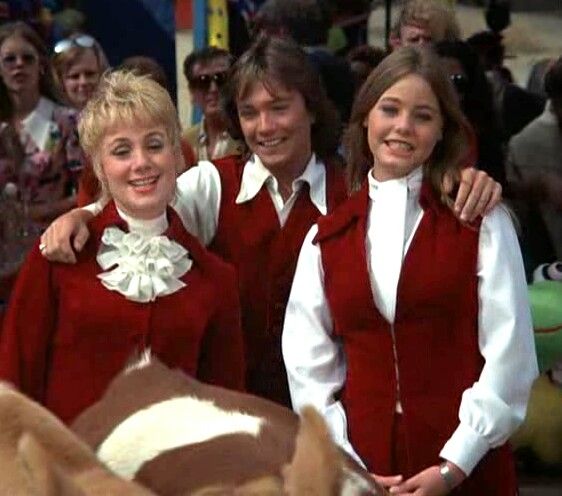
On one overlooked track from Up to Date, the bright TV polish thins just enough for David Cassidy to sound warmer, deeper, and far more human than many listeners remember.
The Partridge Family made its name on irresistible hooks, glossy harmonies, and the kind of pop excitement that television could deliver in a flash. But I’ll Leave Myself a Little Time, from the 1971 album Up to Date, deserves a different kind of listening. It was not released as a standalone single, so it did not earn its own Billboard Hot 100 chart peak. Even so, the album that carried it was no minor footnote. Up to Date reached No. 3 on the U.S. album chart, confirming that this song arrived at the very height of the group’s fame. In the same season, the album’s hit single Doesn’t Somebody Want to Be Wanted climbed to No. 6 on the Hot 100. That context matters, because this track was not made on the sidelines. It came from the center of the phenomenon.
And yet I’ll Leave Myself a Little Time feels almost like a private room inside a very public success story. For anyone interested in a true-voice comparison, this is one of the most revealing Partridge Family recordings. Not because it is raw or unproduced. It is not. These records were carefully shaped by producer Wes Farrell, supported by seasoned Los Angeles studio musicians, and built for a market that wanted instant charm. But some performances allow more of the singer’s natural character to come through, and this is one of them.
Why this 1971 vocal sounds different
By 1971, David Cassidy was far more than a photogenic face at the front of a hit TV franchise. He was still only 21, but he was already carrying television tapings, recording sessions, interviews, and relentless live appearances. On the records themselves, only Cassidy and Shirley Jones from the cast sang regularly, while the instrumental backbone came from professional session players. That system gave The Partridge Family a polished, radio-ready sound, but it also pushed Cassidy into a very specific vocal frame: youthful, bright, immediate, and easy to market.
On I’ll Leave Myself a Little Time, that frame loosens. Cassidy does not drive the melody with the same eager shine heard on some of the group’s biggest hits. Instead, he phrases with patience. He lets the lines settle. The tone in his middle register feels fuller and less pushed toward pure bubblegum sparkle. There is a soft grain in the voice, a little shadow around the edges, and a quiet self-command that changes everything. When listeners compare this performance with the breathless pop lift of I Think I Love You or the harder-sold energy of Doesn’t Somebody Want to Be Wanted, the difference is hard to miss. Here, Cassidy sounds less like a role and more like a singer.
That is why this track matters so much in any reassessment of his voice. People often talk about David Cassidy as if there were two separate artists: the teen idol on one side and the serious vocalist on the other. The truth is much more interesting. The serious vocalist was already there, even within the teen-pop machine. Songs like I’ll Leave Myself a Little Time simply let him show more of it. If you listen across his early 1970s recordings, especially the more mature shading he would later bring to solo material such as How Can I Be Sure, you can hear the bridge forming. This Up to Date album cut points toward that more nuanced singer without ever losing the melodic accessibility that made him famous.
The meaning behind the song
Part of the reason the performance works so well is the song’s emotional idea. I’ll Leave Myself a Little Time is not built as a grand dramatic collapse. It is about stepping back from hurt without pretending the hurt is gone. That is a subtle theme, and a more mature one than many songs written for the youth market of the day. The lyric suggests recovery not as triumph, but as patience. A person does not heal all at once. A heart does not simply agree to move on because the clock says it should.
Casidy understands that emotional balance. He does not oversing the ache. He does not reach for theatrical heartbreak. Instead, he keeps the feeling contained, and that restraint gives the song its power. You hear someone trying to remain steady, trying to preserve dignity, trying to buy a little breathing room from sadness. It is a small emotional shift, but small shifts are often what separate a merely pleasant vocal from a lasting one. The song lingers because the feeling is controlled, not because it is loudly declared.
Why the song deserves fresh attention now
Revisiting The Partridge Family through this track can be a moving experience, because it asks us to listen past the packaging. So much of the original frenzy around David Cassidy was visual, cultural, and commercial. The posters, the magazine covers, the fan hysteria, the television glow, all of that became part of the story. But when the noise fades, the voice remains. And on I’ll Leave Myself a Little Time, the voice tells a fuller story than the brand ever could.
Album tracks often hold truths that hit singles cannot afford to reveal. A single must announce itself quickly. It must sparkle fast. A quieter song has room for nuance, and nuance is exactly what makes this performance special. Up to Date is often remembered for its chart success and its place in the peak years of The Partridge Family, but this overlooked recording gives the album another kind of legacy. It preserves a moment when Cassidy’s natural warmth came through the studio sheen just clearly enough for us to hear who he really was becoming.
So yes, as a David Cassidy true-voice comparison, I’ll Leave Myself a Little Time is deeply valuable. Not because it escapes production, but because it softens the mask. The phrasing is steadier. The tone is richer. The feeling is more lived-in. And once you hear that, it becomes much harder to dismiss him as only the smiling center of a television sensation. This 1971 recording reminds us that inside the machinery of pop fame, there was a genuinely expressive singer waiting to be heard.
