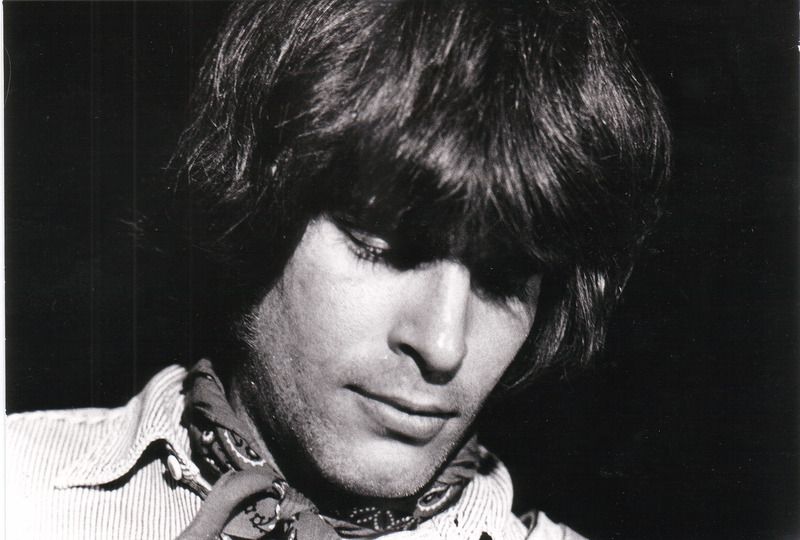
Call It Pretending is one of those small, nearly forgotten records that never touched the charts, yet it captures the exact instant John Fogerty stopped sounding like a band trapped in its old name and began sounding like Creedence Clearwater Revival.
Released first in late 1967 as the flip side of The Golliwogs single Porterville, then carried into early 1968 as the B-side of the first single credited to Creedence Clearwater Revival, Call It Pretending occupies a rare and revealing place in rock history. It is not remembered because it was a hit. In truth, the single did not make a national impact on the Billboard Hot 100. But sometimes the records that do not chart are the ones that tell the clearest story. This one tells us where John Fogerty truly became the center of the band.
That is why the song matters so much. It was not simply another obscure pre-fame side. It was a John Fogerty-written song that literally crossed the line from the final release under The Golliwogs name to the first release under Creedence Clearwater Revival. Same core band, same label, same restless young songwriter, but a different identity was taking shape. If Porterville hinted at the road ahead, Call It Pretending quietly confirmed that the writing voice inside the group had already changed.
By this point, the old Golliwogs era was wearing thin. The band had spent years under a label-imposed name they never truly loved, cutting singles that brushed against garage rock, pop, and beat-group influences without ever finding the right frame for what they could be. John Fogerty, however, was growing sharper as both writer and singer. His instincts were becoming leaner, moodier, and more direct. He was starting to write not as someone chasing trends, but as someone narrowing in on a personal sound. That shift is exactly what makes Call It Pretending so fascinating.
In emotional terms, the song lives inside disappointment, but not in a loud or theatrical way. The title itself says a great deal. To call something pretending is to strip the mask away. It suggests a relationship, a feeling, or a promise that can no longer be believed at face value. Even without the enormous myth-making of later Creedence classics, Call It Pretending already carries that familiar Fogerty quality: the sense that he is less interested in decoration than in getting to the hard center of a feeling. There is hurt in the song, but there is also judgment, self-protection, and an almost weary clarity.
Musically, the track still carries traces of the band’s earlier life. You can hear the late-1960s garage and pop-rock DNA that had shaped so many Golliwogs records. Yet there is a tighter discipline here, a stronger sense of atmosphere, and a more controlled vocal authority from John Fogerty. He does not yet sound exactly like the fully formed CCR frontman who would soon drive Suzie Q, Proud Mary, or Bad Moon Rising, but the outline is unmistakable. The phrasing is firmer. The emotional pressure is more believable. The band, too, sounds less like a group trying on clothes and more like one discovering what fits.
That authorship is the heart of the story. In many retrospectives, the dramatic change is described in terms of the new name: The Golliwogs disappear, Creedence Clearwater Revival appears, and the myth begins. But names alone do not create a classic band. Songs do. Writers do. A point of view does. Call It Pretending matters because it lets you hear John Fogerty supplying all of that before the commercial breakthrough arrived. It is the work of a songwriter beginning to trust his own instincts, and beginning to pull the whole group behind him.
There is also something moving about the song’s position in the catalog. Porterville, the single’s more famous side, was later included on Creedence Clearwater Revival, the band’s 1968 debut album. Call It Pretending was left behind, which may be one reason it remains less familiar even among devoted listeners. But that absence gives it a special kind of poignancy. It feels like the shadow at the edge of the photograph, a song standing at the doorway while history walks past it. Without the album placement, without a chart run, and without the later radio life of the band’s biggest songs, it became a record that serious listeners had to find rather than simply inherit.
And yet, in some ways, that hidden status only deepens its value. When later CCR singles exploded, especially Suzie Q, which climbed to No. 11 on the Billboard Hot 100 in 1968, the world heard a band that sounded startlingly complete. Listening back to Call It Pretending, you realize that completeness did not appear overnight. It had been forming in these transitional records, where John Fogerty was refining his ear for tension, economy, and emotional truth. The hit records would make the legend visible. Songs like this show how the legend was built.
So if someone asks where the bridge really stands between The Golliwogs and Creedence Clearwater Revival, this song is one of the strongest answers. Not because it was famous, and not because it announced itself with fanfare, but because it carried the same musicians across a line that mattered more than most listeners knew at the time. It was the last breath of one band and the first quiet proof of another.
That is the enduring beauty of Call It Pretending. It reminds us that a great songwriter’s arrival is not always a spotlight moment. Sometimes it happens on a B-side, under two different band names, with no chart position to certify it. But the ears can hear it. The authority is there. The mood is there. And most of all, John Fogerty is there, writing his way out of the past and into the sound that would soon make Creedence Clearwater Revival impossible to ignore.
