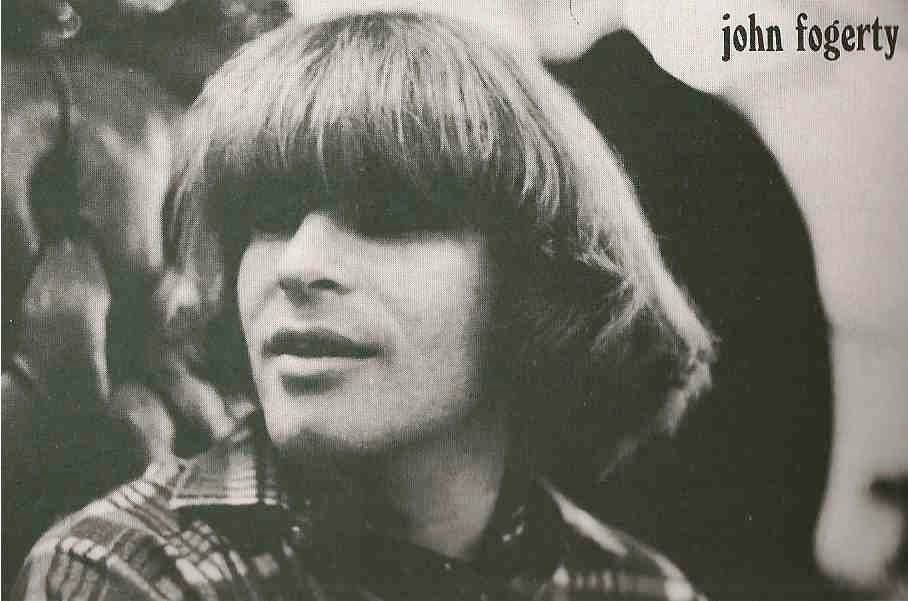
On the surface, Sweet Hitch-Hiker is one of the loosest and fastest rockers Creedence Clearwater Revival ever cut. Beneath that rush, it marks the moment John Fogerty and CCR had to prove the band could still hit hard after Tom Fogerty walked away.
When Sweet Hitch-Hiker came racing onto radio in 1971, it carried more history than its carefree swagger first let on. This was the first Creedence Clearwater Revival single recorded after Tom Fogerty left the group, and that single fact gives the song a special place in the band’s story. On paper, it was a lineup change. In truth, it was the beginning of a different chapter for one of America’s most remarkable hit-making bands. Even so, the record did exactly what great CCR singles always did: it exploded from the speakers with total conviction. The public responded immediately, sending it to No. 6 on the Billboard Hot 100.
That chart peak matters because it tells us something important about the moment. By mid-1971, listeners still heard authority when they heard John Fogerty. They still recognized that hard, lean, unmistakable CCR attack. Whatever was happening inside the band, the music still felt alive, urgent, and completely sure of itself. In commercial terms, Sweet Hitch-Hiker proved there was still fuel in the engine. In emotional terms, it is even more revealing: the song sounds like freedom and motion, but it arrived at a time when the balance inside Creedence Clearwater Revival had already shifted.
Tom Fogerty had departed after the making of Pendulum, the late-1970 album that already suggested a band inching away from its earlier formula. His exit did not change the long-established truth that John Fogerty was the chief songwriter, producer, lead singer, and defining musical force in CCR. But it did change the chemistry. Tom had been part of the group’s identity from the start, part of the stage picture and part of the internal tension that came with being a working band built around brothers, ambition, and unequal creative power. Once he was gone, CCR became a trio: John Fogerty, Stu Cook, and Doug Clifford. So Sweet Hitch-Hiker was not merely another single. It was the first public test of that new reality.
What is striking is how little strain the record shows on its face. Sweet Hitch-Hiker is a joyous, full-throttle rocker, driven by motion, flirtation, and the old American romance of the road. Written by John Fogerty, it follows the singer’s pursuit of a free-spirited hitchhiker, turning a passing roadside image into a three-minute surge of appetite and momentum. The song does not pause to philosophize. It does not brood. It moves. The guitar has bite, the rhythm section keeps everything rolling with almost physical force, and Fogerty’s vocal sounds grinning, hungry, and locked straight into the chase.
That is part of its charm. Not every great CCR song had to carry a storm cloud. Sweet Hitch-Hiker is not built like Who’ll Stop the Rain, and it does not cast the uneasy shadow of Bad Moon Rising. Instead, it taps into something older and simpler in rock and roll: the thrill of speed, the spark of a sudden encounter, the sense that an open highway can change the shape of a day. In that respect, it is one of the band’s most physical records. You can almost feel the heat off the asphalt and hear the tires hissing beneath it.
Still, context changes the way we hear songs. Knowing that this was the first single recorded after Tom Fogerty left gives Sweet Hitch-Hiker an extra layer, even if the lyric itself is not about separation or conflict. Sometimes the deeper meaning of a record is not hidden in the words at all. Sometimes it lives in the moment of its creation. Here, the deeper story is the sound of John Fogerty pushing Creedence Clearwater Revival forward without interruption, answering uncertainty not with explanation but with momentum. The song almost feels like a refusal to let anyone see the cracks. It is bright, fast, and radio-ready, and that confidence was the message.
The song’s later appearance on Mardi Gras in 1972 makes its place in the catalog even more poignant. By then, CCR was clearly in its last phase, and the internal strain would become harder to ignore. Heard against that backdrop, Sweet Hitch-Hiker sounds like one of the final blasts of classic Fogerty-led certainty before the end arrived. It still has the snap, direction, and instantly recognizable authority that listeners associated with the band’s golden run. In other words, it carries the spirit of old Creedence even while history was already pulling the group somewhere else.
That may be why the record continues to resonate. It captures a paradox that often defines great bands in their later years: the performance can sound effortless precisely when nothing around it is effortless anymore. Sweet Hitch-Hiker was a hit, yes. It was fun, yes. But it was also a marker in time, the sound of a beloved American band stepping into a new and more fragile configuration while still managing to make the whole thing feel easy.
If we hear it now only as a summertime rocker, we miss part of what gives it its staying power. And if we hear it only as a footnote to Tom Fogerty’s departure, we miss its sheer musical pleasure. The truth lies in the blend. Sweet Hitch-Hiker is exciting because it moves so freely, and moving because we know what had just changed. It is the sound of John Fogerty keeping the wheels turning, of Creedence Clearwater Revival still sounding like themselves, and of a great band proving that a lineup shift did not erase its power, even if it changed the story forever.
